Page loaded successfully. Showing biography for George Reid.
George Reid BIOGRAPHY
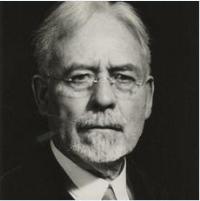
1860 Wingham, Ontario, Canada - 1947 Toronto, Ontario, Canada. Known for: Narrative and rural genre easel and mural painting, printmaking, teaching.
George Agnew Reid RCA, OSA, CSPWC (1860 - 1947). Quote: "He [G.A. Reid] could easily ruin Canadian art, but there's one thing, no one will ever want to buy his pictures." - Lucius Richard O'Brien,... Read full biography
George Agnew Reid RCA, OSA, CSPWC (1860 - 1947). Quote: "He [G.A. Reid] could easily ruin Canadian art, but there's one thing, no one will ever want to buy his pictures." - Lucius Richard O'Brien, President of the Royal Canadian Academy of Arts (c. 1890) (1). George Agnew Reid (AKA: G.A. Reid) was... Read full biography
George Agnew Reid RCA, OSA, CSPWC (1860 - 1947). Quote: "He [G.A. Reid] could easily ruin Canadian art, but there's one thing, no one will ever want to buy his pictures." - Lucius Richard O'Brien, President of the Royal Canadian Academy of Arts (c. 1890) (1). George Agnew Reid (AKA: G.A. Reid) was an important and influential Canadian painter, muralist, printmaker, educator and leader in the national art community. He was President of the Royal Canadian Academy of Arts*, President of the... Read full biography
George Agnew Reid RCA, OSA, CSPWC (1860 - 1947). Quote: "He [G.A. Reid] could easily ruin Canadian art, but there's one thing, no one will ever want to buy his pictures." - Lucius Richard O'Brien, President of the Royal Canadian Academy of Arts (c. 1890) (1). George Agnew Reid (AKA: G.A. Reid) was an important and influential Canadian painter, muralist, printmaker, educator and leader in the national art community. He was President of the Royal Canadian Academy of Arts*, President of the Ontario Society of Artists*, Principle of the Ontario College of Art, and one of the first Canadian artists to have an international reputation. He had a lifelong commitment to public art and education. He played an instrumental role in obtaining permanent... Read full biography
George Agnew Reid RCA, OSA, CSPWC (1860 - 1947). Quote: "He [G.A. Reid] could easily ruin Canadian art, but there's one thing, no one will ever want to buy his pictures." - Lucius Richard O'Brien, President of the Royal Canadian Academy of Arts (c. 1890) (1). George Agnew Reid (AKA: G.A. Reid) was an important and influential Canadian painter, muralist, printmaker, educator and leader in the national art community. He was President of the Royal Canadian Academy of Arts*, President of the Ontario Society of Artists*, Principle of the Ontario College of Art, and one of the first Canadian artists to have an international reputation. He had a lifelong commitment to public art and education. He played an instrumental role in obtaining permanent funding and a staff for the National Gallery of Canada; in establishing the Art Gallery of Toronto (now the Art Gallery... Read full biography
Artist Biography
Biography page for George Reid ((1860 - 1947)), known for Narrative and rural genre easel and mural painting, printmaking, teaching. Showing 1 biographical entries and 0 sample artworks.
George Reid - Artist Info
About George Reid
Biography from the Archives of askART
 George Agnew Reid RCA, OSA, CSPWC (1860 - 1947)
Quote: "He [G.A. Reid] could easily ruin Canadian art, but there's one thing, no one will ever want to buy his pictures." - Lucius Richard O'Brien, President of the Royal Canadian Academy of Arts (c. 1890) (1)
George Agnew Reid (AKA: G.A. Reid) was an important and influential Canadian painter, muralist, printmaker, educator and leader in the national art community. He was President of the Royal Canadian Academy of Arts*, President of the Ontario Society of Artists*, Principle of the Ontario College of Art, and one of the first Canadian artists to have an international reputation. He had a lifelong commitment to public art and education. He played an instrumental role in obtaining permanent funding and a staff for the National Gallery of Canada; in establishing the Art Gallery of Toronto (now the Art Gallery of Ontario); and in creating the Ontario College of Art [now the Ontario College of Art and Design University, the largest art school in Canada]. Most exhibitions that examine the history of Canadian art include his paintings; most comprehensive Canadian art history books illustrate and discuss his work; and dozens of his paintings, prints and drawings are in Canadian museums. (2)
Quote: "The Canadian brush … [has] for its ultimate end the expression of Canadian life, sentiments and characteristics" - G.A. Reid (3)
Reid was born in Wingham, Ontario, a town about 100 miles west of Toronto. He died in Toronto, which had been his primary residence since 1878. (4)
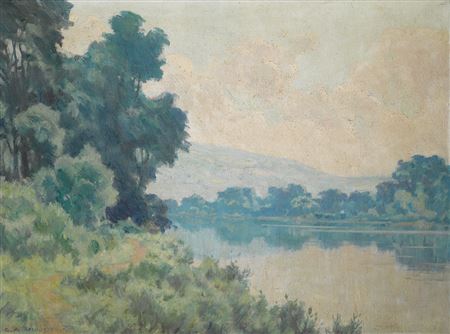
His mediums were oil, watercolor, pastel, etching*, drypoint*, monotype*, pen & ink, charcoal, graphite and mixed mediums. His best known subjects are narrative genre*, historic events, and allegory*. His oeuvre also includes landscapes, portraits, nudes, architecture, forests, figures, interiors, farm life, and industrial activity (during World War I). The painting locations are the environs of his homes in Ontario and the Catskills of New York, as well as from his travels in Canada, the USA and Europe. His styles were Realism* and, briefly, Plein Air* and Impressionism*. AskART have some good illustrations of his work. (5)
Quote: "…the function of art is to represent life." - G.A. Reid (1947) (6)
Reid's formal art education includes the Ontario School of Art, Toronto (1879 - 1882) under Robert Harris (7), John A. Fraser and Charlotte Mount Brock Morrell Schreiber; the Pennsylvania Academy of Fine Arts*, Philadelphia (1882 - 1885) under Thomas Eakins; the Academy Julian*, Paris (1888 - 1889) under Benjamin Constant; the Academy Colarossi*, Paris (1888 - 1889); and the Prado, Madrid (1888 - 1889). (8)
His teaching career began with giving private lessons from 1885 to 1890. In 1890 he began teaching at the Ontario School of Art (9), becoming principal in 1912 and retiring in 1928. Under his direction, the art school became independent of the Board of Education, changed its name to the Ontario College of Art and moved into its own building, which he designed, in 1921. This was the first building in Canada to be used solely for art education. Currently (2011), the Ontario College of Art and Design University, as it is now known, is the largest art school in Canada (10).
His students included Carl Ahrens, William Walker Alexander (1870 - 1948), John W. Beatty, Franklin H. Carmichael, Frederick Sproston Challener, Rody Kenny Courtice, Charles Goldhamer, Frederick Stanley Haines, Charles William Jefferys, Franz Johnston, James Laughlin, Marion Long, Frederick Nicholas Loveroff, Owen Staples, J.E.H. MacDonald, Manly Edward MacDonald, Graham Noble Norwell, Peter Clapham Sheppard, Mildred Valley Thornton, Stanley Francis Turner, William J. Wood, and Mary Wrinch.
Reid's travels include several trips to Europe - England, France, Spain and Italy (1885); Liverpool, London, Paris (1888 - 1889); Madrid and Paris (1896); the British Isles (1902); and St. Ives, Cornwall (c. 1923). (11)
He joined the Ontario Society of Artists (OSA) in 1885, and served as its President from 1897 to 1901. In that role he started a movement to create the Art Galley of Toronto, which was established in 1900. He was elected to the Royal Canadian Academy of Arts (RCA) in 1885 (elected Academician in 1890) and served as RCA President from 1906 to 1909. While President he began the process of improving the conditions at the National Gallery of Canada. At the time it was supervised by a "custodian" [Walter R. Billings] who had little power, staff or funding and most of the collection was dispersed throughout the capital as decoration. In 1906, Reid prepared a report to the Governor General [who forwarded it to parliament] outlining a plan to create a viable national institution. It called for the creation of an advisory council of laymen and artists, a "credible appropriation" of funding and the hiring of a "competent, full-time director". By April 1907 the overhaul had begun with the establishment of the Advisory Arts Council and an initial funding of $10,000.00 (which grew to $25,000.00 by 1909). In 1910, Eric Brown was appointed as National Gallery of Canada's first, full-time curator.
Reid was also a charter member of the Canadian Society of Painters in Water Colour (1926 - 1938). (12)
In addition to exhibiting extensively with the above organizations he also exhibited at the Paris Salon in 1889, 1891, 1892, 1894 and 1896; the Art Association of Montreal from 1888 to 1892 and in 1901; the American Art Galleries, New York in 1894; and at the Canadian National Exhibition in 1906, 1915, 1917, 1920, 1926 and 1938. (13)
Since the 1890s, his works have been included in numerous famous exhibitions such as the "World's Columbian Exposition"*, Chicago (1893); "Midwinter Fair", San Francisco (1894); "Pan-American Exposition"*, Buffalo, New York (1901); "Louisiana Purchase Exposition"*, St. Louis, Missouri (1904); "British Empire Exposition", Wembley, England (1924); "Exposition d'art Canadien", Musée du Jeu de Paume, Paris (1927); 'Outstanding Artists of the last 50 Years', National Gallery of Canada, Ottawa (1935); "A Century of Canadian Art", Tate Gallery, London, England (1938); "The Development of Painting in Canada, 1665 - 1945", Art Gallery of Toronto (1945); and "Painting in Canada, a Selective Survey", Institute of History and Art, Albany, New York (1946).
Posthumously, his works are frequently included in exhibitions that examine the history of Canadian art such as "Fifty Years of Painting in Canada", Art Gallery of Toronto (1949); "Images for a Canadian Heritage", Vancouver Art Gallery, B.C. (1966); "Three Hundred Years of Canadian Art", National Gallery of Canada (1967); "A Terrible Beauty: The Art of Canada at War", Robert McLaughlin Gallery, Oshawa, Ontario and touring (1977); "Canadians in Paris, 1867 - 1914", Art Gallery of Ontario, 1979; "A Distant Harmony: Comparisons in the Painting in Canada and the USA", Winnipeg Art Gallery (1982); "Landscapes of the Mind", McMaster University Art Gallery, Hamilton, Ontario (1986); "Staffage to Centre Stage: The Figure in Canadian Art", Art Gallery of Ontario 1989); "Routine Activity", Art Gallery of Windsor, Ontario (1998); "Book Illustration by Canadian Painters to 1916", National Gallery of Canada (2004); and "Egos and Icons", University of Toronto, Art Centre (2004).
He did at least three joint exhibitions with his first wife Mary Hiester Reid; the first was at Oliver, Coate & Co., Toronto in 1888; the second at the Royal Ontario Museum, Toronto in 1915; and the third at the Heliconian Club, Toronto in 1920.
The Ontario Society of Artists had a memorial exhibition for him at the Art Gallery of Toronto [now Art Gallery of Ontario] in 1949; and the Art Gallery of Ontario had an exhibitions titled "G.A. Reid: Toward a Union of the Arts" in 1985; and "Sympathetic Realism: George A. Reid and the Academic Tradition" in 1986.
His works are very actively traded on the Canadian auction market, they are in many private collections, and they are in several major public collections.
According to the Canadian Heritage Information Network* there are George Agnew Reid works in the permanent collections of the Agnes Etherington Art Centre (Kingston, Ontario), Art Gallery of Alberta (Edmonton), Art Gallery of Hamilton (Ontario), Art Gallery of Ontario (Toronto), Canadian War Museum (Ottawa), Confederation Centre Art Gallery & Museum (Charlottetown, P.E.I.), Mackenzie Art Gallery (Regina, Saskatchewan), McCord Museum of Canadian History (Montreal), Quebec Museum of Fine Arts (Quebec City), Robert McLaughlin Gallery (Oshawa, Ontario), Winnipeg Art Gallery (Manitoba) and the National Gallery of Canada (Ottawa), which has 23 works.
The E.P. Taylor Research Library & Archives* at the Art Gallery of Ontario also has a large collection of Reid material. It includes drawings in pencil, pastel and ink, watercolor sketches, blueprints, exhibition catalogues, photographs, postcards, letters, memorabilia, texts of speeches, awards, and magazine and newspaper clippings. The primary source is 631 pages contained in two scrap books maintained by George Agnew Reid and his second wife Mary Evelyn Wrinch Reid. (14)
Some of the original locations of his murals are the Council Chambers, Toronto City Hall; Earlscourt Public Library, Toronto; Jarvis Collegiate, Toronto; the Royal Ontario Museum, Toronto; the Ontario Provincial Legislature, Toronto; and the Canadian Parliament Buildings, Ottawa. (15)
He illustrated several books including Quebec of Yester-Year (1932) by Arthur George Doughty; published by Nelson, Toronto (198 pages). (16)
His numerous awards and honors include a Gold Medal at the "World's Columbian Exposition"*, Chicago (1893) and a Bronze at the "Midwinter Fair", San Francisco (1894); both for his most famous work The Fore closure of the Mortgage (17). He also won a Silver medal at the "Louisiana Purchase Exposition"*, St. Louis, Missouri (1904); and he was a member of the International Jury of Awards at the "Pan-American Exposition"*, Buffalo, New York (1901). (18)
Quote: "I esteem all art expression from illustration to abstract symbolism and ornament as legitimate art." - G.A. Reid (1929). (19)
Footnotes:
(1) Source: Canadian Impressionism (1990) by Paul Duval (see AskART book references).
(2) Sources: Pages 97, 98 and 99 The Fine Arts in Canada (1925), by Newton MacTavish; page 82 Passionate Spirits: A History of the Royal Canadian Academy of Arts, 1880 - 1980 (1980), by Rebecca Sisler; and pages 37 and 38 The Group of Seven: Art for a Nation (1995), by Charles C. Hill (see AskART book references).
(3) Source: Canadian Paintings, Prints and Drawings (2007), by Anne Newlands (see AskART book references).
(4) Source: A Dictionary of Canadian Artists (1974), by Colin S. MacDonald (see AskART book references).
Note: From 1892 to 1917 Reid and his first wife Mary Hiester had a summer home in Onteora, [Tannersville] New York. They were active members of its artist's colony; George built two cottages there and designed several others as well as its All Souls Church. Sources: E. P. Taylor Research Library and Archives at the Art Gallery of Ontario; and the Onteora Club website - http://onteoraclub.com/heritage.php.
Note: The Onteora Club* [artist's colony], Tannersville, New York was founded in 1887 by design pioneer Candace Thurber Wheeler [see AskART] and her brother Frank Thurber. Early visitors included Mark Twain, conservationist John Burroughs and painter George Bellows [see AskART]. Some of the first residents included writers Mary Mapes Dodge and Elizabeth Custer, actress Maude Adams, as well as painters John White Alexander [see AskART] and Carroll Beckwith [see AskART]. Source: Onteora Club website - http://onteoraclub.com/heritage.php.
Note: George Reid was married twice; both women were prominent artists. He married Mary Hiester [Reid] in 1885 (she died in 1921) and married Mary Evelyn Wrinch [Reid] in 1922. See their biographies in AskART.
(5) Sources: AskART Images; and museum illustrations and descriptions of mediums in the Canadian Heritage Information Network* data base; and Canadian Impressionism (1990) by Paul Duval (see AskART book references).
(6) Source: Page 31, High Realism in Canada (1974), by Paul Duval (see AskART book references).
(7) All artist teachers and artist associates mentioned in this biography, except those with bracketed dates after their names, have their own pages in AskART.
(8) Education and teaching sources: The National Gallery of Canada: Catalogue of Paintings and Sculpture, Volume III (1960), by R.H. Hubbard; Art Gallery of Ontario - The Canadian Collection (1970), by Helen Pepall Bradfield; Canadian Impressionism (1990) by Paul Duval; High Realism in Canada (1974), by Paul Duval; A Dictionary of Canadian Artists (1974), by Colin S. MacDonald; The Collector's Dictionary of Canadian Artists at Auction (2001), by Anthony R. Westbridge and Diana L. Bodnar; Painting in Canada: a History (1966), by J. Russell Harper; "Passionate Spirits: A History of the Royal Canadian Academy of Arts, 1880 - 1980" (1980), by Rebecca Sisler (see AskART book references); and the E. P. Taylor Research Library and Archives at the Art Gallery of Ontario.
Note: Other Canadian artists studying or working in Paris at the same time, with which the Reids associated, included William Brymner, Maurice Cullen, Joseph Franchère, Joseph St. Charles, Curtis Williamson (1867 - 1944) and Paul Peel. Source: A Dictionary of Canadian Artists (1974), by Colin S. MacDonald (see AskART book references).
Note: The list of Reid students only includes a sampling of prominent artists whose biographies in the Westbridge dictionary specifically mentioned Reid as a teacher; his influence is of course far greater when considering all the artists who attended the Ontario College of Art while he was principal.
Note: Reid's first contact with a professional artist was as a teenager when he visited William Cresswell [see AskART] who lived twenty miles away. There he saw his first oil paintings. Source: Ibid; and Painting in Canada: a History (1966), by J. Russell Harper (see AskART book references).
(9) The Ontario School of Art went through several name changes during and after Reid's life; its subsequent names were the Central Ontario School of Art and Design, Ontario College of Art, Ontario College of Art and Design and, in 2008, Ontario College of Art and Design University. Source: Ontario College of Art and Design University.
(10) Source: Ibid.
(11) Source: A Dictionary of Canadian Artists (1974), by Colin S. MacDonald (see AskART book references).
(12) Sources: Painting in Canada: a History (1966), by J. Russell Harper; and pages 82, 83 and 84 Passionate Spirits: A History of the Royal Canadian Academy of Arts, 1880 - 1980 (1980), by Rebecca Sisler (see AskART book references); and the National Gallery of Canada website - http://www.gallery.ca/english/2142.htm.
Note: The Fine Arts in Canada (1925), by Newton MacTavish has (on page 96) that Reid was President of the OSA from 1887 to 1901; and Art Gallery of Ontario - The Canadian Collection (1970), by Helen Pepall Bradfield has (on page 385) that he was president of the CPE [Society of Canadian Painter Etchers and Engravers]. They are the only sources with these versions of Reid's resume.
(13) Sources for all exhibitions: The National Gallery of Canada: Catalogue of Paintings and Sculpture, Volume III (1960), by R.H. Hubbard; Art Gallery of Ontario - The Canadian Collection (1970), by Helen Pepall Bradfield; Canadian Impressionism (1990) by Paul Duval; Three Hundred Years of Canadian Art (1967), by R.H. Hubbard and J.R. Ostiguy; A Dictionary of Canadian Artists (1974), by Colin S. MacDonald ; The Collector's Dictionary of Canadian Artists at Auction (2001), by Anthony R. Westbridge and Diana L. Bodnar (see all previous in AskART book references); the Art Gallery of Ontario (catalogue summaries online); and the E. P. Taylor Research Library and Archives.
Note: He exhibited with the OSA almost every year from 1881 to 1944; and with the RCA almost every year from 1885 to 1946. Sources: Centre for Contemporary Canadian Art*; and Royal Canadian Academy of Arts: Exhibitions and Members, 1880 - 1979 (1981), by Evelyn de R. McMann (see AskART book references).
Note: The CNE exhibition dates are taken from the provenance of works in the collections of the National Gallery of Canada and the Art Gallery of Ontario. There may be more exhibition dates.
Note: The Fine Arts in Canada (1925), by Newton MacTavish lists the Royal Academy, England as an exhibition venue for Reid's work, The Foreclosure of the Mortgage, but it does not provide a date.
Note: A Concise History of Canadian Painting (1973), by Dennis Reid (see AskART book references) lists the Pennsylvania Academy of Fine Arts as a frequent exhibitor of Reid's work, but it does not provide dates.
(14) Source: E. P. Taylor Research Library and Archives, Art Gallery of Ontario - http://www.ago.net/assets/files/pdf/special_collections/SC010.pdf.
Note: The E.P. Taylor Research Library & Archives is located at the Art Gallery of Ontario, Toronto. Begun informally in 1906, it was actualized in 1933 through the stimulus of a grant and donation of 200 books from the Carnegie Foundation, Pittsburgh, PA. Its collection now includes over 165,000 volumes for general art information and in-depth research in the history of art; over 50,000 sales and auction catalogues; over 40,000 documentation files on Canadian art and artists; and rare books from the 16th to the 21st centuries; as well as photographs, multimedia, digital and microform collections. The Library is a leading Canadian study centre for advanced research in art history. It is open to the visiting public, and the museum and academic communities at large. Source: E.P. Taylor Research Library & Archives - http://www.ago.net/research-library-archives-overview.
(15) Sources: A National Soul: Canadian Mural Painting, 1860s - 1930s" (2002), by Marylin Jean McKay; The Dictionary of Art (1996), edited by Jane Turner; and A Dictionary of Canadian Artists (1974), by Colin S. MacDonald (see AskART book references).
Note: Most sources say, that to promote the art of mural painting, Reid personally paid all the costs of painting the Toronto City Hall murals (1897 - 1899); and that he got so much mural business from it that by 1900 he had stopped painting large genre canvases.
(16) Source: A Dictionary of Canadian Artists (1974), by Colin S. MacDonald (see AskART book references).
(17) "In 1934 he [Reid] had done a replica of The Fore closure of the Mortgage; the original had been purchased by F.E. Galbraith, a Torontonian, who had moved to London, England, where he had stored the picture during the war in a warehouse. The warehouse caught fire and the original painting was destroyed." The replica is in the Canadian Parliament Buildings, Ottawa. Sources: A Dictionary of Canadian Artists (1974), by Colin S. MacDonald; and "Landmarks of Canadian Art" (1978), by Peter Mellen (see AskART book references).
(18) Sources: Ibid; The Fine Arts in Canada (1925), by Newton MacTavish; A Dictionary of Canadian Artists (1974), by Colin S. MacDonald; and Passionate Spirits: A History of the Royal Canadian Academy of Arts, 1880 - 1980 (1980), by Rebecca Sisler (see AskART book references).
(19) Source: Canadian Impressionism (1990) by Paul Duval (see AskART book references).
* For more in-depth information about these terms and others, see AskART.com Glossary http://www.askart.com/AskART/lists/Art_Definition.aspx.
Prepared and contributed to askART by M.D. Silverbrooke.