Page loaded successfully. Showing biography for George Booth.
George Booth BIOGRAPHY
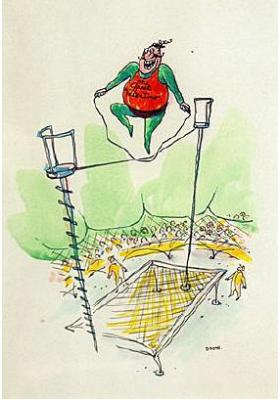
1926 rural Missouri - 2022 Brooklyn, New York. Known for: Magazine cartoonist-New Yorker, whimsy, pets.
A comic artist especially known for his New Yorker magazine cartoons that focused on the uncosmopolitan side of life, George Booth was born and raised in rural Missouri. He started drawing as a... Read full biography
A comic artist especially known for his New Yorker magazine cartoons that focused on the uncosmopolitan side of life, George Booth was born and raised in rural Missouri. He started drawing as a youngster, encouraged by his mother who was a comic artist, and was exposed to the world of public media... Read full biography
A comic artist especially known for his New Yorker magazine cartoons that focused on the uncosmopolitan side of life, George Booth was born and raised in rural Missouri. He started drawing as a youngster, encouraged by his mother who was a comic artist, and was exposed to the world of public media when he worked as a type setter at the local newspaper. Booth served in the U.S. Marines where he did cartoons for The Leatherneck Magazine. After this service, he took art training at the Chicago... Read full biography
A comic artist especially known for his New Yorker magazine cartoons that focused on the uncosmopolitan side of life, George Booth was born and raised in rural Missouri. He started drawing as a youngster, encouraged by his mother who was a comic artist, and was exposed to the world of public media when he worked as a type setter at the local newspaper. Booth served in the U.S. Marines where he did cartoons for The Leatherneck Magazine. After this service, he took art training at the Chicago Academy of Art, Corcoran School of Art and School of the Visual Arts in New York City. He married in 1958, and two years later became a contributing artist for the The New Yorker. He also served as Art Director of some trade magazines, did cartoons for... Read full biography
A comic artist especially known for his New Yorker magazine cartoons that focused on the uncosmopolitan side of life, George Booth was born and raised in rural Missouri. He started drawing as a youngster, encouraged by his mother who was a comic artist, and was exposed to the world of public media when he worked as a type setter at the local newspaper. Booth served in the U.S. Marines where he did cartoons for The Leatherneck Magazine. After this service, he took art training at the Chicago Academy of Art, Corcoran School of Art and School of the Visual Arts in New York City. He married in 1958, and two years later became a contributing artist for the The New Yorker. He also served as Art Director of some trade magazines, did cartoons for the New York Times, and illustrated children's books including Think Good Thoughts... Read full biography
Artist Biography
Biography page for George Booth ((1926 - 2022)), known for Magazine cartoonist-New Yorker, whimsy, pets. Showing 1 biographical entries and 0 sample artworks.
George Booth - Artist Info
About George Booth
Biography from the Archives of askART
 A comic artist especially known for his New Yorker magazine cartoons that focused on the uncosmopolitan side of life, George Booth was born and raised in rural Missouri. He started drawing as a youngster, encouraged by his mother who was a comic artist, and was exposed to the world of public media when he worked as a type setter at the local newspaper.
Booth served in the U.S. Marines where he did cartoons for The Leatherneck Magazine. After this service, he took art training at the Chicago Academy of Art, Corcoran School of Art and School of the Visual Arts in New York City. He married in 1958, and two years later became a contributing artist for the The New Yorker. He also served as Art Director of some trade magazines, did cartoons for the New York Times, and illustrated children's books including Think Good Thoughts About a Pussycat (1075) and Pussycats Need Love, Too (1980)
His New Yorker cartoons brought him much popularity including a series called Maw Maw' and the Family. Signature Booth characters were cave people, "ragged primordials" who just hang out, laugh with each other and have a good time.
Amy Finch in The Boston Phoenix wrote of Booth:
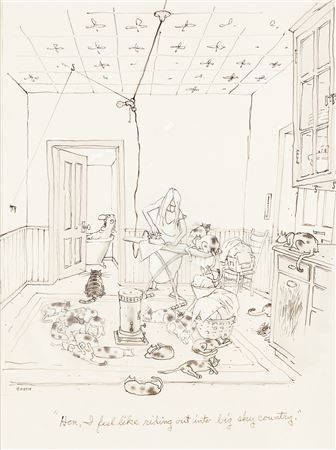
"In person, George Booth is a vision of propriety and pensiveness, unlike his famously scroungy repertoire of cats, bull terriers, and humans, most of whom are prone to explosions of flea-scratching or freeform verbalizing, depending on the species. Archetypal Booth scenes are a cosmos unto themselves: think of his bare-bulb-lit rooms in which a ditzy frump addles her newspaper-clutching husband -- "One of your eyes is bugged out further than the other one" -- or the repair shop where the news is all bad: "We located the hissing noise, Mr. Watkins. Your wife's mother is in the back seat."
Each Booth detail lends such a strong sense of personality and place that it's more like gazing at a stage set than at a printed page. The paradox is that while the Booth world overflows with concrete details, the humor is subtle and skewed, arriving without a laugh track."
"In Booth's world, there is little room for self-consciousness or self-censorship amid all the yard-sale salvage. Words fall out of characters' mouths with a sweet, nutty authenticity that comes straight from life. "
Sources:
Amy Finch, The Boston Phoenix, February 4-11, 1999
http://www.bostonphoenix.com/archive/features/99/02/04/GEORGE_BOOTH.html
Art of the Print
http://www.artoftheprint.com/artistpages/booth_george_mawmawandthefamily.htm