Page loaded successfully. Showing biography for George Cope.
George Cope BIOGRAPHY
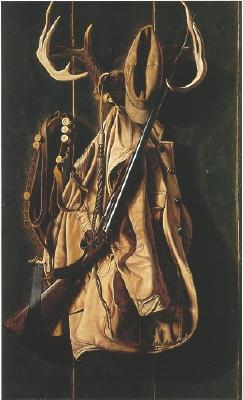
1855 West Chester, Pennsylvania - 1929 West Chester, Pennsylvania. Known for: Trompe still life and landscape painting.
Best known for "trompe l'oeil" or highly realistic still life painting, especially hanging game, George Cope spent most of his life around the Brandywine River Valley in West Chester, Pennsylvania,... Read full biography
Best known for "trompe l'oeil" or highly realistic still life painting, especially hanging game, George Cope spent most of his life around the Brandywine River Valley in West Chester, Pennsylvania, although in the 1870s he traveled for four years to the Far West including the Pacific Coast and the... Read full biography
Best known for "trompe l'oeil" or highly realistic still life painting, especially hanging game, George Cope spent most of his life around the Brandywine River Valley in West Chester, Pennsylvania, although in the 1870s he traveled for four years to the Far West including the Pacific Coast and the Plains. Titles of his work included A Spur of the Sierra Nevada Mountains and Falls of the Turnchuck River, Washington Territory. He was an avid hunter and outdoorsman. Cope began his formal training... Read full biography
Best known for "trompe l'oeil" or highly realistic still life painting, especially hanging game, George Cope spent most of his life around the Brandywine River Valley in West Chester, Pennsylvania, although in the 1870s he traveled for four years to the Far West including the Pacific Coast and the Plains. Titles of his work included A Spur of the Sierra Nevada Mountains and Falls of the Turnchuck River, Washington Territory. He was an avid hunter and outdoorsman. Cope began his formal training in 1876 with German landscape painter Herman Herzog, but in 1887 switched to "trompe l'oeil" still lifes as his primary subject when he saw the success with this style of other artists such as William Harnett. This subject matter was new to the... Read full biography
Best known for "trompe l'oeil" or highly realistic still life painting, especially hanging game, George Cope spent most of his life around the Brandywine River Valley in West Chester, Pennsylvania, although in the 1870s he traveled for four years to the Far West including the Pacific Coast and the Plains. Titles of his work included A Spur of the Sierra Nevada Mountains and Falls of the Turnchuck River, Washington Territory. He was an avid hunter and outdoorsman. Cope began his formal training in 1876 with German landscape painter Herman Herzog, but in 1887 switched to "trompe l'oeil" still lifes as his primary subject when he saw the success with this style of other artists such as William Harnett. This subject matter was new to the United States and was introduced in the mid 19th century by German emigre artists who had been much influenced by th... Read full biography
Artist Biography
Biography page for George Cope ((1855 - 1929)), known for Trompe still life and landscape painting. Showing 2 biographical entries and 0 sample artworks.
George Cope - Artist Info
About George Cope
Biography from the Archives of askART
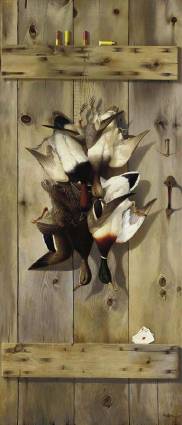 Best known for "trompe l'oeil" or highly realistic still life painting, especially hanging game, George Cope spent most of his life around the Brandywine River Valley in West Chester, Pennsylvania, although in the 1870s he traveled for four years to the Far West including the Pacific Coast and the Plains. Titles of his work included A Spur of the Sierra Nevada Mountains and Falls of the Turnchuck River, Washington Territory.
He was an avid hunter and outdoorsman.
Cope began his formal training in 1876 with German landscape painter Herman Herzog, but in 1887 switched to "trompe l'oeil" still lifes as his primary subject when he saw the success with this style of other artists such as William Harnett. This subject matter was new to the United States and was introduced in the mid 19th century by German emigre artists who had been much influenced by the Dutch still-life tradition.
When Cope returned to Pennsylvania, he taught in a local school and produced paintings that were collected in Philadelphia by wealthy collectors, but after the turn of the century, he was largely forgotten.
He died poor and neglected, with one of the reasons being that he continued into the 20th century as a trompe l'oeil painter, a style that became very outmoded. As he got more and more determined in the face of modernism to maintain precision, it is written that his later still lifes "are almost macabre in their staring, frozen, rigid exactitude"
Sources:
Peter Hastings Falk, Editor, Who Was Who in American Art
Alfred Frankenstein, After the HuntBiography from Schwarz Gallery
George Cope was born in Western Chester County, Pennsylvania, the son of Quaker parents. He taught himself to draw while attending school, and in 1876 took painting lessons from the Philadelphia artist Herman Herzog (1832-1932). In 1876 and 1879 Cope traveled to the West, where he painted landscapes and Indian subjects that were exhibited in shop windows back in West Chester, Pennsylvania.
After moving to Philadelphia in 1881, at which time he began to paint still- lives, Cope returned to West Chester in 1883. There, in addition to painting, Cope supported himself as an art teacher and restorer; he also patented a device for stretching canvas. During the late 1880s he began to paint trompe l'oeil pictures, and shortly thereafter he turned his attention to table top still lifes; both types of works reflect the influence of William Michael Harnett (1848-1892).
REFERENCE: Joan H. Gorman and Gertrude Grace Sill, George Cope, 1855-1929 (Chadds Ford, Pa.: Brandywine River Museum, 1978)