Page loaded successfully. Showing biography for German Cueto.
German Cueto BIOGRAPHY
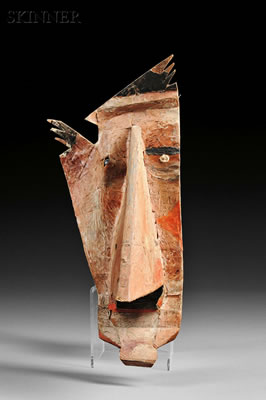
1893 Mexico City, Mexico - 1975 Mexico City, Mexico. Known for: Sculpture.
He is considered the renovator of Mexican sculpture of the twentieth century. On the orders of his father, he entered the School of Chemical Sciences in 1910, there he met the sculptor Fidencio Nava,... Read full biography
He is considered the renovator of Mexican sculpture of the twentieth century. On the orders of his father, he entered the School of Chemical Sciences in 1910, there he met the sculptor Fidencio Nava, later he entered the Academy of Fine Arts, but the type of teaching that was taught there... Read full biography
He is considered the renovator of Mexican sculpture of the twentieth century. On the orders of his father, he entered the School of Chemical Sciences in 1910, there he met the sculptor Fidencio Nava, later he entered the Academy of Fine Arts, but the type of teaching that was taught there disappointed him. In 1922 he was assistant of Ignacio Asúnsolo in the renovation of the building of the SEP. But it was not until he joined the group of the Estridentistas, when he found the right means to... Read full biography
He is considered the renovator of Mexican sculpture of the twentieth century. On the orders of his father, he entered the School of Chemical Sciences in 1910, there he met the sculptor Fidencio Nava, later he entered the Academy of Fine Arts, but the type of teaching that was taught there disappointed him. In 1922 he was assistant of Ignacio Asúnsolo in the renovation of the building of the SEP. But it was not until he joined the group of the Estridentistas, when he found the right means to carry out the avant-garde art that interested him. From this period, cardboard masks in bright colors of characters and friends stand out. From 1927 to 1932 he lived in France, where he met and lived with artists such as Mondrian, Torres García,... Read full biography
He is considered the renovator of Mexican sculpture of the twentieth century. On the orders of his father, he entered the School of Chemical Sciences in 1910, there he met the sculptor Fidencio Nava, later he entered the Academy of Fine Arts, but the type of teaching that was taught there disappointed him. In 1922 he was assistant of Ignacio Asúnsolo in the renovation of the building of the SEP. But it was not until he joined the group of the Estridentistas, when he found the right means to carry out the avant-garde art that interested him. From this period, cardboard masks in bright colors of characters and friends stand out. From 1927 to 1932 he lived in France, where he met and lived with artists such as Mondrian, Torres García, Archipenko, Arp and Calder. It is then that he developed his taste for the diversity of materials and the handli... Read full biography
Artist Biography
Biography page for German Cueto ((1893 - 1975)), known for Sculpture. Showing 1 biographical entries and 0 sample artworks.
German Cueto - Artist Info
About German Cueto
Biography from Morton Subastas
He is considered the renovator of Mexican sculpture of the twentieth century. On the orders of his father, he entered the School of Chemical Sciences in 1910, there he met the sculptor Fidencio Nava, later he entered the Academy of Fine Arts, but the type of teaching that was taught there disappointed him. In 1922 he was assistant of Ignacio Asúnsolo in the renovation of the building of the SEP. But it was not until he joined the group of the Estridentistas, when he found the right means to carry out the avant-garde art that interested him. From this period, cardboard masks in bright colors of characters and friends stand out.
From 1927 to 1932 he lived in France, where he met and lived with artists such as Mondrian, Torres García, Archipenko, Arp and Calder. It is then that he developed his taste for the diversity of materials and the handling of plans and volumes that characterize his work. In Europe he participated in group exhibitions in Switzerland, Spain, Holland and France.
Germán Cueto fixed his gaze on traditional Mexican art, especially in masks, which for decades were central motifs of his production. The artist made numerous masks throughout his life, with different forms, materials and techniques, through a tireless process of experimentation and always with an avant-garde sculptural perspective. Cueto knew, without a doubt, that Mexico is the "Country of the Mask", where a hidden face possesses an almost ritual power. "Cueto closes the scope of inhibition and inaugurates the great theater of the world as a collective irruption of a liberating frenzy. The mask relieves the contained tension that erupts like an overflowing laughter. The ultimate meaning is found in another place, its meaning it is its mystery: when the face is only a transfiguration, the mask is the face, the mirror of interiority ". Teresa Bosch Romeu. Consulted
Sources:
TOVAR DE TERESA, Guillermo. Repertoire of artists in Mexico. Volume I. Mexico. Grupo Financiero Bancomer, 1997, p. 312, BOSCH ROMEU, Teresa. Germán Cueto, a renovating artist. Mexico. CONACULTA, 1999, Pg. 18 and ESPINOZA, Antonio. "Germán Cueto: avant-garde sculptor". Mexico. The Universal, Confabulario, February 2014.