Page loaded successfully. Showing biography for Gregorio Prieto.
Gregorio Prieto BIOGRAPHY

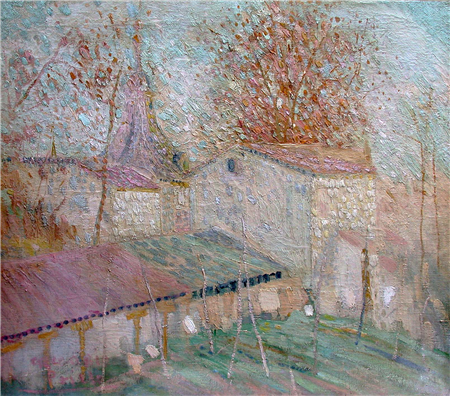
1897 Valdepenas, (Ciudad Real,) Spain - 1992 Valdepeñas (Ciudad Real), Spain. Known for: Impressionist floral scenes, symbolic figure and rural scene painting.
Gregorio Prieto Muñoz was a Spanish painter born in Valdepeñas (Ciudad Real) in the province of La Mancha. After the death of his mother, the family moved to Madrid when he was seven. His passion for... Read full biography
Gregorio Prieto Muñoz was a Spanish painter born in Valdepeñas (Ciudad Real) in the province of La Mancha. After the death of his mother, the family moved to Madrid when he was seven. His passion for painting was not to the liking of his father. Prieto painted in secret and despite the disagreement... Read full biography
Gregorio Prieto Muñoz was a Spanish painter born in Valdepeñas (Ciudad Real) in the province of La Mancha. After the death of his mother, the family moved to Madrid when he was seven. His passion for painting was not to the liking of his father. Prieto painted in secret and despite the disagreement of his family, he enrolled at the School of Arts and Crafts. In 1915 he achieved his goal he entered the Academy of Fine Arts of San Fernando. Winning many scholarships he made his first exhibitions... Read full biography
Gregorio Prieto Muñoz was a Spanish painter born in Valdepeñas (Ciudad Real) in the province of La Mancha. After the death of his mother, the family moved to Madrid when he was seven. His passion for painting was not to the liking of his father. Prieto painted in secret and despite the disagreement of his family, he enrolled at the School of Arts and Crafts. In 1915 he achieved his goal he entered the Academy of Fine Arts of San Fernando. Winning many scholarships he made his first exhibitions in Barcelona and Madrid Ateneo in 1919. He fell in love with Rafael Alberti. Shortly after, in April 1924, he met Federico García Lorca and Vicente Aleixandre. In 1925, he moved to Paris to continue his studies and had his first contact with Cubism... Read full biography
Gregorio Prieto Muñoz was a Spanish painter born in Valdepeñas (Ciudad Real) in the province of La Mancha. After the death of his mother, the family moved to Madrid when he was seven. His passion for painting was not to the liking of his father. Prieto painted in secret and despite the disagreement of his family, he enrolled at the School of Arts and Crafts. In 1915 he achieved his goal he entered the Academy of Fine Arts of San Fernando. Winning many scholarships he made his first exhibitions in Barcelona and Madrid Ateneo in 1919. He fell in love with Rafael Alberti. Shortly after, in April 1924, he met Federico García Lorca and Vicente Aleixandre. In 1925, he moved to Paris to continue his studies and had his first contact with Cubism and the Surrealists. In 1926, he participated in the Venice Biennale and the Salon of Independent in Paris. Until late twenties his sub... Read full biography
Artist Biography
Biography page for Gregorio Prieto ((1897 - 1992)), known for Impressionist floral scenes, symbolic figure and rural scene painting. Showing 1 biographical entries and 0 sample artworks.
Gregorio Prieto - Artist Info
About Gregorio Prieto
Name variants
Gregoria Prieto Munoz
Biography from Le chef d'oeuvre inconnu
 Gregorio Prieto Muñoz was a Spanish painter born in Valdepeñas (Ciudad Real) in the province of La Mancha. After the death of his mother, the family moved to Madrid when he was seven. His passion for painting was not to the liking of his father. Prieto painted in secret and despite the disagreement of his family, he enrolled at the School of Arts and Crafts. In 1915 he achieved his goal he entered the Academy of Fine Arts of San Fernando. Winning many scholarships he made his first exhibitions in Barcelona and Madrid Ateneo in 1919.
He fell in love with Rafael Alberti. Shortly after, in April 1924, he met Federico García Lorca and Vicente Aleixandre. In 1925, he moved to Paris to continue his studies and had his first contact with Cubism and the Surrealists. In 1926, he participated in the Venice Biennale and the Salon of Independent in Paris.
Until late twenties his subjects are reduced to landscapes, still lifes and portraits, but he also begins to work with impressionism, and joines a cotorie of literary circles. In 1928, he receives a scholarship to the Spanish Academy of Fine Arts in Rome, where he remained until 1932. It was during his stay in Rome he painted his best pictures: mannequins Series and images inspired by the ancient Greco-Roman painting. In 1935, he organized a major exhibition in Paris in the company of Pablo Picasso, Joan Miró, Juan Gris and Salvador Dali among others. He designed the sets for The prodigious boot and Lullaby and worked for the BBC as an art critic.
After visiting many European countries, where he made numerous exhibitions, he returned briefly to Spain. In 1936, the beginning of the Spanish Civil War and, more specifically, assassination of Federico Garcia Lorca, made him choose voluntary exile in London.
He returned to Madrid in 1947. After his return, Gregorio Prieto was primarily established as a portraitist of the upper class and painter of landscapes, including in particular the mills of his native Mancha but also elsewhere.
From 1970, he received important awards, culminating in the Gold Medal for Merit in Fine Arts (1982), the Gold Medal of the Junta de Castilla-La Mancha Comunidades, the inauguration of the Museum Gregorio Prieto Foundation and the appointment of honorary Royal Academy of Fine Arts of San Fernando (1990).
He died at age 95 in his hometown.