Page loaded successfully. Showing biography for Hal Rudolf Foster.
Hal Rudolf Foster BIOGRAPHY
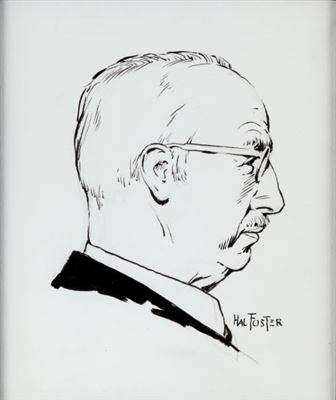
1892 Halifax, Nova Scotia - 1982 Spring Hill, Florida. Known for: "Prince Valiant" comic strip, drawing.
Hal Foster was conspicuously talented and greatly influential. He drew two of the best-looking adventure strips in comics, Tarzan and Prince Valiant. He was active in the field from the late 1920s to... Read full biography
Hal Foster was conspicuously talented and greatly influential. He drew two of the best-looking adventure strips in comics, Tarzan and Prince Valiant. He was active in the field from the late 1920s to the early 1970s, and during that half-century reached a wide audience and influenced numerous... Read full biography
Hal Foster was conspicuously talented and greatly influential. He drew two of the best-looking adventure strips in comics, Tarzan and Prince Valiant. He was active in the field from the late 1920s to the early 1970s, and during that half-century reached a wide audience and influenced numerous younger artists, including Alex Raymond and Frank Frazetta. Harold Rudolf Foster was born in Halifax, Nova Scotia. The family moved to Winnipeg when he was still in his teens. An outdoorsman, he went fur... Read full biography
Hal Foster was conspicuously talented and greatly influential. He drew two of the best-looking adventure strips in comics, Tarzan and Prince Valiant. He was active in the field from the late 1920s to the early 1970s, and during that half-century reached a wide audience and influenced numerous younger artists, including Alex Raymond and Frank Frazetta. Harold Rudolf Foster was born in Halifax, Nova Scotia. The family moved to Winnipeg when he was still in his teens. An outdoorsman, he went fur trapping as a teenager. After a variety of short-lived jobs, Foster decided to try to make some money with his knack for drawing; he landed a seasonal job illustrating the catalog of the Hudson Bay Company in Winnipeg. By 1921, he had made up his mind... Read full biography
Hal Foster was conspicuously talented and greatly influential. He drew two of the best-looking adventure strips in comics, Tarzan and Prince Valiant. He was active in the field from the late 1920s to the early 1970s, and during that half-century reached a wide audience and influenced numerous younger artists, including Alex Raymond and Frank Frazetta. Harold Rudolf Foster was born in Halifax, Nova Scotia. The family moved to Winnipeg when he was still in his teens. An outdoorsman, he went fur trapping as a teenager. After a variety of short-lived jobs, Foster decided to try to make some money with his knack for drawing; he landed a seasonal job illustrating the catalog of the Hudson Bay Company in Winnipeg. By 1921, he had made up his mind to go to the United States for formal art training. He spent 14 days bicycling from Winnipeg to Chicago,... Read full biography
Artist Biography
Biography page for Hal Rudolf Foster ((1892 - 1982)), known for "Prince Valiant" comic strip, drawing. Showing 3 biographical entries and 0 sample artworks.
Hal Rudolf Foster - Artist Info
About Hal Rudolf Foster
Name variants
Harold Foster
Biography from the Archives of askART
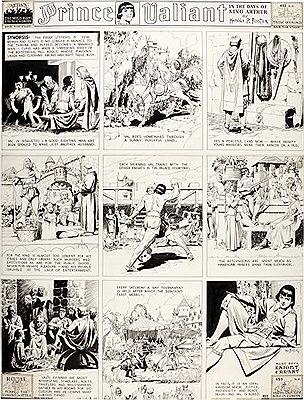 Born Halifax, Nova Scotia, Canada, 1892; died Spring Hill, FL, July 25, 1982. Illustrator. Cartoonist. Painter. Studied at the Art Institute of Chicago and the Chicago Academy of Fine Arts. Creator of the Tarzan cartoons and the Prince Valiant in the Days of King Arthur cartoon strip. Moved to Topeka from Chicago in 1936, his wife's hometown, and lived there three years. Moved to Evanston, IL in 1940, to Reading, CT in 1944, and finally to Spring Hill, FL in 1971.
Biography from the Archives of askART
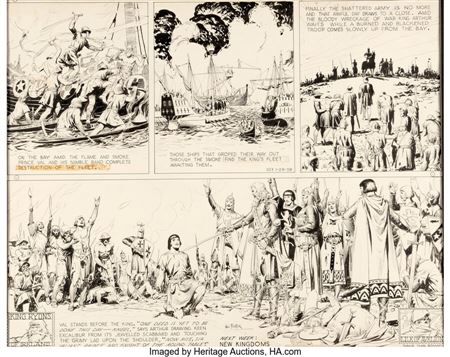 Hal Foster was conspicuously talented and greatly influential. He drew two of the best-looking adventure strips in comics, Tarzan and Prince Valiant. He was active in the field from the late 1920s to the early 1970s, and during that half-century reached a wide audience and influenced numerous younger artists, including Alex Raymond and Frank Frazetta.
Harold Rudolf Foster was born in Halifax, Nova Scotia. The family moved to Winnipeg when he was still in his teens. An outdoorsman, he went fur trapping as a teenager. After a variety of short-lived jobs, Foster decided to try to make some money with his knack for drawing; he landed a seasonal job illustrating the catalog of the Hudson Bay Company in Winnipeg. By 1921, he had made up his mind to go to the United States for formal art training. He spent 14 days bicycling from Winnipeg to Chicago, where he studied at the Art Institute and the Chicago Academy of Fine Arts. During the 1920s, he worked chiefly as an advertising illustrator and painted in his spare time.
When one of his ad clients got the notion of turning the Tarzan novels into comic strips, he approached Foster. Foster, whose idols were serious illustrators like Howard Pyle and E.A. Abbey, didnt have a very high opinion of the comics medium: "I thought I was prostituting my art . . . being a funny page artist." But he soon realized that he and his family could use the money. He illustrated a 10-week daily strip adaptation of Tarzan of the Apes, which started on January 7, 1929. Although the new jungle adventure strip was a success, Foster declined to continue with it and returned to commercial art.
In 1931, with the Depression in full force, he was persuaded to return to draw the recently launched Sunday Tarzan. "I didn't think much of Tarzan," he later admitted, "although a lot of people did." The full pages he drew were handsome, achieving a loose, relaxed cinematic quality that owed as much to the movies as it did to Howard Pyle.
Hal Fosters work began to attract increasing attention, and had an effect on the comics field. Coulton Waugh pointed out in The Comics, "The man was so good at his particular job that there remained little for subsequent workers to improve on, and very few had the ability to come anywhere near him." Foster attracted the attention of other syndicates as well. "King Features first approached me because William Randolph Hearst liked my Tarzan artwork so much," Foster once explained. "They wanted me to do a strip and offered to create one for me. I refused at first because I wanted to create my own. Prince Valiant was the result." Foster had originally called the strip Derek, Son of Thule, but King president Joseph Connolly came up with the livelier title.
In 1936, he moved from Chicago to Topeka, Kansas, his wife's hometown, where the family lived for three years.
Foster worked on the new page for two years before showing it to KFS, which launched it in 1937. He kept doing the Tarzan page until then. "The medieval period gave me scope," he admitted. "That's why I picked it. At first, I thought of the Crusades, but the theme was too limited. With Prince Valiant, I have leeway of almost three centuries due to the lack of written records." By blurring the dates of his own Arthurian saga several hundred years from the supposed dates of Arthur's alleged reign, he had better costumes and pageantry to draw on.
While many artists waited at the drawing board for inspiration, Foster traveled widely doing research. "Research has taken me to most of the countries Val has visited to gather authentic material," he once said. He also read extensively, explaining, "When reading fantasy and about the medieval period, sometimes just a phrase or a word will give me the idea for a plot." He started a page by writing the story in longhand. He drew big in a 23-inch by 34-inch format. Each intricate Sunday page usually took a full workweek.
The family had moved from Topeka to Evanston, Illinois in 1940, and to Reading, Connecticut in 1944.
He often employed an assistant, one of who was longtime Superman artist, Wayne Boring. In 1970, he turned the drawing of Prince Valiant over to John Cullen Murphy, continuing to write the continuities. Foster retired officially in 1979; in 1971 he had moved to Spring Hill, Florida, where he died on July 25, 1982.
Source:
Ron Goulart, Editor, The Encyclopedia of American ComicsBiography from UMD Tweed Museum
Hal (Harold R.) Foster
(American, Halifax, Nova Scotia 1892 - 1981)
Painted 13 Mountie subjects between 1931-1945.
Hal Foster, well-known as the creator and illustrator of the Prince Valiant adventure comic strip, moved from his native Canada to Chicago in 1921 to study at the Chicago Art Institute. By the mid-1920s he established himself as an illustrator of advertising posters and magazine covers, including covers for Popular Mechanics. Foster worked as an assistant to the established illustrator and teacher J. Allen St. John, who had done illustrations for Edgar Rice Burroughs' Tarzan books.
In 1929, Foster was asked to do the drawings for a Tarzan adventure strip when St. John turned the job down. Foster's Tarzan was an instant success, and firmly established him as one of the leading illustrators of the day, with a beautiful drawing style that many others copied.
Growing tired of the Tarzan strip, Foster created his own adventure story, called Prince Valiant, which began in 1937, around the same time that Alex Raymond's Flash Gordon appeared. In 1931, Foster was the first artist commissioned by the Northwest Paper Company to produce Mountie illustrations for its advertising campaign.