Page loaded successfully. Showing biography for Hans Kinder.
Hans Kinder BIOGRAPHY
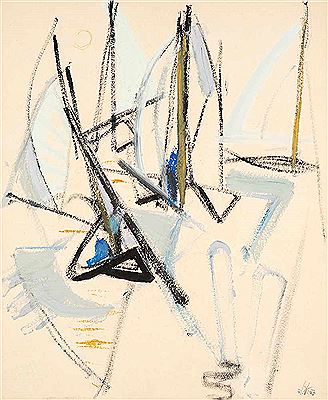
1900 Dresden - 1986 Dresden. Known for: Late Cubist painting and his explorations of light.
Hans Kinder was born on 6 August 1900 in Dresden, Germany, and died on 20 January 1986 in Dresden. He was an important representative of Dresden late Cubism, developing a personal language rooted in... Read full biography
Hans Kinder was born on 6 August 1900 in Dresden, Germany, and died on 20 January 1986 in Dresden. He was an important representative of Dresden late Cubism, developing a personal language rooted in fractured form, structured composition, and a distinct regional interpretation of the movement. His... Read full biography
Hans Kinder was born on 6 August 1900 in Dresden, Germany, and died on 20 January 1986 in Dresden. He was an important representative of Dresden late Cubism, developing a personal language rooted in fractured form, structured composition, and a distinct regional interpretation of the movement. His work consistently explored the effects of light, a focus shaped by his long summers painting on the Baltic coast in Ahrenshoop. Kinder attended the Dreikönigsgymnasium in Dresden and began his studies... Read full biography
Hans Kinder was born on 6 August 1900 in Dresden, Germany, and died on 20 January 1986 in Dresden. He was an important representative of Dresden late Cubism, developing a personal language rooted in fractured form, structured composition, and a distinct regional interpretation of the movement. His work consistently explored the effects of light, a focus shaped by his long summers painting on the Baltic coast in Ahrenshoop. Kinder attended the Dreikönigsgymnasium in Dresden and began his studies in 1916 at the Dresdner Kunstgewerbeschule. He later studied as a guest student at the Bauhaus Weimar in 1924 and continued his training at the Akademie der Künste Dresden beginning in 1925, becoming a master student of Max Feldbauer in 1926. His... Read full biography
Hans Kinder was born on 6 August 1900 in Dresden, Germany, and died on 20 January 1986 in Dresden. He was an important representative of Dresden late Cubism, developing a personal language rooted in fractured form, structured composition, and a distinct regional interpretation of the movement. His work consistently explored the effects of light, a focus shaped by his long summers painting on the Baltic coast in Ahrenshoop. Kinder attended the Dreikönigsgymnasium in Dresden and began his studies in 1916 at the Dresdner Kunstgewerbeschule. He later studied as a guest student at the Bauhaus Weimar in 1924 and continued his training at the Akademie der Künste Dresden beginning in 1925, becoming a master student of Max Feldbauer in 1926. His early life included military service in World War I, during which he was wounded and hospitalized until 1920, and he served again during World... Read full biography
Artist Biography
Biography page for Hans Kinder ((1900 - 1986)), known for Late Cubist painting and his explorations of light. Showing 2 biographical entries and 0 sample artworks.
Hans Kinder - Artist Info
About Hans Kinder
Biography from the Archives of askART
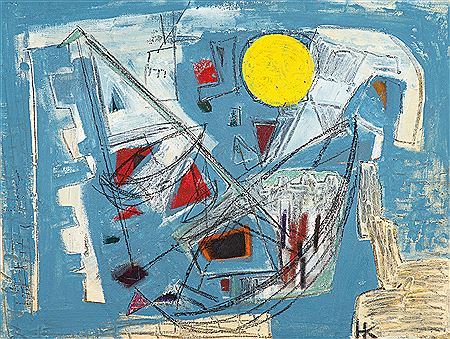 Hans Kinder was born on 6 August 1900 in Dresden, Germany, and died on 20 January 1986 in Dresden. He was an important representative of Dresden late Cubism, developing a personal language rooted in fractured form, structured composition, and a distinct regional interpretation of the movement. His work consistently explored the effects of light, a focus shaped by his long summers painting on the Baltic coast in Ahrenshoop.
Kinder attended the Dreikönigsgymnasium in Dresden and began his studies in 1916 at the Dresdner Kunstgewerbeschule. He later studied as a guest student at the Bauhaus Weimar in 1924 and continued his training at the Akademie der Künste Dresden beginning in 1925, becoming a master student of Max Feldbauer in 1926. His early life included military service in World War I, during which he was wounded and hospitalized until 1920, and he served again during World War II.
Kinder received the Großer Sächsischer Staatspreis twice, in 1928 and 1931, recognizing his achievements in painting. He joined the Neue Dresdner Sezession in 1932 and later became a member of the artist group Das Ufer in 1947. In 1942, he met Pablo Picasso in Paris, an encounter that he described as deeply influential.
After returning to Dresden in 1945, Kinder resumed freelance work and continued developing his theoretical ideas, publishing Erkenntnisse meiner Studien über die objektiven Wirkungsgesetze von Form und Farbe in 1953. He also completed major commissions, including interior artistic work for the Leipzig Opera (1958–1960), the Semperoper Dresden (1965), and the Komische Oper Berlin (1966–1967).
From 1957 onward, Kinder spent regular periods working in Ahrenshoop, maintaining an atelier on Grenzweg. A street in the town, Hans-Kinder-Weg, is named in his honor. His surviving oeuvre comprises around 1,500 works, including semi-abstract oil paintings, tempera works, gouaches, drawings, and architectural commissions such as the mural cycle Poem auf Dresden (1955–1956).
Collections:
Kupferstichkabinett Dresden
Galerie Neue Meister, Dresden
Nationalgalerie Berlin
Kunsthalle Rostock
Museum of the Visual Arts, Leipzig
Art Museum AhrenshoopBiography from Auktionshaus Satow
Hans Kinder was born in 1900 in Dresden, Germany, and died in 1986 in Ahrenshoop. He was an important representative of Dresden late Cubism, developing a personal language rooted in fractured form, structured composition, and a distinct regional interpretation of the movement. His work formed part of the modernist developments in Dresden, where late Cubist tendencies were explored through structure, light, and form.
Kinder studied at the Dresden School of Arts and Crafts and initially worked as a muralist before establishing himself as a freelance artist. He was a member of the Dresden Secession and spent summers painting in Ahrenshoop, capturing the shifting light of the Baltic Sea—an enduring focus throughout his practice. His works are held in numerous museums and galleries across Germany, reflecting his significance within 20th-century regional modernism.
Collections:
Kupferstichkabinett Dresden
Galerie Neue Meister, Dresden
Nationalgalerie Berlin
Kunsthalle Rostock
Museum of the Visual Arts, Leipzig
Art Museum Ahrenshoop