Page loaded successfully. Showing biography for Henry Barraud.
Henry Barraud BIOGRAPHY
1811 London, England - 1874 London, England. Known for: Figure and landscape painter, miniature.
The Barraud brothers, William and Henry, collaborated on a number of paintings, several of which were exhibited at the Royal Academy. William painted the horses and dogs, while Henry painted the... Read full biography
The Barraud brothers, William and Henry, collaborated on a number of paintings, several of which were exhibited at the Royal Academy. William painted the horses and dogs, while Henry painted the figures and landscapes. William Barraud began his professional life as a clerk in the where his father... Read full biography
The Barraud brothers, William and Henry, collaborated on a number of paintings, several of which were exhibited at the Royal Academy. William painted the horses and dogs, while Henry painted the figures and landscapes. William Barraud began his professional life as a clerk in the where his father worked. That occupied him only a short time, and he left to study animal painting with Abraham Cooper. An animal painting exhibited at the Royal Academy in 1929 brought William commissions. In 1830, he... Read full biography
The Barraud brothers, William and Henry, collaborated on a number of paintings, several of which were exhibited at the Royal Academy. William painted the horses and dogs, while Henry painted the figures and landscapes. William Barraud began his professional life as a clerk in the where his father worked. That occupied him only a short time, and he left to study animal painting with Abraham Cooper. An animal painting exhibited at the Royal Academy in 1929 brought William commissions. In 1830, he produced a portrait group of John Warde, "The Father of Foxhunters", on his favorite hunter with his best hounds. Requests for similar paintings, like The Old Surrey and Burstow Foxhounds, were accepted jointly by William and Henry. Henry had... Read full biography
The Barraud brothers, William and Henry, collaborated on a number of paintings, several of which were exhibited at the Royal Academy. William painted the horses and dogs, while Henry painted the figures and landscapes. William Barraud began his professional life as a clerk in the where his father worked. That occupied him only a short time, and he left to study animal painting with Abraham Cooper. An animal painting exhibited at the Royal Academy in 1929 brought William commissions. In 1830, he produced a portrait group of John Warde, "The Father of Foxhunters", on his favorite hunter with his best hounds. Requests for similar paintings, like The Old Surrey and Burstow Foxhounds, were accepted jointly by William and Henry. Henry had followed his older brother to a brief clerkship at the Customs House, after which he too sought formal art training in portraiture. Outliving... Read full biography
Artist Biography
Biography page for Henry Barraud ((1811 - 1874)), known for Figure and landscape painter, miniature. Showing 2 biographical entries and 0 sample artworks.
Henry Barraud - Artist Info
About Henry Barraud
Biography from the Archives of askART
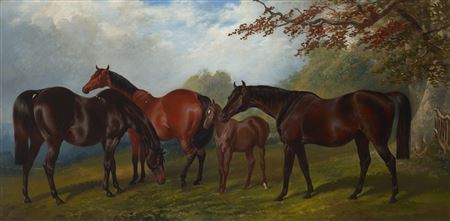
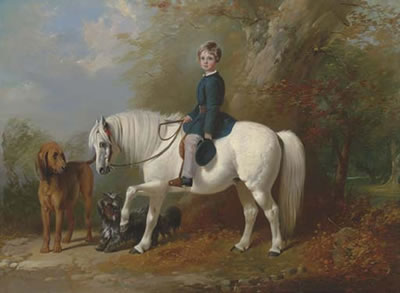 The Barraud brothers, William and Henry, collaborated on a number of paintings, several of which were exhibited at the Royal Academy. William painted the horses and dogs, while Henry painted the figures and landscapes.
William Barraud began his professional life as a clerk in the where his father worked. That occupied him only a short time, and he left to study animal painting with Abraham Cooper. An animal painting exhibited at the Royal Academy in 1929 brought William commissions. In 1830, he produced a portrait group of John Warde, "The Father of Foxhunters", on his favorite hunter with his best hounds. Requests for similar paintings, like The Old Surrey and Burstow Foxhounds, were accepted jointly by William and Henry.
Henry had followed his older brother to a brief clerkship at the Customs House, after which he too sought formal art training in portraiture. Outliving his brother by more than 20 years, he continued to paint sporting subjects, but also ventured into other areas such as his painting of three choristers.
Fox-hunting developed into a national sport during the first half of the 19th century in England. Public subscription packs, in well-defined hunt countries, replaced privately maintained packs of foxhounds and hunts on manorial estates. The Old Surrey, conveniently located near London, afforded sport for any who could pay to subscribe. The Surrey foxhounds later combined with the pack from Burstow. The Old Surrey and Burstow Foxhounds, signed and dated 1838, shows three members of the Hills family, ready to hunt, surrounded by 21 hounds and one terrier, all accurately portrayed.
Sporting paintings by both of the Barraud brothers, together and individually, were engraved, and many appeared as illustrations in the sporting magazines.
Source:
David Freeman
Freemanart ConsultancyBiography from Setdart
Barraud was born in London, one of seventeen children of William Francis Barraud (1783-1833), a Customs clerk, and Sophia (née) Hull. His maternal grandfather, Thomas Hull, was a miniature painter. The family was of French Huguenot origin who had come to England at the time of the revocation of the Edict of Nantes.
His older brother, William Barraud, became a noted animal painter. Like his brother, Henry excelled in animal painting, but his works were mainly portraits, with horses and dogs, and thematic paintings, such as "The Pope Blessing the Animals" (painted in 1842), many of which were executed jointly with his brother. He exhibited at the Royal Academy from 1833 to 1859, and at the British Institution and the Society of British Artists between 1831 and 1868.
The two brothers shared a studio from 1835 until William's death in 1850, and in their joint paintings William painted the animals and Henry the figures. They also produced a book entitled "Sketches of Figures and Animals", (H. Graves and Co., c.1850). Barraud's most popular works were "We Praise Thee, O God"; "London Station, a Scene in Hyde Park"; "The Cricket Ground at Lord's"; and "The Lobby of the House of Commons" (painted in 1872), all of which were engraved or self-painted.
He was also commissioned for several royal portraits. His son Francis Barraud (1856-1924) was also an artist, best remembered for his painting of the dog Nipper on the His Master's Voice record label.