Page loaded successfully. Showing biography for Herbert Gurschner.
Herbert Gurschner BIOGRAPHY
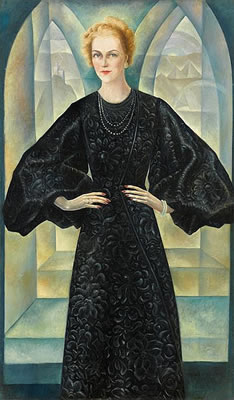
1901 Innsbruck, Austria - 1975. Known for: Painting and stage design.
Herbert Gurschner, who was born in the Tyrolean capital Innsbruck in 1901, received his first training at the arts and crafts school in his place of birth and then went to the Munich art academy. His... Read full biography
Herbert Gurschner, who was born in the Tyrolean capital Innsbruck in 1901, received his first training at the arts and crafts school in his place of birth and then went to the Munich art academy. His oeuvre is partly shaped by his Tyrolean homeland. The main themes here are views of the... Read full biography
Herbert Gurschner, who was born in the Tyrolean capital Innsbruck in 1901, received his first training at the arts and crafts school in his place of birth and then went to the Munich art academy. His oeuvre is partly shaped by his Tyrolean homeland. The main themes here are views of the surroundings and show rural life. Through his English wives he finally lives and works in London, where he frequented aristocratic, economic and cultural circles and so his artistic success with exhibition... Read full biography
Herbert Gurschner, who was born in the Tyrolean capital Innsbruck in 1901, received his first training at the arts and crafts school in his place of birth and then went to the Munich art academy. His oeuvre is partly shaped by his Tyrolean homeland. The main themes here are views of the surroundings and show rural life. Through his English wives he finally lives and works in London, where he frequented aristocratic, economic and cultural circles and so his artistic success with exhibition activities took the right course. He became one of the most sought-after portraitists in European society. His portraits include, among others, Lawrence of Arabia and King Gustav of Sweden. With the Second World War he finally received British citizenship... Read full biography
Herbert Gurschner, who was born in the Tyrolean capital Innsbruck in 1901, received his first training at the arts and crafts school in his place of birth and then went to the Munich art academy. His oeuvre is partly shaped by his Tyrolean homeland. The main themes here are views of the surroundings and show rural life. Through his English wives he finally lives and works in London, where he frequented aristocratic, economic and cultural circles and so his artistic success with exhibition activities took the right course. He became one of the most sought-after portraitists in European society. His portraits include, among others, Lawrence of Arabia and King Gustav of Sweden. With the Second World War he finally received British citizenship and served in the army. After the war, however, his participation in exhibitions fell sharply, as he now devoted himself more to stage design.... Read full biography
Artist Biography
Biography page for Herbert Gurschner ((1901 - 1975)), known for Painting and stage design. Showing 3 biographical entries and 0 sample artworks.
Herbert Gurschner - Artist Info
About Herbert Gurschner
Biography from Galerie Bassenge, Berlin
An elegant gentleman, slim and slender: This is how Gustav Adolf, Hereditary Prince of Sweden, presents himself. He was not only highly educated but also athletic, winning numerous horsemanship, obstacle, dressage and show jumping competitions and being one of Sweden's elite in saber fencing. That is why Gurschner shows him in a tennis outfit, with a racket in his hand, sitting on the edge of a tennis court in a southern landscape.
Razor-sharp, sensitively drawn contours separate the figure in the foreground from the background landscape. Carefully painted, frequently dotted inner structures characterize the pictorial objects in the foreground, while in the other pictorial levels the depiction is captured more summarily with a broad brush. The glaringly bright light makes all color values ??appear in delicate, lively, finely graded and effectively contrasted pastel tones.Biography from Karl & Faber Kunstauktionen
Herbert Gurschner, who was born in the Tyrolean capital Innsbruck in 1901, received his first training at the arts and crafts school in his place of birth and then went to the Munich art academy. His oeuvre is partly shaped by his Tyrolean homeland. The main themes here are views of the surroundings and show rural life. Through his English wives he finally lives and works in London, where he frequented aristocratic, economic and cultural circles and so his artistic success with exhibition activities took the right course. He became one of the most sought-after portraitists in European society.
His portraits include, among others, Lawrence of Arabia and King Gustav of Sweden. With the Second World War he finally received British citizenship and served in the army. After the war, however, his participation in exhibitions fell sharply, as he now devoted himself more to stage design. The composition of the present woman portrait is reminiscent of portraits from the Renaissance such as the "Mona Lisa". The lady, Princess Pilar of Bavaria, depicted here in elongated proportions in the finest style, is one of the artist's most famous portraits. The sitter with a thoughtful look wears a simple, bright blue dress and sits directly opposite the viewer. With her hands crossed, she sits in a window niche in front of a landscape view with suggested castles on high hills to the right and left.
The artist takes up the blue of the landscape again in the color of the princess's eyes and continues to direct the viewer's gaze to the two turquoise rings on her two graceful hands. A certain distance and coolness emanates from the sitter, which is typical of the art of New Objectivity of the 1920s / 30s. Desmond Chapman-Huston writes about the portrait: “Against a background of the Bavarian Alps and Lake Starnberg - where her unhappy ancestor King Ludwig II. tragically found his rest - the painter has placed the stilled figure of the Princess, little austere and withdrawn, with the blue eyes of the Wittelsbachs and the Bourbons d'Espagne, red-gold hair and marvelous folded hands. Behind a smile, as subtle and unrevealing as that of Mona Lisa herself, is the history of the House of Wittelsbach for eight hundred years (...). ”(Widder p. 43/44). To Chapman-Huston's book“ Bavaria the Incomparable ”(1934) María del Pilar, Princess of Bavaria (1891–1987) worked with, so here he provided a very personal description of the girlfriend.Biography from Auctionata
Herbert Gurschner was born in Innsbruck in 1901. He started his artistic training in 1917 and completed his studies at the art academy in Munich, between 1918 and 1920. His first exhibitions were organized in Innsbruck.
In 1929 he became a member of the Fine Art Society in London and experienced his breakthrough in Britain. He acquired British citizenship at the time of the Second World War and served at the British Army. His later artistic output was mainly focused on stage design. Gurschner died in 1975.