Page loaded successfully. Showing biography for Herman Henstenburgh.
Herman Henstenburgh BIOGRAPHY
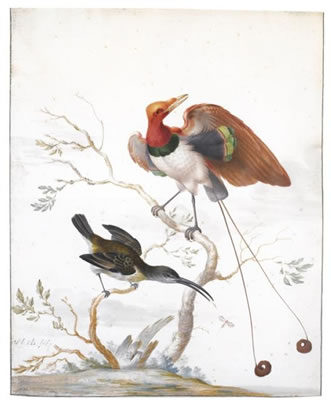
1667 Hoorn, North Holland - 1726 Hoorn, North Holland. Known for: Still life painting and drawing, birds, insects, fruit and flowers.
Herman Henstenburgh (or Henstenburg) was a pupil of the natural history draughtsman Johannes Bronckhorst, whose studio in Hoorn he entered in 1683, and who also trained the young artist in his other... Read full biography
Herman Henstenburgh (or Henstenburg) was a pupil of the natural history draughtsman Johannes Bronckhorst, whose studio in Hoorn he entered in 1683, and who also trained the young artist in his other vocation as a pastry baker. Indeed, throughout his life Henstenburgh seems to have worked as a baker... Read full biography
Herman Henstenburgh (or Henstenburg) was a pupil of the natural history draughtsman Johannes Bronckhorst, whose studio in Hoorn he entered in 1683, and who also trained the young artist in his other vocation as a pastry baker. Indeed, throughout his life Henstenburgh seems to have worked as a baker in Hoorn, a relative artistic backwater, and his watercolours, despite being greatly admired, remained something of a hobby. The influence of Bronckhorst, as well as of Pieter Holsteyn the Younger,... Read full biography
Herman Henstenburgh (or Henstenburg) was a pupil of the natural history draughtsman Johannes Bronckhorst, whose studio in Hoorn he entered in 1683, and who also trained the young artist in his other vocation as a pastry baker. Indeed, throughout his life Henstenburgh seems to have worked as a baker in Hoorn, a relative artistic backwater, and his watercolours, despite being greatly admired, remained something of a hobby. The influence of Bronckhorst, as well as of Pieter Holsteyn the Younger, was to be important for Henstenburgh, particularly on his choice of subjects. As a draughtsman, he specialized in depictions of birds, insects, flowers and fruit, usually drawn on vellum. The contemporary biographer Johan van Gool noted that... Read full biography
Herman Henstenburgh (or Henstenburg) was a pupil of the natural history draughtsman Johannes Bronckhorst, whose studio in Hoorn he entered in 1683, and who also trained the young artist in his other vocation as a pastry baker. Indeed, throughout his life Henstenburgh seems to have worked as a baker in Hoorn, a relative artistic backwater, and his watercolours, despite being greatly admired, remained something of a hobby. The influence of Bronckhorst, as well as of Pieter Holsteyn the Younger, was to be important for Henstenburgh, particularly on his choice of subjects. As a draughtsman, he specialized in depictions of birds, insects, flowers and fruit, usually drawn on vellum. The contemporary biographer Johan van Gool noted that Henstenburgh’s earliest works were of birds and insects, and that it was not until around 1689 that he also began to produce finished watercolour drawin... Read full biography
Artist Biography
Biography page for Herman Henstenburgh ((1667 - 1726)), known for Still life painting and drawing, birds, insects, fruit and flowers. Showing 2 biographical entries and 0 sample artworks.
Herman Henstenburgh - Artist Info
About Herman Henstenburgh
Biography from the Archives of askART
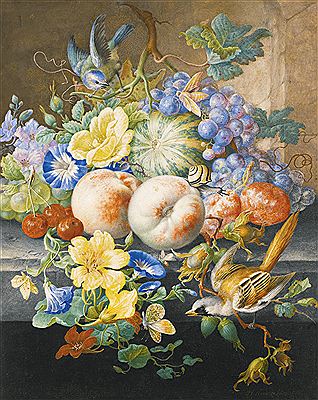 Herman Henstenburgh (or Henstenburg) was a pupil of the natural history draughtsman Johannes Bronckhorst, whose studio in Hoorn he entered in 1683, and who also trained the young artist in his other vocation as a pastry baker. Indeed, throughout his life Henstenburgh seems to have worked as a baker in Hoorn, a relative artistic backwater, and his watercolours, despite being greatly admired, remained something of a hobby. The influence of Bronckhorst, as well as of Pieter Holsteyn the Younger, was to be important for Henstenburgh, particularly on his choice of subjects.
As a draughtsman, he specialized in depictions of birds, insects, flowers and fruit, usually drawn on vellum. The contemporary biographer Johan van Gool noted that Henstenburgh’s earliest works were of birds and insects, and that it was not until around 1689 that he also began to produce finished watercolour drawings of fruit and flowers. Van Gool further commented that the artist was able to achieve a particular richness and intensity of colour in his drawings by experimenting with pigments to perfect a new form of watercolour technique.
Through the intervention of the painter Mattheus Terwesten, Henstenburgh was introduced to a number of important local collectors, notably Pieter van den Brande. Another significant patron was the botanical collector Agneta Blok, a collector of exotic plants and flowers who also commissioned natural history drawings of animals and birds from Bronckhorst, Holsteyn, Herman Saftleven and Maria Sibylla Merian. Further afield, the Grand Duke Cosimo III de’Medici in Florence is known to have owned three drawings by Henstenburgh as early as 1700.
Henstenburgh was never able to make a living from his art, however, and as Van Gool relates, ‘There he sat in his native town, with all his works of art about him, as if in oblivion, for rarely did he receive a visit from an art-lover.’ It was not until several years after his death that Henstenburgh’s drawings became especially popular with collectors, particularly in England. Van Gool notes that in 1750 he saw the Rotterdam collectors Jan and Pieter Bisschop, at an Amsterdam auction, pay 105 guilders for one of the artist’s watercolours of fruit. Henstenburgh’s son Antoni inherited his business as a pastry chef and was, like his father, also an amateur draughtsman of bird and insect subjects, and sometimes copied his father’s works.
Source:
Website of Stephen Ongpin Fine Art, London, EnglandBiography from Sotheby's New York
Herman Henstenburgh was one of three notable still-life and natural history artists from Hoorn, who established that town as a centre for their very distinctive, highly detailed and decorative watercolor and gouache style. All three also famously followed parallel careers as pastry-bakers.
The eldest of the these artists was Johannes Bronckhorst (1648-1727), who was Herman Henstenburgh's teacher as both artist and baker. The trio was completed by Herman's son, Anton Henstenburgh (1695-1781).
According to the near-contemporary chronicler, Johan van Gool, Henstenburgh started out by depicting birds and landscapes, and then broadened his repertoire after about 1695 to include flowers and fruit pieces. Van Gool went on to explain the extraordinary richness of Henstenburgh's colors by claiming that the artist had invented a new type of watercolor.