Page loaded successfully. Showing biography for Hermann Huber.
Hermann Huber BIOGRAPHY
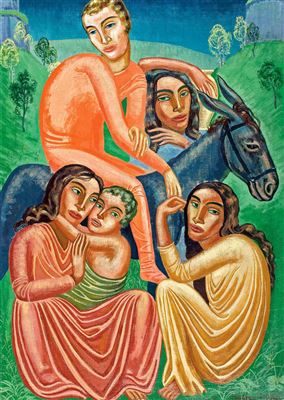
1888 Wiedikon, Switzerland - 1967 Hirzel, Zurich, Switzerland. Known for: Impressionist paintings.
Swiss artist Hermann Huber is associated with the circle of Die Brücke and the Berlin Secession. Born 13.9.1888 in Wiedikon (Zurich), died 9.12.1967 in Hirzel, Zurich. Extremely talented at a young... Read full biography
Swiss artist Hermann Huber is associated with the circle of Die Brücke and the Berlin Secession. Born 13.9.1888 in Wiedikon (Zurich), died 9.12.1967 in Hirzel, Zurich. Extremely talented at a young age, Huber joined schoolmates Reinhold Kündig, Paul Bodmer and others, attending the Zurich... Read full biography
Swiss artist Hermann Huber is associated with the circle of Die Brücke and the Berlin Secession. Born 13.9.1888 in Wiedikon (Zurich), died 9.12.1967 in Hirzel, Zurich. Extremely talented at a young age, Huber joined schoolmates Reinhold Kündig, Paul Bodmer and others, attending the Zurich Kunstgewerbe with Otto Meyer in 1904 - 1905, beginning a lifelong association with Meyer. Huber traveled swiftly, continuing at Düsseldorf, Berlin and Munich (1906-1907), then in Rome (1908-1909), having been... Read full biography
Swiss artist Hermann Huber is associated with the circle of Die Brücke and the Berlin Secession. Born 13.9.1888 in Wiedikon (Zurich), died 9.12.1967 in Hirzel, Zurich. Extremely talented at a young age, Huber joined schoolmates Reinhold Kündig, Paul Bodmer and others, attending the Zurich Kunstgewerbe with Otto Meyer in 1904 - 1905, beginning a lifelong association with Meyer. Huber traveled swiftly, continuing at Düsseldorf, Berlin and Munich (1906-1907), then in Rome (1908-1909), having been apprenticed to graphic draftsman Orell Füssli in 1906, then on to Dusseldorf and to Berlin. In 1906/07 he joinrd Meyer-Amden in Munich where he attended private study with Moritz Heimann. Here he associates with the circle of Alexej Jawlensky,... Read full biography
Swiss artist Hermann Huber is associated with the circle of Die Brücke and the Berlin Secession. Born 13.9.1888 in Wiedikon (Zurich), died 9.12.1967 in Hirzel, Zurich. Extremely talented at a young age, Huber joined schoolmates Reinhold Kündig, Paul Bodmer and others, attending the Zurich Kunstgewerbe with Otto Meyer in 1904 - 1905, beginning a lifelong association with Meyer. Huber traveled swiftly, continuing at Düsseldorf, Berlin and Munich (1906-1907), then in Rome (1908-1909), having been apprenticed to graphic draftsman Orell Füssli in 1906, then on to Dusseldorf and to Berlin. In 1906/07 he joinrd Meyer-Amden in Munich where he attended private study with Moritz Heimann. Here he associates with the circle of Alexej Jawlensky, Marianne von Werefkin and Paul Klee. In 1908/09 Huber intermittently works with Eduard Bi... Read full biography
Artist Biography
Biography page for Hermann Huber ((1888 - 1967)), known for Impressionist paintings. Showing 1 biographical entries and 0 sample artworks.
Hermann Huber - Artist Info
About Hermann Huber
Biography from the Archives of askART
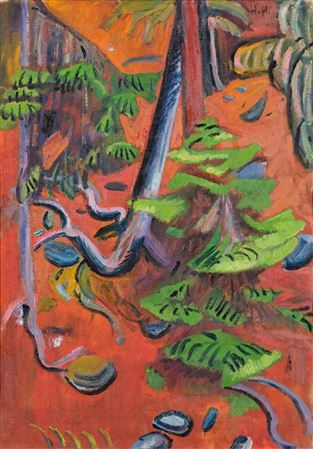 Swiss artist Hermann Huber is associated with the circle of Die Brücke and the Berlin Secession.
Born 13.9.1888 in Wiedikon (Zurich), died 9.12.1967 in Hirzel, Zurich. Extremely talented at a young age, Huber joined schoolmates Reinhold Kündig, Paul Bodmer and others, attending the Zurich Kunstgewerbe with Otto Meyer in 1904 - 1905, beginning a lifelong association with Meyer. Huber traveled swiftly, continuing at Düsseldorf, Berlin and Munich (1906-1907), then in Rome (1908-1909), having been apprenticed to graphic draftsman Orell Füssli in 1906, then on to Dusseldorf and to Berlin. In 1906/07 he joinrd Meyer-Amden in Munich where he attended private study with Moritz Heimann. Here he associates with the circle of Alexej Jawlensky, Marianne von Werefkin and Paul Klee. In 1908/09 Huber intermittently works with Eduard Bick and the German painter Viktor Schulte in Rome.
Huber returned to Switzerland a founding member of the artistic group Der Moderne Bund (1910), which later included Willi Baumeister and Hans Arp. With his father Willibrod (Jan Verkade), he collaborated in the murals of the Benedictine Abbey of Dormition, on Mount Zion in Jerusalem (1910-1911). He remained in Algiers and Paris (1911-1912), where he met Wilhelm Gimmi, then in Amden again with Otto Meyer-Amden (1912-1913). Huber first gained recognition the first prize for decoration of the Senate of the University of Zurich (1913). He became acquainted with Walter Gropius and Vassily Kandinsky in Weimar (Bauhaus) in 1922. Huber became most noted for his expressionist oils and elegant early etchings exhibiting a kind of "cloisonnisme" suffused with the influence of Die Brücke. These continued the Jugendstil tradition of Hodler but embued Huber's encounter with the German Expressionists and French Fauves in style and form. These graphic works of his earliest period were exhibited at the Berlin Sezession (1911, his membership from 1912-1918), by Bruno Cassirer later in 1923, and characterized by Curt Glaser. Huber also completed frescos, in particular with the govenrment house of Zurich of the Swiss National Bank (1923) and at the parochial house of Zurich-Wiedikon (1925). After having lived in Schooren (Community Kilchberg ZH, 1925-1933), with stays in Berlin (1927-1928), he remained in Sihlbrugg.
Sources:
Hans Trog (Hermann Huber, 1924, Potsdam) & Walter Kern (Hermann Huber, 1939, Zurich).
Information courtesy of Mike Wied