Hermann Scherer BIOGRAPHY
Artist Biography
Biography page for Hermann Scherer ((1893 - 1927)), known for Painting and sculpture. Showing 1 biographical entries and 0 sample artworks.
Hermann Scherer - Artist Info
About Hermann Scherer
Biography from Dobiaschofsky Auktionen
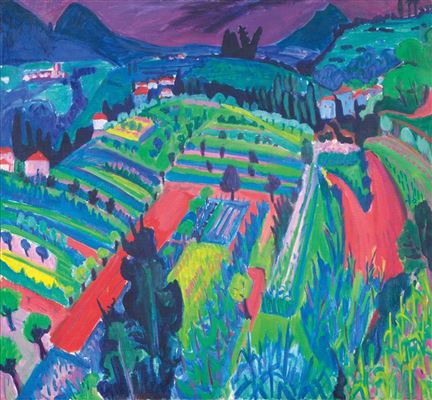
After completing an apprenticeship as a stonemason in Lörrach, Hermann Scherer moved to Basel in 1910/11, where he found work with the sculptor Carl Gutknecht. In 1912/13, he spent years traveling in Cologne and Koblenz. During the First World War, he lived in Basel again and worked in the studio of the sculptor and painter Otto Roos. In the wake of the controversy surrounding Ferdinand Hodler's "View into Infinity," which erupted in 1917, he and other young artists vehemently campaigned for the Kunstmuseum to purchase the work. From 1918 to 1921, he worked as an assistant to Carl Burckhardt, the most important Swiss sculptor at the time. A seminal experience was Scherer's visit to the Munch retrospective at the Zurich Kunsthaus in 1922, which was accompanied by polemical controversy. In the wake of this exhibition, he also dabbled in painting and, in the spring of 1923, created his first landscape compositions. In June of the same year, he met Ernst Ludwig Kirchner at a group exhibition at the Basel Kunsthalle. He stayed at Kirchner's "Haus in den Lärchen" near Davos for three weeks shortly thereafter, and again in the spring of 1924. Together with the great Expressionist, he painted mountain motifs and created wood sculptures. On New Year's Eve 1924, he founded the artists' association "Rot-Blau" (Red-Blue) with Albert Müller and Paul Camenisch, which Werner Neuhaus joined a few days later. After participating in exhibitions in Basel and Zurich, Scherer presented his work at the International Art Exhibition in Dresden in June 1926, thus gaining his first exposure to the German market, a market that held great promise for his artistic work. A serious illness in the autumn of 1926, from which Hermann Scherer died a few months later, brought his promising artistic career to an abrupt end.