Page loaded successfully. Showing biography for Hernando Vines.
Hernando Vines BIOGRAPHY
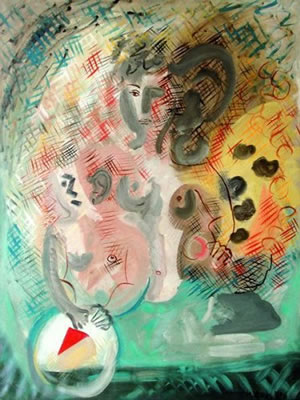
1904 - 1993 Madrid, Spain. Known for: Painting.
Hernando Vines lived from 1904 and 1993. Viñes was one of the historical avant-garde painters. As the critic Fernando Calvo Serraller notes in the article which he published in the newspaper El País... Read full biography
Hernando Vines lived from 1904 and 1993. Viñes was one of the historical avant-garde painters. As the critic Fernando Calvo Serraller notes in the article which he published in the newspaper El País on the painter´s death, Viñes was one of those who: “in the decades between the wars, developed an... Read full biography
Hernando Vines lived from 1904 and 1993. Viñes was one of the historical avant-garde painters. As the critic Fernando Calvo Serraller notes in the article which he published in the newspaper El País on the painter´s death, Viñes was one of those who: “in the decades between the wars, developed an aesthetic between post-cubism and surrealism, but, above all, a refined, modern pictorial taste, as can be clearly seen in the paintings of Bores, Peinado, Manuel Ángeles Ortiz, Cossío, De la Serna and... Read full biography
Hernando Vines lived from 1904 and 1993. Viñes was one of the historical avant-garde painters. As the critic Fernando Calvo Serraller notes in the article which he published in the newspaper El País on the painter´s death, Viñes was one of those who: “in the decades between the wars, developed an aesthetic between post-cubism and surrealism, but, above all, a refined, modern pictorial taste, as can be clearly seen in the paintings of Bores, Peinado, Manuel Ángeles Ortiz, Cossío, De la Serna and Viñes himself.” The painting which we present comes from a very significant moment in Viñes´ artistic life. He had been living in Paris since 1919, he initially trained in the painter Maurice Denis´ workshop of sacred art, as well as studying... Read full biography
Hernando Vines lived from 1904 and 1993. Viñes was one of the historical avant-garde painters. As the critic Fernando Calvo Serraller notes in the article which he published in the newspaper El País on the painter´s death, Viñes was one of those who: “in the decades between the wars, developed an aesthetic between post-cubism and surrealism, but, above all, a refined, modern pictorial taste, as can be clearly seen in the paintings of Bores, Peinado, Manuel Ángeles Ortiz, Cossío, De la Serna and Viñes himself.” The painting which we present comes from a very significant moment in Viñes´ artistic life. He had been living in Paris since 1919, he initially trained in the painter Maurice Denis´ workshop of sacred art, as well as studying drawing at the Académie de la Grande Chaumière, to later be moved by his own restless avant-garde spirit to train at André Lhote... Read full biography
Artist Biography
Biography page for Hernando Vines ((1904 - 1993)), known for Painting. Showing 1 biographical entries and 0 sample artworks.
Hernando Vines - Artist Info
About Hernando Vines
Biography from La Suite Subastas
Hernando Vines lived from 1904 and 1993. Viñes was one of the historical avant-garde painters. As the critic Fernando Calvo Serraller notes in the article which he published in the newspaper El País on the painter´s death, Viñes was one of those who: “in the decades between the wars, developed an aesthetic between post-cubism and surrealism, but, above all, a refined, modern pictorial taste, as can be clearly seen in the paintings of Bores, Peinado, Manuel Ángeles Ortiz, Cossío, De la Serna and Viñes himself.” The painting which we present comes from a very significant moment in Viñes´ artistic life.
He had been living in Paris since 1919, he initially trained in the painter Maurice Denis´ workshop of sacred art, as well as studying drawing at the Académie de la Grande Chaumière, to later be moved by his own restless avant-garde spirit to train at André Lhote´s and Severini´s studios. In 1923, thanks to his uncle, the renowned pianist Ricardo Viñes, Manuel de Falla commissioned him to design the sets and figurines, alongside Manuel Ángeles Ortiz, for the Parisian premiere of his puppet opera, “El retablo de Maese Pedro”. Through this job he got to know Luis Buñuel, who became a lifelong friend and was artistic director for the Amsterdam production.
A year later he met the art critics Teriade and Christian Zervos, founder and director of Cahiers d'Art, a magazine which had become the greatest exponent of avant-garde art and architecture of the time. Zervos published numerous articles praising the quality of Viñes´ output. The aesthetic climate of Paris in the 20´s is summarised very well in Ana Vázquez de Parga´s text for the catalogue of the exhibition “Istmos. Spanish avant-garde artists 1915-1936” which she curated: “From 1925 to 1927, through the painters who are already in contact with Paris, “neo-cubism” appeared, strongly influenced by Braque´s painting, and which, from 1927-29, became the so-called “poetry-painting” or “poetic-plastic” tendency, which seems to have imposed itself since then on the circle that is close to Picasso, further championed by Zervos and Tériade, in the “Cahiers d’Art”.
Borès, Viñes and Cossío are at the head of the movement, and a fair number of Spanish artists have been dragged along with them, both inside and outside our borders.” In 1929 Viñes participated in the exhibition at the Botanical Garden in Madrid in 1929, where Spanish painters that were working in Paris were introduced for the first time. Work by other of his greatest friends and comrades such as Bores, Cossío, Gris, de la Serna, Olivares, Peinado, Picasso, Pruna, Manolo, Gargallo, Fenosa, etc. was also included in the exhibition. During these years he participated in numerous individual and collective exhibitions alongside the most important artists of the period, Bores, Picasso and André Beaudin habitually shared exhibitions with Hernando Viñes.
On his trips to Madrid he met Generation 27 artists such as Rafael Alberti and Benjamín Palencia. His work can be found at the Reina Sofía National Art Museum in Madrid, the Museo Patio Herreriano Museum in Valladolid, the Pompidou Centre in Paris, the Musée d'Art Moderne de la Ville in Paris, Musée Zervos in Vézelay, Artium, The Basque Museum-Centre of Contemporary Art, Vitoria-Gasteiz, The Prague Museum of Contemporary Art, the Contemporary Art Museum of Buenos Aires etc.