Page loaded successfully. Showing biography for Horacio Butler.
Horacio Butler BIOGRAPHY
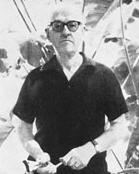
1897 Buenes Aires, Argentina - 1983 Buenes Aires, Argentina. Known for: Abstract, surreal paintings, sculpture, tapestry design, set design, teaching.
Horacio Butler was born in Buenos Aires in 1897. After a brief stint in the classrooms of the Faculty of Architecture and the Augusto Bolognini Academy, in 1915 he entered the National Academy of... Read full biography
Horacio Butler was born in Buenos Aires in 1897. After a brief stint in the classrooms of the Faculty of Architecture and the Augusto Bolognini Academy, in 1915 he entered the National Academy of Fine Arts where he made friendships that would last his lifetime: Héctor Basaldúa and Aquiles Badi -and... Read full biography
Horacio Butler was born in Buenos Aires in 1897. After a brief stint in the classrooms of the Faculty of Architecture and the Augusto Bolognini Academy, in 1915 he entered the National Academy of Fine Arts where he made friendships that would last his lifetime: Héctor Basaldúa and Aquiles Badi -and colleagues from " la Bolognini "- besides Lorenzo Gigli, Alfredo Bigatti, Antonio Gargiulo, Lino Enea Spilimbergo, Pedro Domínguez Neira and Emiliano Aguirre. Disillusioned by the plein-air,... Read full biography
Horacio Butler was born in Buenos Aires in 1897. After a brief stint in the classrooms of the Faculty of Architecture and the Augusto Bolognini Academy, in 1915 he entered the National Academy of Fine Arts where he made friendships that would last his lifetime: Héctor Basaldúa and Aquiles Badi -and colleagues from " la Bolognini "- besides Lorenzo Gigli, Alfredo Bigatti, Antonio Gargiulo, Lino Enea Spilimbergo, Pedro Domínguez Neira and Emiliano Aguirre. Disillusioned by the plein-air, naturalist teaching received in the Academy, in 1922 he started the trip to Europe thanks to the financial help of Rosa Butler, his paternal aunt. He settled in the artistic colony of Worpswede, near Bremen, Germany and there, between the bohemian and the... Read full biography
Horacio Butler was born in Buenos Aires in 1897. After a brief stint in the classrooms of the Faculty of Architecture and the Augusto Bolognini Academy, in 1915 he entered the National Academy of Fine Arts where he made friendships that would last his lifetime: Héctor Basaldúa and Aquiles Badi -and colleagues from " la Bolognini "- besides Lorenzo Gigli, Alfredo Bigatti, Antonio Gargiulo, Lino Enea Spilimbergo, Pedro Domínguez Neira and Emiliano Aguirre. Disillusioned by the plein-air, naturalist teaching received in the Academy, in 1922 he started the trip to Europe thanks to the financial help of Rosa Butler, his paternal aunt. He settled in the artistic colony of Worpswede, near Bremen, Germany and there, between the bohemian and the cultivation of a contemplative spirit, he made contact with the expressionist painting while knowing the work of Cézanne, an artist who lef... Read full biography
Artist Biography
Biography page for Horacio Butler ((1897 - 1983)), known for Abstract, surreal paintings, sculpture, tapestry design, set design, teaching. Showing 1 biographical entries and 0 sample artworks.
Horacio Butler - Artist Info
About Horacio Butler
Biography from the Archives of askART
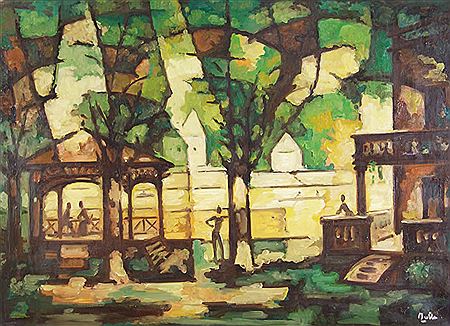 Horacio Butler was born in Buenos Aires in 1897. After a brief stint in the classrooms of the Faculty of Architecture and the Augusto Bolognini Academy, in 1915 he entered the National Academy of Fine Arts where he made friendships that would last his lifetime: Héctor Basaldúa and Aquiles Badi -and colleagues from " la Bolognini "- besides Lorenzo Gigli, Alfredo Bigatti, Antonio Gargiulo, Lino Enea Spilimbergo, Pedro Domínguez Neira and Emiliano Aguirre.
Disillusioned by the plein-air, naturalist teaching received in the Academy, in 1922 he started the trip to Europe thanks to the financial help of Rosa Butler, his paternal aunt.
He settled in the artistic colony of Worpswede, near Bremen, Germany and there, between the bohemian and the cultivation of a contemplative spirit, he made contact with the expressionist painting while knowing the work of Cézanne, an artist who left a deep impression on his career
In post-war Germany, demoralized and defeated, the young artist saw his modest resources transformed into a small fortune that allowed him to remain in Europe without pressure. He attended concerts, theaters and museums with enthusiasm. He discovered new possibilities of artwork with exposure to the work of Van Gogh, Renoir, Chagall and Paula Modershon.
After spending six months in Worpswede, after a brief experience in Paris, a brief stay in Vienna and a trip to Milan - always in the company of Badi - he decided to settle in the light city of Paris where he occupied a workshop at 51 bis, rue Cler .
Almost immediately he started activities: he alternated the practice of live models in the Academy of the Grande Chaumiére with the classes taught in the workshop of André Lhote. After a while, he decided to do another learning experience under the direction of Othon Friesz. There, he was exposed to the notions of construction and synthesis, and through Lhote learned the sense of unity, which integrates light, figure and background into a harmonious and expressive whole. In this way and with a very attentive look at the art of rebirth, Butler became part of the new realism of the School of Paris.
Meanwhile, with Argentine companions, he spent much time in Montparnasse.
In 1928 he returned briefly to Buenos Aires to organize the First Modern Painting Salon in the rooms of the Friends of Art Association. Between 1923 and 1931, he made successive trips to Cagnes, first, and Sanary, later, spending summer seasons in these small villages of the French midi. At the same time, from 1929 he began to spend time in the halls of Autumn and the Tuileries of Paris.
A collective exhibition held at the Zak Gallery, in 1930, allowed him to show works with Joaquín Torres García, José C. Orozco and Diego Ribera. At the same time he worked on his paintings, he also made small sculptures in metal.
In 1933, with the company of the singers Jane Bathori and Jacqueline Ibels, Butler went to Buenos Aires. That year, already installed in that city, he made his first solo exhibition at Amigos del Arte where he included, in addition to paintings, stage models. Through the mediation of Estela Mora de Cárcano, the National Museum of Fine Arts acquired the painting La siesta, from 1927.
At the request of the mother of Manuel Mujica Láinez, he made the plot and sets for a small work represented in the opera theater. In 1934 he rented a house-workshop on the Carapachay River in the Tigre, where he took up contact with nature, which became a central axes of his work.
In 1937, he participated in the Paris International Exhibition, sending works and decorating the panel for the tourism section. He also began to illustrate various publications for the publishers Sudamericana and Losada, including, among others, Green Mansions by G. E. Hudson, which in a deluxe edition, is published by Alfred A. Knopf.
In 1941 he married Lucia Capdepont. That year he made the scenery of Estancia de Alberto Ginastera and was invited by the aggregate of information from the American Embassy to visit the United States, a trip he made with Ezequiel Martínez Estrada, Sebastián Soler and Teodoro Becú.
Two years later he joined as a professor at the National Academy of Fine Arts, then directed by Pío Collivadino. He was also elected a Member of the National Academy of Fine Arts and began to serve as a jury in the recently organized Palanza Prize.
In 1945 he held an individual exhibition at the Müller Gallery and in 1950 another at the Genaro Pérez Museum in the city of Córdoba. The following year the theater S.O.D.R.E. from Montevideo he designed the sets and costumes of Juan José Castro's La zapatera prodigiosa and in 1947 the Scala in Milan represented Proserpina and the foreigner, with the artist's scenography.
Towards 1964 he began a series of tapestries began, culminating with the one dedicated to the front part of the church of San Francisco, of great dimensions.
Between 1956 and 1966 the gallery Bonino dedicated five solo exhibitions and in 1968 the galleries van Riel and Bonino jointly organize a retrospective with 38 paintings, 12 tapestries and 5 metal sheets. The catalog printed in the opportunity includes a critical text by J. A. García Martínez.
Parallel to his artistic activity, Horacio Butler writes three books: Painting and My Time (1966), People and the Years (1973) and Francisco (1978).
He died in Buenos Aires, on March 17, 1983.
Source:Wikipedia, Google Translate, May 2019