Page loaded successfully. Showing biography for Hovsep Pushman.
Hovsep Pushman BIOGRAPHY
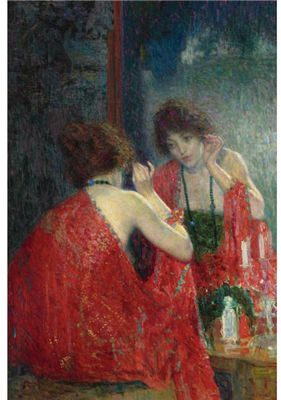
1877 Armenia - 1966 New York City. Known for: Oriental-motif still life and figure painting.
Born in Armenia on May 9, 1877. In 1888 Pushman began art studies at the Imperial School of Fine Arts in Constantinople. He immigrated to the U.S. about 1894 and settled in Chicago where he further... Read full biography
Born in Armenia on May 9, 1877. In 1888 Pushman began art studies at the Imperial School of Fine Arts in Constantinople. He immigrated to the U.S. about 1894 and settled in Chicago where he further studied at the AIC. About 1910 he traveled to Paris where he was a pupil of Lefebvre, Robert-Fleury,... Read full biography
Born in Armenia on May 9, 1877. In 1888 Pushman began art studies at the Imperial School of Fine Arts in Constantinople. He immigrated to the U.S. about 1894 and settled in Chicago where he further studied at the AIC. About 1910 he traveled to Paris where he was a pupil of Lefebvre, Robert-Fleury, and Dechenaud at Académie Julian. Leaving France, he toured the Orient and was introduced to the oriental subject matter that was to become his forte. After his return to Chicago, he painted portraits... Read full biography
Born in Armenia on May 9, 1877. In 1888 Pushman began art studies at the Imperial School of Fine Arts in Constantinople. He immigrated to the U.S. about 1894 and settled in Chicago where he further studied at the AIC. About 1910 he traveled to Paris where he was a pupil of Lefebvre, Robert-Fleury, and Dechenaud at Académie Julian. Leaving France, he toured the Orient and was introduced to the oriental subject matter that was to become his forte. After his return to Chicago, he painted portraits and still lives. During 1916-19 Pushman maintained a studio in the Mission Inn in Riverside, CA and continued exhibiting in Los Angeles throughout the 1920s and 1930s. Having settled in NYC in 1919, he lived there until his demise on Feb. 11, 1966.... Read full biography
Born in Armenia on May 9, 1877. In 1888 Pushman began art studies at the Imperial School of Fine Arts in Constantinople. He immigrated to the U.S. about 1894 and settled in Chicago where he further studied at the AIC. About 1910 he traveled to Paris where he was a pupil of Lefebvre, Robert-Fleury, and Dechenaud at Académie Julian. Leaving France, he toured the Orient and was introduced to the oriental subject matter that was to become his forte. After his return to Chicago, he painted portraits and still lives. During 1916-19 Pushman maintained a studio in the Mission Inn in Riverside, CA and continued exhibiting in Los Angeles throughout the 1920s and 1930s. Having settled in NYC in 1919, he lived there until his demise on Feb. 11, 1966. Member: . American AA of Paris; Salmagundi Club. Exh: . PAFA, 1913, 1942-44; Paris Sa. Source: Edan Hughes, "Artists in California, 1786-1940". Los... Read full biography
Artist Biography
Biography page for Hovsep Pushman ((1877 - 1966)), known for Oriental-motif still life and figure painting. Showing 5 biographical entries and 0 sample artworks.
Hovsep Pushman - Artist Info
About Hovsep Pushman
Name variants
Housef (Hovsep) Pushman
Biography from the Archives of askART
 Born in Armenia on May 9, 1877. In 1888 Pushman began art studies at the Imperial School of Fine Arts in Constantinople. He immigrated to the U.S. about 1894 and settled in Chicago where he further studied at the AIC. About 1910 he traveled to Paris where he was a pupil of Lefebvre, Robert-Fleury, and Dechenaud at Académie Julian. Leaving France, he toured the Orient and was introduced to the oriental subject matter that was to become his forte.
After his return to Chicago, he painted portraits and still lives. During 1916-19 Pushman maintained a studio in the Mission Inn in Riverside, CA and continued exhibiting in Los Angeles throughout the 1920s and 1930s. Having settled in NYC in 1919, he lived there until his demise on Feb. 11, 1966.
Member:
American AA of Paris; Salmagundi Club.
Exh:
PAFA, 1913, 1942-44; Paris Salon, 1914 (bronze medal), 1921 (silver medal); Mission Inn (Riverside), 1916; LACMA, 1916, 1918, 1921 (solos); Calif. Art Club, 1918 (prize); Exposition Park (LA), 1919; Macbeth Gallery (NYC), 1920; Cannell & Chafflin (LA), 1923, 1925, 1927; Hollywood Club, 1925; Ebell Club (LA), 1925; Grand Central Gallery (NYC), 1930; Nicholson Gallery (LA), 1931, 1948; Laguna Beach AA, 1933; Biltmore Salon (LA), 1934, 1938; Hatfield Gallery (LA), 1940; Findlay Gallery (Chicago), 1952.
In:
Amherst College; Montclair (NJ) Museum; Boston Museum; Minneapolis Museum; MM; University of Illinois; Detroit Inst. of Arts; Seattle Museum; Milwaukee Art Inst.Biography from the Archives of askART
 Born in Armenia, Hovsep Pushman became known for still lifes of exotic subjects, featuring antique objects with Oriental motifs, Nubian princesses, or Spanish gypsies. His paintings had soft lighting and quite often tapestries as backgrounds and were harmonious in tone with refined, delicate brush work.
He studied at the Constantinople Academy of Art, at the Chicago Art Academy, and in Paris under Jules Joseph Lefebvre, Tony Robert-Fleury, and Adolphe Dechenaud who encouraged him to explore his eastern heritage.
After settling in Chicago in 1915, he became a U.S. citizen and began creating his signature works in the 1930s. He was also a resident of New York City and painted in California where he was active in the California Art Club.
Source:
Michael David Zellman, "300 Years of American Art"Biography from ROUGHTON GALLERIES, INC
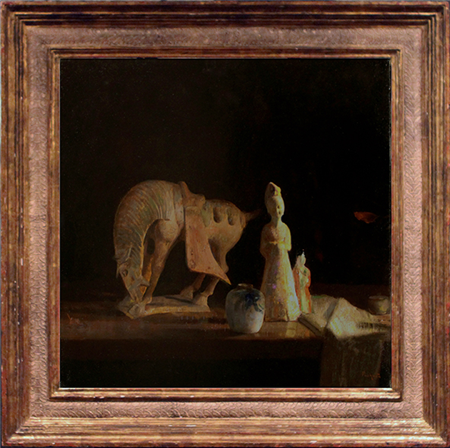 Hovsep Pushman was one of those rare artists whose work was appreciated by both critics and collectors, and who enjoyed recognition and good fortune. In a 1932 one-man show at New York's Grand Central Art Galleries, the entire display of 16 Pushman paintings was sold before opening day's end.
Pushman, later a naturalized American citizen, was born in Armenia in 1877. At age 11, he held a scholarship at the Constantinople Academy of Art. By 17, he had gone to the United States and started teaching art in Chicago. Pushman received his formal education in Paris at the Beaux-Arts Academie under Lefebvre, Robert-Fleury and Dechenaud. He exhibited his work at the Salon des Artistes Francais in Paris, winning a bronze medal in 1914 and a silver medal in 1921. He also was awarded the California Art Club's Ackerman prize in 1918.
Pushman's artistic identity began to take shape after he opened his own studio in 1921. Robert-Fleury, upon seeing one of Pushman's early studio still lives, advised the artist, "That painting is you." Thereafter, Pushman's career was devoted to one subject, oriental mysticism, and one form, the still life. His paintings typically featured oriental idols, pottery and glassware, all glowing duskily as if illuminated by candlelight. They were symbolic, spiritual paintings, and were sometimes accompanied by readings, which help explain their allegorical significance. Most important, they were exquisitely beautiful, executed with technical precision.
When "Twilight Comes" (date and location unknown) exemplifies the stunning beauty, mysterious mood and impeccable technique that made Pushman's work so highly respected.
Pushman died in 1966 in New York City.
MEMBERSHIPS
American Art Association of Paris
California Art Club
Salmagundi Club
PUBLIC COLLECTIONS
Detroit Institute of Arts
Houston Art Museum
Metropolitan Museum of Art, New York City
Milwaukee Art Institute, Wisconsin
Minneapolis Art Museum, Minnesota
Montclair Art Museum, New Jersey
Museum of Fine Arts, Boston
New Britain Institute, Connecticut
Norfolk Art Association, Virginia
Philbrook Art Center, Tulsa
Rockford Art Guild, Illinois
San Diego Fine Arts Society
Seattle Art MuseumBiography from Cantor Fine Art
 Hovsep Pushman, later a naturalized American citizen, was born in Armenia in 1877. At age 11, he held a scholarship at the Constantinople Academy of Art. By 17, he had gone to the United States and started teaching art in Chicago. He traveled for several years in China, immersing himself in oriental art and perhaps philosophy. He then studied in Paris under Lefebvre, Robert-Fleury and Dechenaud. He exhibited his work at the Salon des Artistes Francais in Paris, winning a bronze medal in 1914 and a silver medal in 1921. He also was awarded the California Art Club's Ackerman Prize in 1918.
In a 1932 one-man show at New York's Grand Central Art Galleries, the entire display of 16 Pushman paintings was sold before opening day's end.
Pushman's artistic identity began to take shape after he opened his own studio in 1921. Robert Fleury, upon seeing one of Pushman's early studio still life's, advised the artist, "That painting is you."
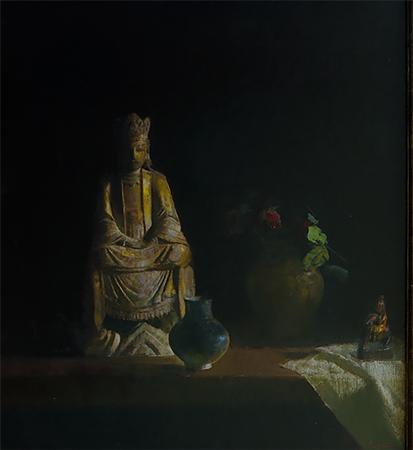
Thereafter, Pushman's career was devoted to one subject, oriental mysticism, and one form, the still life. His paintings typically featured oriental idols, pottery and glassware, all glowing duskily as if illuminated by candlelight. They were symbolic, spiritual paintings, and were sometimes accompanied by readings, which help explain their allegorical significance. Most important, they were exquisitely beautiful, executed with technical precision. "When Twilight Comes" (date and location unknown) exemplifies the stunning beauty, mysterious mood and impeccable technique that made Pushman's work so highly respected.
Pushman died in 1966 in New York City.
Source:
CR GalleriesBiography from Taylor Graham
In 1932, The Grand Central Art Galleries in in New York City opened a solo exhibition of works by Hovsep Pushman. The entire exhibition was sold out on opening day. From even the earliest days of his career when he won medals at the Paris Salons in 1914 and his one-man show at the Art Institute of Chicago held in 1916, he has been regarded as a painter of exceptional quality and exotic subject matter.
Pushman was born in Armenia, later becoming a naturalized American citizen. He began his artistic career at an early age when he went to the Constantinople Academy of Art on a scholarship at the age of 11. By the time he was 17, Pushman had come to the United States and began teaching art in Chicago. He also studied in Paris with Jules Lefebvre, Tony Robert-Fleury and Adolphe Dechenaud. He exhibited at the Salon des Artistes Francais in Paris, winning a bronze medal in 1914 and a silver medal in 1921. He was also awarded the California Art Club's Ackerman Prize in 1918.
Exhibitions:
Pennsylvania Academy of Fine Arts, Annuals, 1913, 1942-44
Paris Salon, 1914 (medal), 1921 (medal)
California Art Club, 1918 (prize)
Corcoran Gallery Biennials, 1921-39 (4 times)
LACMA, 1916, 1918, 1921 (solo)
Grand Central Art Gallery, 1930 (prize), 1932 (solo)
Collections:
Detroit Institute of Arts
Houston Art Museum
Metropolitan Museum of Art, New York
Milwaukee Art Institute, Wisconsin
Minneapolis Art Museum, Minnesota
Montclair Art Museum, New Jersey
Museum of Fine Arts, Boston
New Britain Institute, Connecticut
Seattle Art Museum