Page loaded successfully. Showing biography for Hugues Merle.
Hugues Merle BIOGRAPHY
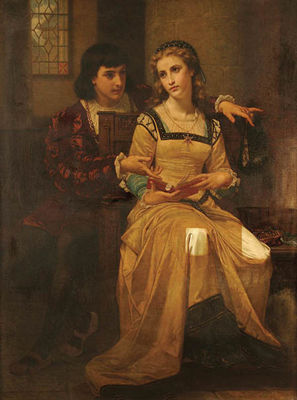
1823 St. Marcellin, France - 1881 Paris, France. Known for: Female figure allegorical and history scene painting.
Born in the village of St. Marcellin, Hugues Merle was a sensitive genre painter of great talent whose paintings of the simple, noble lives of the working class won him international recognition.... Read full biography
Born in the village of St. Marcellin, Hugues Merle was a sensitive genre painter of great talent whose paintings of the simple, noble lives of the working class won him international recognition. After studying with Leon Cogniet at the Ecole des Beaux-Arts, he embarked on a series of paintings... Read full biography
Born in the village of St. Marcellin, Hugues Merle was a sensitive genre painter of great talent whose paintings of the simple, noble lives of the working class won him international recognition. After studying with Leon Cogniet at the Ecole des Beaux-Arts, he embarked on a series of paintings depicting historical themes including The Assassination of Henry the III, which was acquired by the French government in 1863 for exhibition at the Musee de Pau. Thereafter he was accorded a regular place... Read full biography
Born in the village of St. Marcellin, Hugues Merle was a sensitive genre painter of great talent whose paintings of the simple, noble lives of the working class won him international recognition. After studying with Leon Cogniet at the Ecole des Beaux-Arts, he embarked on a series of paintings depicting historical themes including The Assassination of Henry the III, which was acquired by the French government in 1863 for exhibition at the Musee de Pau. Thereafter he was accorded a regular place at the Salon where he submitted paintings from 1847 until 1880. Well-known for depictions with a sentimental spirit, Merle remains important; his best-known work, The Mendicant, now hangs in the Musee d'Orsay, Paris. Merle's idealism and charming... Read full biography
Born in the village of St. Marcellin, Hugues Merle was a sensitive genre painter of great talent whose paintings of the simple, noble lives of the working class won him international recognition. After studying with Leon Cogniet at the Ecole des Beaux-Arts, he embarked on a series of paintings depicting historical themes including The Assassination of Henry the III, which was acquired by the French government in 1863 for exhibition at the Musee de Pau. Thereafter he was accorded a regular place at the Salon where he submitted paintings from 1847 until 1880. Well-known for depictions with a sentimental spirit, Merle remains important; his best-known work, The Mendicant, now hangs in the Musee d'Orsay, Paris. Merle's idealism and charming subjects found a solid clientele among the newly affluent French and American art patrons. Indeed it can be sa... Read full biography
Artist Biography
Biography page for Hugues Merle ((1823 - 1881)), known for Female figure allegorical and history scene painting. Showing 4 biographical entries and 0 sample artworks.
Hugues Merle - Artist Info
About Hugues Merle
Name variants
Georges Hugues Merle
Biography from Schiller & Bodo European Paintings
French, 1823-1881
Hughes Merle was a talented painter of idealized, often sweet and tender genre themes, that were so prominent during the middle of the nineteenth-century. A student of Léon Cogniet, he began exhibiting at the Salon in 1847. He was awarded second-class medals in 1861 and 1863, and in 1866 he was made Chevalier of the Legion of Honor.
Merle concentrated on a range of subjects, including allegories, historical anecdotes and highly finished rural genre scenes, often of mothers and children. It was this latter that won him his greatest success. Sentimental scenes of childhood innocence or maternal affection led contemporaries to compare his work to that of Bouguereau. Merle's work was known internationally and was particularly popular among American collectors.
Museums:
Atlanta, GA, High Museum of Art; Baltimore, Walters Art Gallery; Dallas, Museum of Art; London, Wallace Collection; New York, Metropolitan Museum of Art; Paris, Musée d'Orsay; Washington D.C., National Gallery of Art; Williamstown, MA, Clark Art Institute;Biography from ROUGHTON GALLERIES, INC
Hugues Merle (1823-1881) was much acclaimed during his own life-time for his highly finished depictions of family life, historical subjects and the pathos experienced in the lives of the less fortunate French-notably working women.
Merle was most often associated with his friend and rival, William Bouguereau. In fact, it was at the urging of their mutual friend and art dealer, Durand-Ruel, that Bouguereau took up Merle's highly successful theme of familial love on which the latter had built a solid reputation with the Salon entries from 1847 and awards during the 1860's.
Later Merle and Bouguereau found lucrative employment with Goupil, and Merle became the teacher of Bouguereau's wife, Elizabeth Gardner.
Museums:
Luxembourg Museum
Wallace Collection, Paris
Municipal Museum of Amsterdam
Metropolitan Museum, NYBiography from Anderson Galleries, Inc.
Born in the village of St. Marcellin, Hugues Merle was a sensitive genre painter of great talent whose paintings of the simple, noble lives of the working class won him international recognition. After studying with Leon Cogniet at the Ecole des Beaux-Arts, he embarked on a series of paintings depicting historical themes including The Assassination of Henry the III, which was acquired by the French government in 1863 for exhibition at the Musee de Pau. Thereafter he was accorded a regular place at the Salon where he submitted paintings from 1847 until 1880. Well-known for depictions with a sentimental spirit, Merle remains important; his best-known work, The Mendicant, now hangs in the Musee d'Orsay, Paris.
Merle's idealism and charming subjects found a solid clientele among the newly affluent French and American art patrons. Indeed it can be said that his reputation preceded and influenced that of William-Adolphe Bouguereau, who was persuaded by their common friend and dealer Rene Goupil, to adopt Merle's subjects for his own oils. Thus the two became friends and rivals, and their finished naturalist techniques all but identical.
Merle's pupil Elizabeth Gardener, the distinguished American Salon painter, ultimately married Bouguereau, thereby adding a third star to this shining realist constellation.
Merle was awarded a 2nd class medal in 1861 and the Legion of Honor in 1866. He died in Paris in 1881.
Museum Collections Include:
Musee d'Orsay, Paris; The Metropolitan Museum of Art, New York; The Art Institute of Chicago; The Brooklyn Museum; The Sterling & Francine Clark Art Institute, Williamstown; Layton Art Gallery, Milwaukee; High Museum of Art, Atlanta; The Wallace Collection, London; Municipal Museum, AmsterdamBiography from Bonhams Bond Street
Hugues Merle received his artistic education in the studio of Leon Cogniet and first exhibited at the Paris Salon in 1847. He exhibited there until the final year of his life, was twice awarded the second class medal in 1861 and 1863, and he was made a Chevalier de legion d'honneur in 1866. Merle was a contemporary of the most famous Academic artist of the time, William Adolphe Bouguereau, to whom his work often draws comparisons. In fact it was written that during his career Merle 'became a considerable rival to Bouguereau in subject and treatment'1. Their dedication to the academic technique and the quality of painting that resulted ensured both artists enjoyed great acclaim both at home and abroad. Merle and Bouguereau knew one another well, were rivals and often competed for commissions and recognition. For a time they were both represented by the same gallery, Durand-Ruel, in Paris. Perhaps nowhere were they held in higher regard than by American collectors in the last quarter of the 19th Century and Merle's work graced some of the most prominent American collections of the time including those of Robert Sterling Clark and Cornelis Vanderbilt. 1C. H. Stranahan, A History of French Painting from its Earliest to its Latest Practice, New York, 1917, p. 398.