Page loaded successfully. Showing biography for Inge King.
Inge King BIOGRAPHY

1918 Berlin, Germany - 2016. Known for: Large-scale public sculpture.
Inge King, born 26 November 1918, is a prominent Australian sculptor, who has many significant public, commercial, and private sculpture commissions to her credit. Inge Studied sculpture with Hermann... Read full biography
Inge King, born 26 November 1918, is a prominent Australian sculptor, who has many significant public, commercial, and private sculpture commissions to her credit. Inge Studied sculpture with Hermann Nonnenmacher(1892-1988) during 1936-37, and in October 1937 she was admitted to the Berlin Academy... Read full biography
Inge King, born 26 November 1918, is a prominent Australian sculptor, who has many significant public, commercial, and private sculpture commissions to her credit. Inge Studied sculpture with Hermann Nonnenmacher(1892-1988) during 1936-37, and in October 1937 she was admitted to the Berlin Academy of Fine Arts*. She was forced to leave the academy a year later, shortly before Kristallnacht. In 1939 Inge travelled to England, and spent two terms at the Royal Academy*, London until it was closed... Read full biography
Inge King, born 26 November 1918, is a prominent Australian sculptor, who has many significant public, commercial, and private sculpture commissions to her credit. Inge Studied sculpture with Hermann Nonnenmacher(1892-1988) during 1936-37, and in October 1937 she was admitted to the Berlin Academy of Fine Arts*. She was forced to leave the academy a year later, shortly before Kristallnacht. In 1939 Inge travelled to England, and spent two terms at the Royal Academy*, London until it was closed due to war-time bombing. Inge joined the sculpture classes of Benno Schotz at the Glasgow School of Art* in 1941 and stayed until 1943. Inge met her husband, the Australian artist Grahame King, at The Abbey Arts Centre in Hertfordshire, England and... Read full biography
Inge King, born 26 November 1918, is a prominent Australian sculptor, who has many significant public, commercial, and private sculpture commissions to her credit. Inge Studied sculpture with Hermann Nonnenmacher(1892-1988) during 1936-37, and in October 1937 she was admitted to the Berlin Academy of Fine Arts*. She was forced to leave the academy a year later, shortly before Kristallnacht. In 1939 Inge travelled to England, and spent two terms at the Royal Academy*, London until it was closed due to war-time bombing. Inge joined the sculpture classes of Benno Schotz at the Glasgow School of Art* in 1941 and stayed until 1943. Inge met her husband, the Australian artist Grahame King, at The Abbey Arts Centre in Hertfordshire, England and they were married in 1950. Grahame and Inge returned to Australia and the settled in Melbourne in 1951. Inge King has been at the forefron... Read full biography
Artist Biography
Biography page for Inge King ((1918 - 2016)), known for Large-scale public sculpture. Showing 1 biographical entries and 0 sample artworks.
Inge King - Artist Info
About Inge King
Biography from the Archives of askART
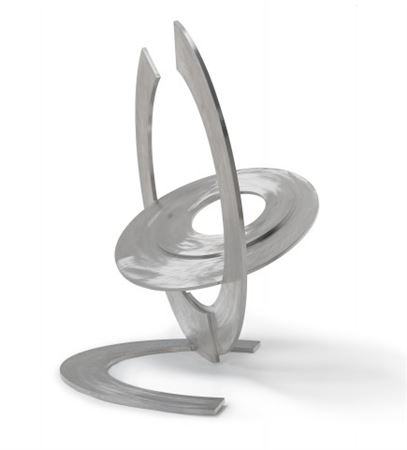 Inge King, born 26 November 1918, is a prominent Australian sculptor, who has many significant public, commercial, and private sculpture commissions to her credit.
Inge Studied sculpture with Hermann Nonnenmacher(1892-1988) during 1936-37, and in October 1937 she was admitted to the Berlin Academy of Fine Arts*. She was forced to leave the academy a year later, shortly before Kristallnacht. In 1939 Inge travelled to England, and spent two terms at the Royal Academy*, London until it was closed due to war-time bombing. Inge joined the sculpture classes of Benno Schotz at the Glasgow School of Art* in 1941 and stayed until 1943. Inge met her husband, the Australian artist Grahame King, at The Abbey Arts Centre in Hertfordshire, England and they were married in 1950. Grahame and Inge returned to Australia and the settled in Melbourne in 1951.
Inge King has been at the forefront of developing non-figurative sculpture in Australia. She was a member of The Centre 5 group of sculptors, which grew from a 1961 meeting convened by Julius Kane in Melbourne to, 'help foster greater public awareness in contemporary sculpture in Australia'. Members of the Centre 5 group included Lenton Parr, Inge King, Norma Redpath, Julius Kane, Vincas Jomantas, Clifford Last and Teisutis Zikaras.
Many of her large-scale works are found in public plazas, including Forward Surge, 1974 at the Victorian Arts Centre and on numerous university campuses. Inge has held over 26 solo exhibitions including a retrospective at the National Gallery of Victoria in 1992, and has participated in over 60 group shows in London, New York, Australia and New Zealand.
In 2009 she was awarded by the Australian Arts Council 'The Visual Arts Emeritus Award which recognises Inge's pivotal role in raising the profile of modern sculpture in this country,'
In July 2009, her solo show "Sculpture: Maquettes and Recent Work" opened at Australian Galleries and a book, Inge King: Small Sculptures and Macquettes, by Judith Trimble and Ken McGregor was published by Palgrave Macmillan.
Inge's most prominent sculpture is the monumental Forward Surge at the Melbourne Art Centre. It is made from 50mm mild steel and stands 5.2m high, 15.1m wide and 13.7m deep. The sculpture was commissioned by the Victorian Arts Centre in 1974; construction was completed in 1976 and the work was installed in its present position in 1981. more images
Forward Surge is the major sculptural drawcard for the Arts Centre precinct and one of our most prominent and valued works of art. It has been listed on the National Trust Register since 1992, and is noted by the National Trust as King's "most monumental work of art, and probably most significant".
The Royal Australian Air Force Memorial, situated on Anzac Parade, Canberra, Australian Capital Territory, was designed by Inge King and unveiled in 1973. It is a free-standing abstract steel sculpture on a stone base. Three large stainless steel panels reminiscent of aircraft wings, rise vertically from the base to a height of almost eight meters. They represent the endurance, strength and courage of RAAF personnel. The panels enclose a polished basalt base on which rests a bronze plate representing man's struggle to conquer the elements. The inscription per ardua ad astra is the RAAF motto meaning "through adversity to the stars".
Inge King's Sun Ribbon provides the students of University of Melbourne with a unique resting place among its massive unfurling bands, and is the focal point of one of the University's busiest thoroughfares, the Union Lawn. The sculpture is formed in 19mm-thick steel, by two upright flat, circular bands, each 360 cm, in diameter, and three folder 'rectangular' planes comprising a total ensemble length of 600 cm.
Other Works
• Flower Dancer (1948), National Gallery of Victoria, Melbourne
• Oracle (1966)
• Encounter (1968), La Trobe University, Melbourne-Bundura
• Fred Schonell Memorial Fountain (1971), University of Queensland, Brisbane
• Black Sun (1975), National Gallery of Victoria, Melbourne
• Dialogue of Circles (1976), La T robe University Sculpture Park, Melbourne-Bundura
• Temple Gate (1976/1977),Sculpture park in the National Gallery of Art, Canberra
• Lunar Image (1980), Museum and Art Gallery of the Northern Territory (MAGNT), Darwin, Northern Territory
• Jabaroo (1984/1985), McClelland Gallery and Sculpture Park, Langwarrin, Victoria
• Silent Gong (1989)
• Island Sculpture (1991), McClelland Gallery and Sculpture Park, Langwarrin, Victoria
• Guardian Angel (1995), Deakin Museum of Art, Deakin University, Melbourne
• Moonbird (1999 commissioned by the Australia Fund), Residence of the Prime-minister, The Lodge, Canberra
• The Sentinel (2000), Eastern Freeway in Melbourne
• Wandering Angel (2000), The National Gallery of Art, Canberra
• Rings of Jupiter (3) (2006), National Gallery of Victoria, Melbourne
• Red Rings (2008), Eastlink Motorway in Melbourne
• Red and Blue (2008), Hobart Place and West Row, Civic, ACT [3]
Source:
Wikipedia, http://en.wikipedia.org/wiki/Inge_King
* For more in-depth information about these terms and others, see AskART.com Glossary http://www.askart.com/AskART/lists/Art_Definition.aspx