Page loaded successfully. Showing biography for Istvan Prihoda.
Istvan Prihoda BIOGRAPHY
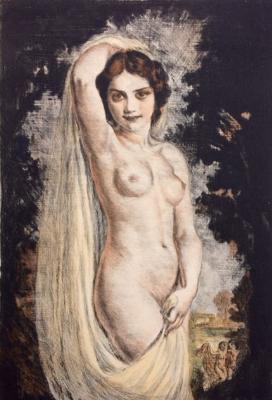
1891 Kolozvar, Hungary - 1965. Known for: Painting, etching, illustration, graphic art.
Istvan Prihoda (1891-1965). Painter, printmaker, illustrator and graphic artist Istvan Azary Prihoda was born in Kolozsvar (called Cluj after Trianon*) in the Kingdom of Hungary. After finishing his... Read full biography
Istvan Prihoda (1891-1965). Painter, printmaker, illustrator and graphic artist Istvan Azary Prihoda was born in Kolozsvar (called Cluj after Trianon*) in the Kingdom of Hungary. After finishing his studies at the Art Academy of Budapest, Prihoda began exhibiting his paintings and etchings. He won... Read full biography
Istvan Prihoda (1891-1965). Painter, printmaker, illustrator and graphic artist Istvan Azary Prihoda was born in Kolozsvar (called Cluj after Trianon*) in the Kingdom of Hungary. After finishing his studies at the Art Academy of Budapest, Prihoda began exhibiting his paintings and etchings. He won The National Graphic Arts Prize three years in a row and critical acclaim with his printed graphic sheets. His robustly dynamic à la poupée** etchings were highly sought after by collectors - scenes... Read full biography
Istvan Prihoda (1891-1965). Painter, printmaker, illustrator and graphic artist Istvan Azary Prihoda was born in Kolozsvar (called Cluj after Trianon*) in the Kingdom of Hungary. After finishing his studies at the Art Academy of Budapest, Prihoda began exhibiting his paintings and etchings. He won The National Graphic Arts Prize three years in a row and critical acclaim with his printed graphic sheets. His robustly dynamic à la poupée** etchings were highly sought after by collectors - scenes with fetching female nudes in particular. During World War I, he served on the Russian front, where he was captured and became a prisoner of war. During the Bolshevik revolt he managed to escape and flee home. In 1919 he designed a propaganda poster... Read full biography
Istvan Prihoda (1891-1965). Painter, printmaker, illustrator and graphic artist Istvan Azary Prihoda was born in Kolozsvar (called Cluj after Trianon*) in the Kingdom of Hungary. After finishing his studies at the Art Academy of Budapest, Prihoda began exhibiting his paintings and etchings. He won The National Graphic Arts Prize three years in a row and critical acclaim with his printed graphic sheets. His robustly dynamic à la poupée** etchings were highly sought after by collectors - scenes with fetching female nudes in particular. During World War I, he served on the Russian front, where he was captured and became a prisoner of war. During the Bolshevik revolt he managed to escape and flee home. In 1919 he designed a propaganda poster for the short lived Hungarian Soviet Republic. The poster popularized books and urged workers to read more. Later, in... Read full biography
Artist Biography
Biography page for Istvan Prihoda ((1891 - 1965)), known for Painting, etching, illustration, graphic art. Showing 1 biographical entries and 0 sample artworks.
Istvan Prihoda - Artist Info
About Istvan Prihoda
Biography from Antal Fine Art
Istvan Prihoda (1891-1965)
Painter, printmaker, illustrator and graphic artist Istvan Azary Prihoda was born in Kolozsvar (called Cluj after Trianon*) in the Kingdom of Hungary.
After finishing his studies at the Art Academy of Budapest, Prihoda began exhibiting his paintings and etchings. He won The National Graphic Arts Prize three years in a row and critical acclaim with his printed graphic sheets. His robustly dynamic à la poupée** etchings were highly sought after by collectors - scenes with fetching female nudes in particular.
During World War I, he served on the Russian front, where he was captured and became a prisoner of war. During the Bolshevik revolt he managed to escape and flee home. In 1919 he designed a propaganda poster for the short lived Hungarian Soviet Republic. The poster popularized books and urged workers to read more.
Later, in the early 1920s he created a propaganda poster for the opposite political side, that is, for a rightist party which intended to restore monarchy. Both posters used strong lighting effects. On the first one, the light comes from the background, which gives a feeling of monumentality to the reading worker and his child standing next to him. The second poster shows angels raising the Hungarian Royal Crown toward the sky, with the map of “un-truncated” Hungary beneath.
Prihoda created book illustrations and posters from the 1920's on, for advertising bars, theater shows, Philips radio, or the loan of the League of Nations.
In the 1930's he became head of the Graphic Arts Department in Budapest at the Art Academy
From Wikipedia:
* The Treaty of Trianon was the agreement of 1920 that formally ended World War I between most of the Allies of World War I and the Kingdom of Hungary, the latter being one of the successor states to Austria-Hungary. The treaty regulated the status of an independent Hungarian state and redefined its borders. It left Hungary as a landlocked state that covered 35,936 sq miles, only 28% of the 125,642 sq miles that had constituted the pre-war Kingdom of Hungary (the Hungarian half of the Austro-Hungarian monarchy). Its population was reduced to 7.6 million, only 36% of the pre-war kingdom's population of 20.9 million. The areas that were allocated to neighbouring countries in total (and each of them separately) had a majority of non-Hungarians but 31% of Hungarians (3.3 million) were left outside of post-Trianon Hungary. Five of the pre-war kingdom's ten largest cities were drawn into other countries. The treaty limited Hungary's army to 35,000 officers and men, and the Austro-Hungarian Navy ceased to exist.
**À la poupée is an intaglio printmaking technique for using different ink colors of ink using a ball-shaped wad of fabric to apply the ink to a copperplate. Paper is printed through just one run in the press. The term à la poupée means "with a doll", which refers to the wad of fabric, shaped like a ball.
Source: Hungarian Wikipedia
Submitted by: Lui Antal Deak