Page loaded successfully. Showing biography for Ivan Fedorovich Choultse.
Ivan Fedorovich Choultse BIOGRAPHY
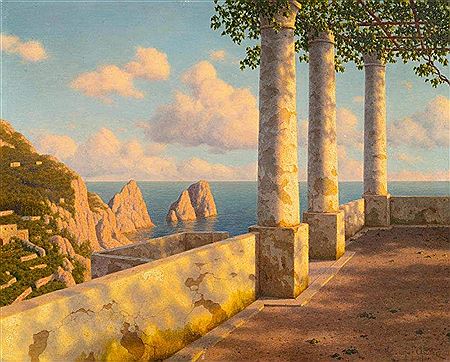
1874 St. Petersburg, Russia - 1939 Nice, France. Known for: Light-filled paintings, landscape and winter scenes.
Ivan Fedorovich Choultsé is a Russian artist who was designated as "the magician of light" in America, and whose clients were the family of Carl Fabergé and the Royal family of the Romanovs in the... Read full biography
Ivan Fedorovich Choultsé is a Russian artist who was designated as "the magician of light" in America, and whose clients were the family of Carl Fabergé and the Royal family of the Romanovs in the pre-revolutionary Russia. Master of complex light effects, glare and reflections, Choultsé was... Read full biography
Ivan Fedorovich Choultsé is a Russian artist who was designated as "the magician of light" in America, and whose clients were the family of Carl Fabergé and the Royal family of the Romanovs in the pre-revolutionary Russia. Master of complex light effects, glare and reflections, Choultsé was creating incredible landscapes throughout his life, as if depicting not our real world, but some phantasmagoria. The artist has often portrayed sea views as he was fascinated by the play of sunlight and... Read full biography
Ivan Fedorovich Choultsé is a Russian artist who was designated as "the magician of light" in America, and whose clients were the family of Carl Fabergé and the Royal family of the Romanovs in the pre-revolutionary Russia. Master of complex light effects, glare and reflections, Choultsé was creating incredible landscapes throughout his life, as if depicting not our real world, but some phantasmagoria. The artist has often portrayed sea views as he was fascinated by the play of sunlight and moonlight on the water. Some critics have argued that none of the other artists can so impressively and vividly display the texture of snow or sunlit forest on the canvas. The artist was a committed realist painter, and even in the heyday of avant-garde... Read full biography
Ivan Fedorovich Choultsé is a Russian artist who was designated as "the magician of light" in America, and whose clients were the family of Carl Fabergé and the Royal family of the Romanovs in the pre-revolutionary Russia. Master of complex light effects, glare and reflections, Choultsé was creating incredible landscapes throughout his life, as if depicting not our real world, but some phantasmagoria. The artist has often portrayed sea views as he was fascinated by the play of sunlight and moonlight on the water. Some critics have argued that none of the other artists can so impressively and vividly display the texture of snow or sunlit forest on the canvas. The artist was a committed realist painter, and even in the heyday of avant-garde tradition, he remained faithful to his path. Being a descendant of the Russified Germans, the artist was born on October 21, 1874, in St. Peter... Read full biography
Artist Biography
Biography page for Ivan Fedorovich Choultse ((1874 - 1939)), known for Light-filled paintings, landscape and winter scenes. Showing 3 biographical entries and 0 sample artworks.
Ivan Fedorovich Choultse - Artist Info
About Ivan Fedorovich Choultse
Name variants
Ivan Schultze, Ivan Fedorovich Shoul'tse, Ivan Fedorovich Shul'tse, Ivan Fyodorovich Shultse
Biography from the Archives of askART
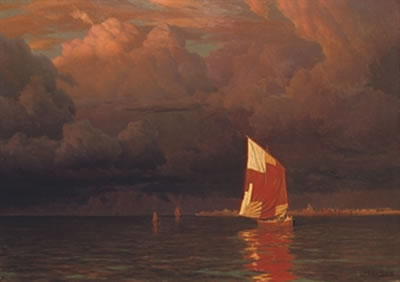 Ivan Fedorovich Choultsé is a Russian artist who was designated as "the magician of light" in America, and whose clients were the family of Carl Fabergé and the Royal family of the Romanovs in the pre-revolutionary Russia. Master of complex light effects, glare and reflections, Choultsé was creating incredible landscapes throughout his life, as if depicting not our real world, but some phantasmagoria. The artist has often portrayed sea views as he was fascinated by the play of sunlight and moonlight on the water. Some critics have argued that none of the other artists can so impressively and vividly display the texture of snow or sunlit forest on the canvas. The artist was a committed realist painter, and even in the heyday of avant-garde tradition, he remained faithful to his path.
Being a descendant of the Russified Germans, the artist was born on October 21, 1874, in St. Petersburg. Choultsé's ancestors emigrated from Germany to Russia in the XVIII century. Ivan Fedorovich has not dreamed of becoming a professional artist since childhood; he was interested in a completely different area - electricity. Being very passionate about this subject, Choultsé was inspired by the idea of using the immense power of the Imatra waterfall in Finland to produce electricity. Although Choultsé received an engineering education, he still always was eager to express his creative side.
In his early youth in his spare time, Ivan Fedorovich used to paint small sketches without any specific purpose. These sketches were very helpful to the thirty-year-old Choultsé when he went bankrupt during his engineering project in Finland. The financial question has become acute and Ivan Choultsé began to look for another way of earning money. He went to the strict and demanding academician and famous landscape painter Konstantin Yakovlevich Kryzhitsky to show his early works. His talent as appreciated and soon Ivan Fedorovich was admitted to the Imperial Academy of Arts. In addition to Kryzhitsky, a Russian artist Arkhip Kuindzhi and Swiss landscape painter Alexander Kalam were highly influential for the development of Choultsé's painting. Already in 1903 at his first exhibition at the Academy, the artist gained early fame and recognition of his talent by a wider audience.
Ivan Fedorovich's early glorious arctic works were created on a trip with his teacher Kryzhitsky in 1910 in an expedition to Norway and the island of Spitsbergen, which is the Arctic ocean. Unfortunately, Choultsé lost both mentors, Kuindzhi (1910) and Kryzhitsky (1911) in a very short time, but this did not prevent the artist from continuing to improve his skills and strive to achieve his own artistic ideals. After the death of his mentor, Ivan Fedorovich often took part in exhibitions organised by the society created in memory of Konstantin Kryzhitsky.
In the period preceding the February Revolution, Choultsé enjoyed career success, being quite popular and respected painter in the community, which was confirmed by the fact that the brother of Tsar Nicholas II, Mikhail Alexandrovich, regularly commissioned his works. Ivan Fedorovich's landscapes were in high demand at the exhibitions of the Association of Artists, in which he began to participate in 1912, and his work has always caused excitement of the public and artistic society. Like other famous paintings which spread to the most remote corners of the country. After the Revolution, there was a period of turmoil and confusion, including one in the arts, when many artists were forced to adjust to the new regime and reconsider their views.
As an ardent supporter of the academic* style, Choultsé decided that staying in the country would be unwise and uncomfortable, so he went on a long journey through Europe. His paintings reflect all the movements of the artist for two years, from 1917 to 1919, and especially, they represent the beauty of the Swiss Alps, southern France, and Northern regions of Italy. After returning home in 1921, Choultsé has not entirely lost hope for the development of his career in the new Soviet state. He joined the Society of Individualist Artists in St. Petersburg. The society included such famous artists as Isaak Israelevich Brodsky, Alexander Vladimirovich Makovsky, Ivan Avgustovich Welz and Julius Yulievich Klever. Ivan Fedorovich took part in the society's first two exhibitions in 1921.
However, after a short period, in the same year, the artist left the attempt to win over the Soviet audience and, being sure that he was going forever, left his hometown. He moved to France and settled on the Boulevard Pereire, 121, where the second stage of his career, the fate of the immigrant, has begun. The artist continued to paint his legendary winter views of Russia, which he based on his previous works and sketches.
The great success happened at the first solo exhibition of Ivan Choultsé in Paris on November 23, 1922, when the Galleries Gérard Frères sold all the paintings of the artist, and they were presented in the amount of 50, on the opening day of the show. This extraordinary occasion is particularly surprising considering the artistic environment of Paris which was extremely overabundant with all sorts of artistic proposals and presentations, and also quite indicative of the artist's magnificent gift that in spite of everything Choultsé's works could so quickly win the sympathy of the international public and critics. The demand for the artist's paintings was so extensive that the painter often did not have enough time to fulfil all commissions. In 1923, the work of Ivan Fedorovich was shown in the Paris Spring Salon, where his talent was elevated to the level of the most admired artists of the Salon.
From the very beginning of his time in Paris Choultsé has been lucky with art dealers and gallery owners. He was represented by the gallery of Leon Gerard, which not only successfully sold the artist's paintings but also regularly arranged his personal exhibitions. In 1927, Ivan Fedorovich received French citizenship. In addition to Europe, Choultsé has gained great popularity on the other side of the world, in America. Paradoxically, the artist's landscapes can be seen today more often in museums and galleries in the United States than in his homeland.
In 1928, Ivan Fedorovich met Eduard Jonas, the owner of galleries in Paris and New York, who took most of Choultsé's works to America. In his letter to his daughter, Ivan Fedorovich wrote: "I met a very interesting dealer. And how good it is that now, sitting in Paris, I can sell my work for dollars!". Indeed, the financial affairs of the artist were great, and sales were regular and profitable. Choultsé's contemporary writer and critic, Nikolai Breshko-Breshkovsky commented on the situation with the paintings of Ivan Fedorovich in the West: "In America, Choultsé's snow and sun paintings are highly esteemed and worth of great price".
Ivan Fedorovich's work is inextricably linked with his active travels around the world: the abundance and diversity of his landscapes directly depended on the places he saw. He travelled a lot in the Mediterranean, which was expressed in his summer, hot scenes. However, a stronger influence on the development of his art had a trip to Switzerland and, in particular, the mountainous region of Engadine and the Alpine town of St. Moritz surrounded by snow and mountains. Choultsé was inspired not only by Europe but also visited Asia, North Africa and the Arctic regions. He worked in the UK and USA.
Ivan Fedorovich's solo exhibitions were held in London in 1927 at the prestigious Arthur Tooth & Sons gallery, in New York at the gallery of E. Jonas in 1928, at the gallery of J. Levy in 1931, and in Chicago at the gallery of M. Field in 1933. Choultsé's works were also exhibited in a prominent New-York gallery called Hammer as part of the exhibition "150 years of Russian art."
The artist moved to the permanent residence in Nice in 1933. Since that date, the aspects of his biography seem rather vague, unreliable and sketchy. Even the full date of Ivan Fedorovich's death is unknown. According to some reports, he died in a psychiatric hospital. The year 1939 is listed on his tomb as the year of his death. The artist is buried at the cemetery Kokav in Nice, France.
Source:
Website of RA Gallery, Russian and International Fine Art, 2020
* For more in-depth information about these terms and others, see AskART.com. Glossary http://www.askart.com/AskART/lists/Art_Definition.aspxBiography from Odon Wagner Gallery
Choultse was a landscape painter, born in Petrograd, Russia in 1877. He studied painting with Constantin Krighitsky and became the court painter to Czar Nicholas II. After the Russian Revolution, he immigrated to Paris, and in 1923 began exhibiting at the Salon des Artistes Français. Although Choultse continued to paint Russian scenes whilst in Paris, he also undertook several trips to Switzerland's Engadine. He was fascinated with the mountainous landscape of the area surrounding St. Moritz, especially in the winter.
Critics wrote that no other artist was ever as adept at transferring the texture of settled snow to canvas. In his 1979 biography, Memoirs of an Art Dealer, Toronto art dealer G. Blair Laing wrote:
"He painted spectacular snow scenes in which the light seems to come from behind the canvas and glow. The critics scorned these pictures as photographic and called them non-art - but today this style of painting is called 'magic-realism' and is much admired by critics and museum people. When I was at university I saw a small exhibition of his work at Eaton's and marveled at the technical competence of the artist, but my professor of aesthetics warned me the pictures were bogus and would be forgotten in a few years. Today they are more expensive than ever.Biography from Kabinet Auktion
Educated in St. Petersburg under the leadership of KY Kryzhitsky in the 1890s - 1910s.
He participated in exhibitions at the IAH Society, KY Kryzhitsky, the Association of Artists, in the early 1920s. - In the first and second exhibitions of the Society of Artists, individualists (1921). He exhibited his work at the Salon of French artists (1923-1924).
Solo Exhibitions: In 1923 in Paris (Gallery "Gerard"), 1927-1928 - in London (gallery Tus A. and E. Jonas), in 1931 - in New York (J. Levy Gallery), in 1933 - in Chicago (M Gallery . Field).
His works are in the Tretyakov Gallery, the State Russian Museum and others.