Page loaded successfully. Showing biography for Jack Whitten.
Jack Whitten BIOGRAPHY
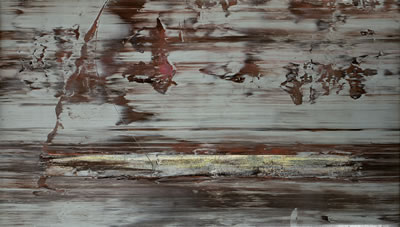
1939 Bessemer, Alabama - 2018 Manhattan, New York. Known for: Abstract mosaic-like paintings, African-American themes, wood carved sculpture.
An Old-School Painter Adapts to a New World Order: Jack Whitten’s 50-Year Evolution," By Alex Greenberger, ARTNEWS, Posted 01/19/16 . In 1974, a monolithic, fire-red painting by Jack Whitten debuted... Read full biography
An Old-School Painter Adapts to a New World Order: Jack Whitten’s 50-Year Evolution," By Alex Greenberger, ARTNEWS, Posted 01/19/16 . In 1974, a monolithic, fire-red painting by Jack Whitten debuted in the Whitney’s lobby gallery. Whitten made the painting, titled Sorcerer’s Apprentice, by laying... Read full biography
An Old-School Painter Adapts to a New World Order: Jack Whitten’s 50-Year Evolution," By Alex Greenberger, ARTNEWS, Posted 01/19/16 . In 1974, a monolithic, fire-red painting by Jack Whitten debuted in the Whitney’s lobby gallery. Whitten made the painting, titled Sorcerer’s Apprentice, by laying the canvas on the floor, dragging a squeegee across it to mix colors, and letting the quarter-inch-thick layer of paint dry. It was one of several pieces known as the artist’s “Slab” works, and, like... Read full biography
An Old-School Painter Adapts to a New World Order: Jack Whitten’s 50-Year Evolution," By Alex Greenberger, ARTNEWS, Posted 01/19/16 . In 1974, a monolithic, fire-red painting by Jack Whitten debuted in the Whitney’s lobby gallery. Whitten made the painting, titled Sorcerer’s Apprentice, by laying the canvas on the floor, dragging a squeegee across it to mix colors, and letting the quarter-inch-thick layer of paint dry. It was one of several pieces known as the artist’s “Slab” works, and, like the others in the series, it came and went from the museum without much fanfare. Whitten was an abstract painter—and an African American one, at that—when the odds were stacked against him; in the mid-’70s, as tastes skewed more toward the restraint... Read full biography
An Old-School Painter Adapts to a New World Order: Jack Whitten’s 50-Year Evolution," By Alex Greenberger, ARTNEWS, Posted 01/19/16 . In 1974, a monolithic, fire-red painting by Jack Whitten debuted in the Whitney’s lobby gallery. Whitten made the painting, titled Sorcerer’s Apprentice, by laying the canvas on the floor, dragging a squeegee across it to mix colors, and letting the quarter-inch-thick layer of paint dry. It was one of several pieces known as the artist’s “Slab” works, and, like the others in the series, it came and went from the museum without much fanfare. Whitten was an abstract painter—and an African American one, at that—when the odds were stacked against him; in the mid-’70s, as tastes skewed more toward the restraint of Minimalism and black artists were largely ignored by institutions, he was lucky to have gotten a show at the Whitney at a... Read full biography
Artist Biography
Biography page for Jack Whitten ((1939 - 2018)), known for Abstract mosaic-like paintings, African-American themes, wood carved sculpture. Showing 3 biographical entries and 0 sample artworks.
Jack Whitten - Artist Info
About Jack Whitten
Biography from the Archives of askART
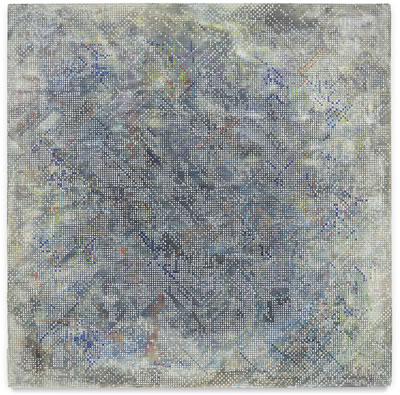 An Old-School Painter Adapts to a New World Order: Jack Whitten’s 50-Year Evolution," By Alex Greenberger, ARTNEWS, Posted 01/19/16
In 1974, a monolithic, fire-red painting by Jack Whitten debuted in the Whitney’s lobby gallery. Whitten made the painting, titled Sorcerer’s Apprentice, by laying the canvas on the floor, dragging a squeegee across it to mix colors, and letting the quarter-inch-thick layer of paint dry. It was one of several pieces known as the artist’s “Slab” works, and, like the others in the series, it came and went from the museum without much fanfare.
Whitten was an abstract painter—and an African American one, at that—when the odds were stacked against him; in the mid-’70s, as tastes skewed more toward the restraint of Minimalism and black artists were largely ignored by institutions, he was lucky to have gotten a show at the Whitney at all.
Thirty-one years later, in 2015, the Whitney’s curators, realizing they had a gap in their collection, acquired Sorcerer’s Apprentice, and showed it in “America Is Hard to See,” the inaugural show of the museum’s permanent collection in its new building in the Meatpacking District. The Whitney now joins MoMA, the Dallas Museum of Art, the Walker Art Center, and others who have acquired work by Whitten over the past few years, concluding that Whitten is an important, if under-appreciated, piece of American art history after all.
The painter’s work has never been more visible than it is right now, thanks to a traveling retrospective now on view at the Walker Art Center in Minneapolis. Whitten, at age 76, is more famous than he has ever been in his half-century career.
“I maintain that painting is organic, and it continues to evolve,” Whitten said when I visited him in his Queens studio one morning last fall. Behind where he sat was a wall covered with an unruly mess of images that the artist had personally gathered together, ranging from Kazimir Malevich’s Black Square to busty pinup models to photographs of Crete, where he and his wife take vacations. Nearby were silver, spray-painted Nike shoes and several works in progress that, with their subtle arrangements of acrylic, projected an effortless dignity.
Whitten has a salt-and-pepper mustache and bushy hair to match, and he speaks with a passion that can be both intimidating and thrilling. When he’s not painting, he reads constantly, absorbing ideas from cutting-edge physics, technology, and current events into his work. He would hate not to keep adjusting to the times. As a result, his work from 1974, as compared with his more recent style, looks like the efforts of a different artist.
Kathryn Kanjo, the chief curator of the Museum of Contemporary Art San Diego, which hosted the Whitten retrospective in 2014, said of the artist’s output, “To honestly realize, Oh, this is all the same person… It’s sublime. We have to catch up to him.”
As Whitten served me tea, we spoke about his practice, which he terms “conceptual painting.” “All it means, really, is the ability to design, to lay things out, to literally have something that you can plan ahead and you can follow the steps,” he said. “It’s all programmed, so when it comes time for the improvisation to take place, the conceptual is thrown out the window.”
Born in 1939, in Bessemer, Alabama, Whitten witnessed the effects of longstanding American racism firsthand. He recalled being a part of a black community that revolved around the church, family, and schools—but it was also segregated. “Being black in America, you’re always black,” he said. “I’m a product of American apartheid. There’s no other way to put it. You’re talking to someone who grew up in straight segregation.”
Whitten became an avid participant in the Civil Rights Movement in the South. In 1957, the same year Congress passed the first civil rights legislation since Reconstruction, Whitten met Martin Luther King Jr. in Tuskegee. “I believed in what he preached,” Whitten said, “but, when I had the opportunity to test what he was saying, which occurred in Baton Rouge, it changed my life.” He was referring to an incident in 1960, when Whitten was studying at Southern University in Louisiana. With 15 other students, Whitten staged a sit-in to protest segregation on campus. What began with his class peacefully closing down the school became a national event: once local clergy got involved, Whitten and the other students marched to the state capitol building in Baton Rouge, where they were attacked. “I didn’t fight, I didn’t resist,” Whitten said. “But I realized that I couldn’t do that. That’s what drove me out of the South.”
That same year, Whitten got on a Greyhound bus to New York and never lived in Alabama again. He applied to Cooper Union and was accepted the following year. By the time he graduated, in 1964, he had come up with a way of describing his artistic vision: “The image is photographic, therefore I must photograph my thoughts.” By this, he meant, “I can see it in my brain, and it’s reproduced. I’m using the word ‘reproduce’ in the same sense that you would use a Xerox copy machine or a computer—any form of a reproduction device.”
Following this impulse, Whitten’s first mature series was a group of black-and-white paintings that look like wisps of smoke, but, according to their titles, represent people and objects. Whitten maintains that he even sees the head of Jesus Christ in one. Using a mesh-like fabric, Whitten was able to mix layers of black and white paint on the canvas, creating what resembles ghosts moving in front of a camera. “They’re strange, man,” Whitten told me. Allan Stone, Whitten’s gallerist at the time, thought so, too—he refused to show the “Head” works, thinking they wouldn’t sell.
What Whitten did show were paintings such as Martin Luther King’s Garden (1968), a swirling mix of freeform strokes that seems to refer to the chaos and triumph of the late ’60s. Whitten had met and become friendly with artists like Franz Kline, and the work hints at the influence of Arshile Gorky and Joan Miró. But, in its politics, it also demands comparisons to paintings by Norman Lewis, who Whitten knew as well, and who likewise represented the Civil Rights Movement in abstract terms.
By the mid-’70s, Whitten had leapt into total, process-based abstraction, and had even switched mediums—he stopped working with oil paint altogether and took up acrylic because it dried faster. His “Slab” paintings, the works shown at the Whitney in 1974, were very much of their era, which is to say: messy, and positively overwhelming. This is also a fine way of describing the radical shift that happened over the course of the first decade and a half of Whitten’s career. He’s still trying to find ways of doing this in his newest work, which has referred to the Newtown school shooting and Barack Obama on purely geometric terms. Whitten said, “I want a worldview that will teach me how to conduct myself in this new world order. That’s what I’m working on.”
On what would become one of the shaping trips of his life, Whitten went to services for Greek Christmas in Sinai, Egypt, at Saint Catherine’s Monastery. Built into the pink-granite foothills of Mount Sinai, the monastery has huge, tiered chandeliers that, over the course of the service, were gradually lit, illuminating the mosaics surrounding them.
Whitten described the experience as being transcendent—he realized that the masteri, or the artists behind the mosaics, didn’t lay the glass tiles evenly, which allowed them to glow unnaturally when light hit them.
Whitten has since made entire series of paintings that look like mosaics, but are actually composed of dried-acrylic paint chips unevenly set in wet paint. “Hence today,” he explained, “I say three-dimensional light. In the early ’70s, it was planar light, because that was all I had. It was more of a Euclidean base. Now, the fractile dimension of light has become multi-dimensional.”
The idea had lingered with Whitten since 1965, when he met jazz musician John Coltrane and realized, through his music, that “I was looking for light—light in painting.” For a while, however, it lay dormant in his practice. During the late ’70s and early ’80s, Whitten experimented with minimalist forms, using the teeth of a saw-like tool to create even lines in wet paint. Then he began to move grids toward paintings that looked like circuit boards. But something shifted after a show at the Studio Museum in Harlem, in 1983. He started using frottage-like pieces of acrylic and insetting them in paint. The result is a fractured surface, anticipating the mosaic-like paintings of the ’90s.
The works leading up to the ’90s are visually stunning—they make you wonder, “How did he do that?” It’s no surprise that Alexander Gray, whose New York gallery, Alexander Gray Associates, has represented Whitten since 2007, calls the effect of Whitten’s work “the wow, how, wow,” or “getting that visual-energy punch and trying to figure out how the stuff is stuck to the canvas.”
Gray described being seduced by Whitten’s ongoing Black Monoliths series—mosaic-like paintings that memorialize figures like Ralph Ellison and Jacob Lawrence, begun in the ’90s. When I visited Whitten’s studio, he was working on one dedicated to the saxophonist Ornette Coleman, who died last year. Light bounced off the acrylic pieces meant to resemble Coleman’s head, creating what really did feel like a glowing presence. Kanjo, the MCASD curator, put the tiled paintings’ effect best: “He transforms the materials from what we expect them to do, so we look at paint differently.”
For Whitten, his chipped-paint technique refers to abstract physics. “We know now that light occurs in extremely small particles,” he said. “That’s what allows us to see—those little fucking photons bouncing around your retina, and blam-o, I can see!”
Whitten cites Benoit Mandelbrot, the mathematician who discovered that all organic matter is fundamentally made of geometric shapes, as one of his influences. This, surprisingly, makes a lot of sense. Since the ’90s, Whitten’s paint chips have continued to mutate into strange, new forms. He’s done series based on postage-stamp codes, in which the tiles are laid out in grid-like forms. (A crimson-and-white one is dedicated to the curator Marcia Tucker.) He’s also made paintings such as Apps for Obama (2011), which features a number of candy-like blobs arranged like app icons on an iPad. The technique Whitten is using is millennia old; the way he’s using it and the content are ultra-new. “I’m talking about a geometry of the information age,” Whitten explained
As she was preparing the 2006 show “High Times Hard Times: New York Painting 1967–1975,” curator Katy Siegel visited Whitten’s storage facilities, which, at the time, were in TriBeCa. The exhibition arose from a conversation Siegel had with the painter David Reed, who proposed the idea of doing a painting survey focused on the show’s titular eight-year stretch, a time when the medium was believed by many critics and curators to have hit a dead end. This meant having to do some research—and also making some major rediscoveries. Whitten showed Siegel a number of early works, each one better than the last. “I could tell from the first second that I walked into storage that this was a major historical figure,” Siegel told me. “I just thought, ‘Well, he may be known, but he’s not well-enough known.’”
“High Times Hard Times” has been credited with reintroducing Whitten in the last decade, but nobody has shaped his career arc more than Whitten himself.
Siegel told me that, during the ’70s and ’80s, when writers weren’t there for painters and black artists, Whitten became his own critic. The traveling retrospective may be what has brought Whitten’s work back to the attention of museums, but “he should’ve been there all along,” Siegel said. “In the decades that he wasn’t famous, he was making work that was incredibly important. When the world was ready, there he was, not an iota diminished by those years of inattention.”
For his part, Whitten is mostly unfazed by his recent success. At the moment, his plans are to keep painting. “The beat goes on,” he said with a smile. “My old dealer, Allan Stone, loved the phrase, ‘There’s no destination, it’s only the journey.’ I haven’t seen a destination yet, but that’s good. I’m still finding new stuff out there.”Biography from the Archives of askART
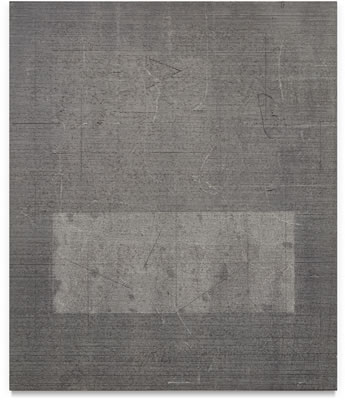 "Jack Whitten, Artist of Wide-Ranging Curiosity, Dies at 78," by Neil Genzlinger, January 23, 2018, Obituary, The New York Times
Jack Whitten, an artist who began as an Abstract Expressionist but pushed that genre to new places and explored many others in a long career, died on Saturday in Manhattan. He was 78.
The cause was complications of chronic leukemia, said Andrea Schwan, a publicist speaking for his family. She said he died at NewYork-Presbyterian Hospital.
Mr. Whitten, a black man who grew up in the South as the civil rights movement was gaining steam there, brought those experiences and sensibilities north when he came to New York in 1959. They are evident in many of his works, including a series he called “Black Monoliths” honoring figures like Ralph Ellison and Muhammad Ali.
Yet Mr. Whitten, whose work has been featured in numerous gallery and museum shows, did not want to be overly bound by race.
“I sincerely believe that in the black community of artists, especially those of us dealing with abstraction, art has to go beyond the general notions of race, gender, nationalism,” he told Art in America magazine in 2013. “Things have evolved to the degree where there is a possibility of a new sensibility out there. We’re into a global aesthetic here, and anyone that doesn’t see that has a real old-fashioned way of thinking.”
That curious and all-embracing spirit led him to create works on subjects as diverse as quantum physics and the 2012 shooting at an elementary school in Newtown, Conn. It also led him to experiment with different ways to use paint, and even occasionally to try other art forms. In April the Baltimore Museum of Art is scheduled to open an exhibition featuring 40 sculptures he made, beginning in 1963.
Mr. Whitten was born on Dec. 5, 1939, in Bessemer, Ala., near Birmingham. His father, Mose, was a coal miner who died when Jack was young. His mother, Annie B. Cunningham, was a seamstress and, as Mr. Whitten put it in a 1994 interview with Bomb magazine, “a believer in education”; she later opened a private kindergarten.
Mr. Whitten attended Tuskegee University in Alabama and briefly met the Rev. Dr. Martin Luther King Jr. in 1957 when Mr. Whitten went to hear him speak in Birmingham. After he transferred to Southern University in Louisiana, he said, he joined student civil rights protests, trying to practice Dr. King’s precepts of nonviolence, but a march on the state Capitol was a personal turning point.
“We made it all the way to the state Capitol building as they were hitting us with sticks,” he told the arts journal The Brooklyn Rail in an interview last year. “I did it then, but I made a vow I would never put myself in that position again. That march is what drove me out of the South. I took a Greyhound bus to New York City.”
He studied art at the Cooper Union from 1960 to 1964, falling in with the Abstract Expressionists of the day. Willem de Kooning was a particular influence and mentor.
“I came in one night after a horrific critique when one of my professors put me down for concentrating too much on process,” Mr. Whitten recalled in a 2013 interview with The Boston Globe. “That was not a word used much then, in 1961. He said I accepted too many accidents. I spoke to de Kooning, and he said to me, ‘There’s no such thing as accidents in painting!’ That was very helpful to me.”
As the 1960s advanced, Mr. Whitten began venturing into different ways to paint, trying to avoid the pop trends of the decade.
“Anybody with any sense from my generation who was serious about painting by the late ’60s had to realize that the psychedelic was a perpetual dog chasing its tail,” he said in a 2007 interview with The Brooklyn Rail. “And in our way, we had to invent our way of making paintings.”
He became interested in process art, which espouses the idea that the making of a work is as vital as the end product. In 1970, he and three other artists received grants from the Xerox Corporation, which invited them to experiment with its equipment and work with its engineers.
And Mr. Whitten moved beyond the paintbrush, creating art by dragging paint across a canvas with a squeegee, an Afro comb or a large rakelike tool he had made. He began to attract attention.
“What Mr. Whitten does is to rake across a richly prepared paint substance with a 12-foot-wide instrument of his own devising,” John Russell wrote in The New York Times in 1974, describing an exhibition at the Whitney Museum of American Art. “It is, as he says himself, a gambling situation, and sometimes the gamble doesn’t come off; but in the best pictures the immediacy is captured intact.”
Over the years Mr. Whitten worked in paint so heavily layered that he could, and did, cut slices out of it. He made a sort of tile from paint compounds, applying the result to canvas for a mosaic effect. On the Greek island of Crete, where he spent many summers, he began making the sculptures that will be the focus of the Baltimore exhibition.
Mr. Whitten sometimes responded to the events of the day with artwork. One such event was the attack on the World Trade Center in 2001, which Mr. Whitten witnessed at close range, from his studio on Lispenard Street in TriBeCa.
“When it hit,” he said of the first plane, “the first thing you saw was this big crystal burst; before you saw any smoke, before you saw any flame, the sky was just filled with crystal glass.”
He produced from that experience the painting 9-11-01 in 2006.
Mr. Whitten, who at his death lived in Jackson Heights, Queens, was divorced from his first wife, Florence Squires. He is survived by his wife, the former Mary Staikos, whom he married in 1968; two daughters, Mirsini Alexandra Amidon and Keita A. Whitten; two brothers, James M. Cross and Jesse Whitten; and two grandsons.
Among the many exhibitions centered on Mr. Whitten was a show at Alexander Gray Associates in Chelsea in 2013.
“With a career grazing the 50-year mark,” Holland Cotter wrote of that exhibition in The Times, “Jack Whitten is still making work that looks like no one else’s, which is saying something, given the flood of abstract painting in New York in the past few years.
“He invented new forms of abstraction and standards of beauty to match them. Even more to his credit, he’s still restless enough to make every picture a complex one-off formal event. And he’s stayed invested enough in art as an intimate medium to make those events personal.”Biography from Alexander Gray Associates
JACK WHITTEN
Born 1939, Bessemer, AL Lives and works in Queens, NY
EDUCATION
1964, Cooper Union for the Advancement of Science and Art, New York, NY
1960, Southern University, Baton Rouge, LA
1959, Tuskegee Institute, Tuskegee, AL
Jack Whitten (b.1939) began his earliest experiments in painting during the 1960s by creating dynamic works inspired by Abstract Expressionism. Born and raised in Bessemer, Alabama, he moved to New York City in 1960 to attend The Cooper Union. Noted for raucous colors and density of gesture combined with topical content, his artwork of this period manifests emotionally complex meditations on Dr. Martin Luther King, Jr., the Civil Rights movement and the Vietnam War.
Experimentation turned to abstraction for Whitten in the 1970s; a new method of painting developed, one that resonates more closely with photography. Gesture is removed from the making of the work; the paint and canvas are “processed”, produced from large troughs of paint dragged across the canvas with tools including squeegees, rakes, and Afro combs. This process yields palpable surface texture, line, and void.
Paint became a metaphor for skin during the 1980s when Whitten experimented with “casting” acrylic paints and compounds to create new surfaces and textures. In contrast to the narrative-based and didactic work made by many African-American artists during this period, Whitten’s artworks reintroduce gesture with aspects of sculpture and collage.
Since the 1990s, Whitten’s experiments with paint as a medium have progressed further towards sculpture, beginning with transforming paint compounds into tiles, and applying them to the canvas as mosaics. These artworks allude to ancient architecture and murals, and serve as both an homage to and memorial of celebrated public figures and intimate friends. Recently, Whitten has re-purposed the gamut of techniques he developed over the decades to deepen his engagement with art history, re-contextualizing his experimentations to achieve innovative new surfaces, structures, and symbols.
A retrospective on Whitten’s 50-year long career, Jack Whitten: Five Decades of Painting, was organized by The Museum of Contemporary Art, San Diego (2014), and traveled to the Wexner Center for the Arts, Columbus, OH (2015); Walker Art Center in Minneapolis, MN (2015).
His work has been exhibited in the 1969 and 1972 Whitney Annuals at the Whitney Museum of American Art, New York; and a landmark 1974 solo exhibition at the Whitney Museum of American Art.
Recently, Whitten’s work as been featured at the Brooklyn Museum (2014); 55th Venice Biennale, Italy (2013); Museum Dhondt-Dhaenens, Deurle, Belgium (2014); Aldrich Contemporary Art Museum, Ridgefield, CT (2014); Rose Museum, Brandeis University, Waltham, MA (2013); Savannah College of Art and Design, Savannah, GA (2012); Atlanta Contemporary Art Center, GA (2008); MoMA PS1, New York (2007); and Studio Museum in Harlem, NY (2006); among others.
His work is represented in the collections of the Museum of Modern Art, New York; Metropolitan Museum of Art, New York; Tate Modern, London; Whitney Museum of Art, New York; Art Institute of Chicago, IL; Dallas Museum of Art, TX; Birmingham Museum of Art, AL; High Museum of Art, Atlanta, GA; and the Mott-Warsh Collection, Flint, MI; among others. Whitten received an Honorary Doctorate from the San Francisco Art Institute in 2014.