Page loaded successfully. Showing biography for Jan Miel.
Jan Miel BIOGRAPHY
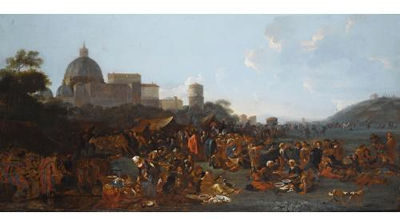
1599 Beveren-Waes Near Antwerp - 1663 Turin. Known for: Landscape, figure in landscape painting.
Jan Miel was born in 1599 in Beveren-Waes Near Antwerp. Though his presence is documented only after 1636, Jan Miel is thought to have arrived in Rome early in the decade, certainly by 1633, where he... Read full biography
Jan Miel was born in 1599 in Beveren-Waes Near Antwerp. Though his presence is documented only after 1636, Jan Miel is thought to have arrived in Rome early in the decade, certainly by 1633, where he rapidly came under the influence of Pieter van Laer and the Bamboccianti. This group was comprised... Read full biography
Jan Miel was born in 1599 in Beveren-Waes Near Antwerp. Though his presence is documented only after 1636, Jan Miel is thought to have arrived in Rome early in the decade, certainly by 1633, where he rapidly came under the influence of Pieter van Laer and the Bamboccianti. This group was comprised of mainly ex-patriot artists from the Netherlands, Flanders, France and Germany who specialized their practice in painting usually small-scale works of low or trivial subjects taken from contemporary... Read full biography
Jan Miel was born in 1599 in Beveren-Waes Near Antwerp. Though his presence is documented only after 1636, Jan Miel is thought to have arrived in Rome early in the decade, certainly by 1633, where he rapidly came under the influence of Pieter van Laer and the Bamboccianti. This group was comprised of mainly ex-patriot artists from the Netherlands, Flanders, France and Germany who specialized their practice in painting usually small-scale works of low or trivial subjects taken from contemporary Italian life. Miel worked primarily on such a scale during his earlier years in Rome, but during the 1640s, his work increased in size with more ambitious multi-figural compositions of Roman life. It appears to have been these larger works which... Read full biography
Jan Miel was born in 1599 in Beveren-Waes Near Antwerp. Though his presence is documented only after 1636, Jan Miel is thought to have arrived in Rome early in the decade, certainly by 1633, where he rapidly came under the influence of Pieter van Laer and the Bamboccianti. This group was comprised of mainly ex-patriot artists from the Netherlands, Flanders, France and Germany who specialized their practice in painting usually small-scale works of low or trivial subjects taken from contemporary Italian life. Miel worked primarily on such a scale during his earlier years in Rome, but during the 1640s, his work increased in size with more ambitious multi-figural compositions of Roman life. It appears to have been these larger works which garnered Miel the most contemporary praise and, indeed, it is tempting to think of these when writers like Filippo Baldinucci, who included the painterL.... Read full biography
Artist Biography
Biography page for Jan Miel ((1599 - 1663)), known for Landscape, figure in landscape painting. Showing 1 biographical entries and 0 sample artworks.
Jan Miel - Artist Info
About Jan Miel
Biography from Christie's London, King Street
Jan Miel was born in 1599 in Beveren-Waes Near Antwerp. Though his presence is documented only after 1636, Jan Miel is thought to have arrived in Rome early in the decade, certainly by 1633, where he rapidly came under the influence of Pieter van Laer and the Bamboccianti. This group was comprised of mainly ex-patriot artists from the Netherlands, Flanders, France and Germany who specialized their practice in painting usually small-scale works of low or trivial subjects taken from contemporary Italian life. Miel worked primarily on such a scale during his earlier years in Rome, but during the 1640s, his work increased in size with more ambitious multi-figural compositions of Roman life. It appears to have been these larger works which garnered Miel the most contemporary praise and, indeed, it is tempting to think of these when writers like Filippo Baldinucci, who included the painter’s life in his Notizie de’ Professori del Disegno, wrote that Miel ‘had…in his invention a talent that we can almost say was uniquely his, and this was to depict from life brigades of slovenly idlers, urchins, beggars, and others absolutely just as they look, with appropriate physiognomies, gestures, ways of dressing, and implements, along with their rest-takings and revels in the countryside’ in Seventeenth Century Art, Rome.