Page loaded successfully. Showing biography for Javier Mariscal.
Javier Mariscal BIOGRAPHY
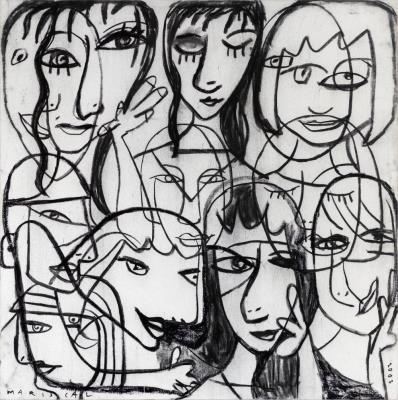
Born 1950 Valencia, Spain. Known for: Painting, sculpture, design, comic figures.
Javier Mariscal is a Spanish artist and designer whose work has spanned a wide range of mediums, ranging from painting and sculpture to interior design and landscaping. He was born in February 1950... Read full biography
Javier Mariscal is a Spanish artist and designer whose work has spanned a wide range of mediums, ranging from painting and sculpture to interior design and landscaping. He was born in February 1950 in the city of Valencia, Spain into a family of eleven brothers and sisters. Since 1970, he has been... Read full biography
Javier Mariscal is a Spanish artist and designer whose work has spanned a wide range of mediums, ranging from painting and sculpture to interior design and landscaping. He was born in February 1950 in the city of Valencia, Spain into a family of eleven brothers and sisters. Since 1970, he has been living and working in Barcelona. Mariscal's language is synthetic, with few strokes and a great deal of expressiveness. He started studying at Colegio El Pilar in Valencia. After he study design at... Read full biography
Javier Mariscal is a Spanish artist and designer whose work has spanned a wide range of mediums, ranging from painting and sculpture to interior design and landscaping. He was born in February 1950 in the city of Valencia, Spain into a family of eleven brothers and sisters. Since 1970, he has been living and working in Barcelona. Mariscal's language is synthetic, with few strokes and a great deal of expressiveness. He started studying at Colegio El Pilar in Valencia. After he study design at the Elisava School in Barcelona which he soon left so that he could learn directly in his environment and follow his own creative impulses. His first steps were in the world of underground comic, a task that he soon combined with illustration,... Read full biography
Javier Mariscal is a Spanish artist and designer whose work has spanned a wide range of mediums, ranging from painting and sculpture to interior design and landscaping. He was born in February 1950 in the city of Valencia, Spain into a family of eleven brothers and sisters. Since 1970, he has been living and working in Barcelona. Mariscal's language is synthetic, with few strokes and a great deal of expressiveness. He started studying at Colegio El Pilar in Valencia. After he study design at the Elisava School in Barcelona which he soon left so that he could learn directly in his environment and follow his own creative impulses. His first steps were in the world of underground comic, a task that he soon combined with illustration, sculpture, graphic design and interior design. In 1979, he designed the Bar Cel Ona logo, a work that would... Read full biography
Artist Biography
Biography page for Javier Mariscal ((Born 1950)), known for Painting, sculpture, design, comic figures. Showing 2 biographical entries and 0 sample artworks.
Javier Mariscal - Artist Info
About Javier Mariscal
Name variants
Xavier Mariscal
Biography from the Archives of askART
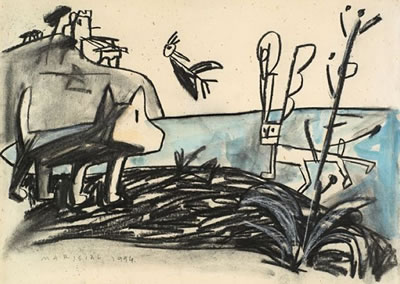 Javier Mariscal is a Spanish artist and designer whose work has spanned a wide range of mediums, ranging from painting and sculpture to interior design and landscaping. He was born in February 1950 in the city of Valencia, Spain into a family of eleven brothers and sisters. Since 1970, he has been living and working in Barcelona.
Mariscal's language is synthetic, with few strokes and a great deal of expressiveness. He started studying at Colegio El Pilar in Valencia. After he study design at the Elisava School in Barcelona which he soon left so that he could learn directly in his environment and follow his own creative impulses. His first steps were in the world of underground comic, a task that he soon combined with illustration, sculpture, graphic design and interior design.
In 1979, he designed the Bar Cel Ona logo, a work that would make him popular. The following year, he opened the first bar in Valencia designed by Mariscal, together with Fernando Salas, the Duplex, for which he designed one of his most famous pieces, the Duplex stool, an authentic icon of the 1980s. In 1981, his work as a furniture designer led him to participate in the exhibition Memphis, an International Style, in Milan. In 1987, he gave an exhibition at the Centre Georges Pompidou in Paris and participated in the Documenta in Kassel, Germany.
Throughout the 1980s, he designed several textile collections for Marieta and Tráfico de Modas and exhibited at the Vinçon salon in Barcelona. In 1989, Cobi was chosen as the mascot for the Barcelona 1992 Olympic Games. The mascot was the center of great controversy because of its vanguard image, although time has shown its creator to have been right and now Cobi is recognized as the most profitable mascot in the history of the modern games. He later created the cartoon series The Cobi Troupe.
He opened the Estudio Mariscal in 1989 and has collaborated in several projects with designers and architects such as Arata Isozaki, Alfredo Arribas, Fernando Salas, Fernando Amat and Pepe Cortés. His most notable works include the visual identities for the Swedish social democratic party, Socialdemokraterna; the Spanish radio station Onda Cero; Barcelona Zoo; the University of Valencia; the Lighthouse Centre for Architecture and Design in Glasgow, the GranShip Cultural Centre in Japan and the London postproduction company, Framestore.
In 1995, Twipsy was chosen as the mascot for the Expo 2000 in Hannover. The success of this mascot led to the Twipsy series, in which the star is a virtual space messenger and the action is set in Internet. Twipsy was sold to over one hundred countries. In 1995, he also designed the Amorosos Furniture collection for the Italian manufacturer Moroso, which includes one of his most successful pieces of furniture, the Alexandra armchair, in which the organic shapes and the use he makes of color communicate the vital, extroverted style that characterizes Mariscal's objects. In 2001, he designed the much sought after diary room chair used in Channel 4's second installment of Big Brother.
In 2002, his multidisciplinary career culminated with the integral design of the Gran Hotel Domine Bilbao, nestling between the Guggenheim Museum in Bilbao and the ria, the creative concept of which is based on reflecting the history of design of the 20th century. Mariscal designed things from the uniforms to the façade, including the graphic image and its website. He did the interior design of the GHDB with Fernando Salas, who also collaborated in Calle 54 Club, a project in which Fernando Trueba also forms part and which provides Madrid with a live space where the most prestigious Latin jazz musicians perform, such as Bebo Valdés and Paquito D'Rivera. Madrid is also the home of Hotel Puerta América, belonging to the Silken Group, a project in which the best architecture and design studios of the moment participated. Estudio Mariscal and Fernando Salas were responsible for the interior design of the eleventh floor.
Another sample of his interdisciplinary vocation is the audiovisual show Colors, which premiered in Barcelona in 1999 and starred the robot Dimitri, another of Mariscal's creatures. The script of Colors has been adapted for the frequent conferences on design he gives all over the world which, rather than conferences are entertaining pocket shows marked with humor and tenderness.
In 2005, he made several objects for the children's collection, Me Too, by Magis, a fruitful collaboration that is still under way. Some of his most recent works, which he continues to combine with his artistic task, are the image of the Spanish financial institution, Bancaja; that of the 32nd America's Cup, of the new brand of bags for Camper, Camper For Hands, as well as the interior design of the Ikea Restaurant in Vitoria. In 2006, he participated in ARCO with the sculpture, Crash!, a homage to the optimist design of the 1950s and a way of telling us that that confidence in the future has exploded because now we need to think about how to make a future possible.
In 2009, from 1 July until 1 November, a major UK retrospective of Mariscal's work is being shown at the London Design Museum, in which visitors enter through a tunnel showing 640 examples of the designer's style from 1970 to the present day, including his typefaces. He will also be creating a mural for the outside of the Design Museum itself.
Mariscal drew and co-directed, with Academy Award winning director Fernando Trueba, the 2010 Spanish-British animated feature-length film Chico and Rita. The film celebrates the music and culture of Cuba and depicts a love story set against backdrops of Havana, New York, Las Vegas, Hollywood and Paris in the late 1940s and early 1950s. The film was nominated for the Academy Award for Best Animated Feature.
In 1999, Mariscal received the National Design Prize of the Spanish Department of Industry and the BCD Foundation grants in recognition of achievements throughout a professional career. In 2011 he won the Award of the Hungarian National Student Jury for Chico and Rita at the 7th Festival of European Animated Feature Films and TV Specials.
In 1995, Mariscal, with lots of schoolchildren in the Land of Valencia created a collective mural sculpture during protest days for the use of the Valencian language in the education. The mural is now located in the Teacher's Faculty of the University of Valencia and open to the public free of charge.
Source:
wikipedia.orgBiography from Setdart
A renowned industrial designer, cartoonist and comic artist, Javier Mariscal has lived and worked in Barcelona since 1970. He studied design at the Elisava School in Barcelona, but soon abandoned his studies to learn directly from his surroundings and follow his own creative impulses.
He began his career in the world of underground comics in publications such as "El Rrollo Enmascarado" or "Star", along with Farry, Nazario and Pepichek. After making his first own comics in the mid-seventies, in 1979 he designed the Bar Cel Ona logo, a work for which he began to be known by the general public. The following year the Dúplex opened in Valencia, the first bar signed by Mariscal, together with Fernando Salas, for which he designed one of his most famous pieces, the Dúplex stool, a true icon of design in the eighties both inside and outside our borders.
In 1981 his work as a furniture designer led him to participate in the exhibition of the Memphis Group in Milan. In 1987 he exhibited at the Georges Pompidou Center in Paris and participated in the Documenta in Kassel. Two years later his design Cobi is chosen as the mascot for the 1992 Barcelona Olympic Games, controversial at first but now recognized as the most profitable mascot in the history of the modern Games.
In 1989 he created Estudio Mariscal and collaborated on various projects with designers and architects such as Arata Isozaki, Alfredo Arribas, Fernando Salas, Fernando Amat and Pepe Cortés. Among his most outstanding works are the visual identities for the Swedish Socialist Party, the Onda Cero radio station, the Barcelona Zoo, the University of Valencia, the Lighthouse design and architecture center in Glasgow, the GranShip cultural center in Japan, and the London post-production company Framestore. In 1999 he received the National Design Prize, awarded by the Spanish Ministry of Industry and the BCD Foundation in recognition of his entire professional career.