Page loaded successfully. Showing biography for John Dilley.
John Dilley BIOGRAPHY
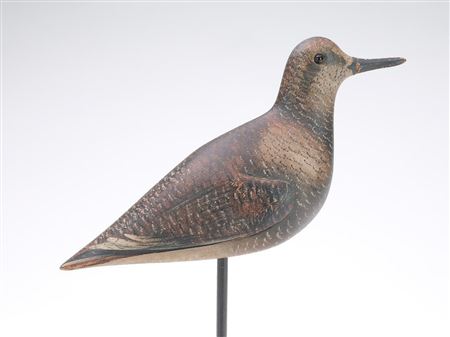
late 19th century. Known for: Decoy carver and stencils of shorebirds.
Lots Sold: 93%, High Price: Subscribe.
John Dilley. Strangely, two of Long Island's most celebrated carvers, Bill Bowman and John Dilley, have escaped researchers' efforts to elaborate on their lives. The first written record of the... Read full biography
John Dilley. Strangely, two of Long Island's most celebrated carvers, Bill Bowman and John Dilley, have escaped researchers' efforts to elaborate on their lives. The first written record of the shorebirds now credited to Dilley appeared in Bill Mackey's 1965 "American Bird Decoys". He related that... Read full biography
John Dilley. Strangely, two of Long Island's most celebrated carvers, Bill Bowman and John Dilley, have escaped researchers' efforts to elaborate on their lives. The first written record of the shorebirds now credited to Dilley appeared in Bill Mackey's 1965 "American Bird Decoys". He related that he had acquired a small rig of very finely painted shorebirds from the widow of Jess Birdsall of Barnegat Bay, NJ. With all innocence, he credited Birdsall with their creation. Fairly quickly,... Read full biography
John Dilley. Strangely, two of Long Island's most celebrated carvers, Bill Bowman and John Dilley, have escaped researchers' efforts to elaborate on their lives. The first written record of the shorebirds now credited to Dilley appeared in Bill Mackey's 1965 "American Bird Decoys". He related that he had acquired a small rig of very finely painted shorebirds from the widow of Jess Birdsall of Barnegat Bay, NJ. With all innocence, he credited Birdsall with their creation. Fairly quickly, however, due to the quality of the painted plumage, speculation centered around the possibility of Elmer Crowell from Cape Cod as the maker. Within a brief period of time, and with additional collectors entering the search, Mackey had to concede that his... Read full biography
John Dilley. Strangely, two of Long Island's most celebrated carvers, Bill Bowman and John Dilley, have escaped researchers' efforts to elaborate on their lives. The first written record of the shorebirds now credited to Dilley appeared in Bill Mackey's 1965 "American Bird Decoys". He related that he had acquired a small rig of very finely painted shorebirds from the widow of Jess Birdsall of Barnegat Bay, NJ. With all innocence, he credited Birdsall with their creation. Fairly quickly, however, due to the quality of the painted plumage, speculation centered around the possibility of Elmer Crowell from Cape Cod as the maker. Within a brief period of time, and with additional collectors entering the search, Mackey had to concede that his initial assumptions were incorrect. This was largely due to the fact that most of the "newly discovered" decoys seem to have b... Read full biography
Artist Biography
Biography page for John Dilley ((late 19th century)), known for Decoy carver and stencils of shorebirds. Showing 1 biographical entries and 0 sample artworks.
John Dilley - Artist Info
About John Dilley
Biography from Guyette & Deeter, Inc.
John Dilley
Strangely, two of Long Island's most celebrated carvers, Bill Bowman and John Dilley, have escaped researchers' efforts to elaborate on their lives.
The first written record of the shorebirds now credited to Dilley appeared in Bill Mackey's 1965 "American Bird Decoys". He related that he had acquired a small rig of very finely painted shorebirds from the widow of Jess Birdsall of Barnegat Bay, NJ. With all innocence, he credited Birdsall with their creation. Fairly quickly, however, due to the quality of the painted plumage, speculation centered around the possibility of Elmer Crowell from Cape Cod as the maker.
Within a brief period of time, and with additional collectors entering the search, Mackey had to concede that his initial assumptions were incorrect. This was largely due to the fact that most of the "newly discovered" decoys seem to have been found on Long Island, not Barnegat Bay or Cape Cod and Mackey felt that their origin was, most likely, from the area of Quogue, on eastern Long Island. Early reports started to emerge that some had been found with a green stencil with the word "Dilley" and one collector stated that he had found six in a box with the name "John Dilley" on the box, suggesting that they were commercially available. Perhaps foolishly, some even went so far as to feel that the attribution stemmed from nothing more than someone seeing the birds and naively commenting "Boy – those are Dilleys". Eventually, the true facts, meager as they are, started to emerge.
Examples began to surface with the sometimes faint but clearly legible signature of "Dilley" (usually under the tail) and some had the species identified on the decoy as well. Skeptics felt that these signatures were applied since Mackey's initial discovery and meant little. In truth, the signatures were under the paint, so it was impossible for a later collector to have added them. Respected early collector, Joe French, was finally able to track down an example with the signature that had been in a documented collection since before 1950, prior to anyone having ever heard of the name Dilley.
Writing in the Jan/Feb 1994 issue of Decoy Magazine, he reported that he had also seen one example with the brand of "Henry and Squires, NY". Henry C Squires was a respected sporting goods dealer on Broadway in downtown New York City. With that lead, an entry was finally located in an 1890 version of Squires' catalog showing that he was, indeed, offering these decoys to sportsmen. At that point, the trail ran cold and nothing of significance, seemingly, has been added to the story.
What remains are the decoys themselves, almost universally acclaimed as being among the very finest of their kind from the entire flyway. Based on form alone, Gigi Hopkins has stated that: "These decoys are 'birdy' – you don't have to see the paint to know what shorebird is being represented". The details in the painted plumage, however, are extraordinary and far exceeded the norm for the period. Carved as working vs mantel birds, the minute detail and perfectly blended surface clearly identifies each intended species.
John Dilley can rest with the confidence that his work is now so widely admired and accepted as the pinnacle of excellence in a working shorebird.