Page loaded successfully. Showing biography for John Ewing Duff.
John Ewing Duff BIOGRAPHY
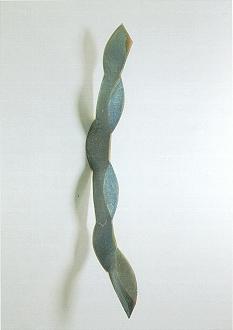
Born 1943 Lafayette, Indiana. Known for: Enamel on fiberglass and bronze biomorphic abstract sculpture.
John Duff’s biomorphic fiberglass sculptures are not the final product of a mental goal but rather, like biology, the finished accumulation of an artistic evolution. An avid surfer as a southern... Read full biography
John Duff’s biomorphic fiberglass sculptures are not the final product of a mental goal but rather, like biology, the finished accumulation of an artistic evolution. An avid surfer as a southern Californian teenager, Duff was first introduced to fiberglass with the maintenance and repair of... Read full biography
John Duff’s biomorphic fiberglass sculptures are not the final product of a mental goal but rather, like biology, the finished accumulation of an artistic evolution. An avid surfer as a southern Californian teenager, Duff was first introduced to fiberglass with the maintenance and repair of surfboards. After moving to New York in 1967, he began sculpting with fiberglass, creating large sculptures that bend and twist in space, at times seemingly defying gravity. The fiberglass, a translucent... Read full biography
John Duff’s biomorphic fiberglass sculptures are not the final product of a mental goal but rather, like biology, the finished accumulation of an artistic evolution. An avid surfer as a southern Californian teenager, Duff was first introduced to fiberglass with the maintenance and repair of surfboards. After moving to New York in 1967, he began sculpting with fiberglass, creating large sculptures that bend and twist in space, at times seemingly defying gravity. The fiberglass, a translucent material, is painted on the inside, lending a subtle, luminescent presence to the forms. With these organic, yet geometric pieces, Duff retains tangible traces of the sculpture’s evolution, leaving rough edges and imperfect surface which illustrate the... Read full biography
John Duff’s biomorphic fiberglass sculptures are not the final product of a mental goal but rather, like biology, the finished accumulation of an artistic evolution. An avid surfer as a southern Californian teenager, Duff was first introduced to fiberglass with the maintenance and repair of surfboards. After moving to New York in 1967, he began sculpting with fiberglass, creating large sculptures that bend and twist in space, at times seemingly defying gravity. The fiberglass, a translucent material, is painted on the inside, lending a subtle, luminescent presence to the forms. With these organic, yet geometric pieces, Duff retains tangible traces of the sculpture’s evolution, leaving rough edges and imperfect surface which illustrate the journey that the artist must devise for the finished piece. Duff’s process carries the fiberglass from the initial geometric shape of a p... Read full biography
Artist Biography
Biography page for John Ewing Duff ((Born 1943)), known for Enamel on fiberglass and bronze biomorphic abstract sculpture. Showing 1 biographical entries and 0 sample artworks.
John Ewing Duff - Artist Info
About John Ewing Duff
Biography from Nerman Museum of Contemporary Art
John Duff’s biomorphic fiberglass sculptures are not the final product of a mental goal but rather, like biology, the finished accumulation of an artistic evolution.
An avid surfer as a southern Californian teenager, Duff was first introduced to fiberglass with the maintenance and repair of surfboards. After moving to New York in 1967, he began sculpting with fiberglass, creating large sculptures that bend and twist in space, at times seemingly defying gravity. The fiberglass, a translucent material, is painted on the inside, lending a subtle, luminescent presence to the forms. With these organic, yet geometric pieces, Duff retains tangible traces of the sculpture’s evolution, leaving rough edges and imperfect surface which illustrate the journey that the artist must devise for the finished piece.
Duff’s process carries the fiberglass from the initial geometric shape of a plaster mold, to taping the image together sealing it by pouring resin inside the piece. Often, the fiberglass is then further manipulated by cutting, pivoting and reattaching elements until the sculptural form is complete. Duff then drills a hole into a seam and pours enamel paint in. the paint produces an ambiguous quality, for it appears translucent while at the same time proving opaque.
A second dimension to Duff’s work is the titles which he gives each sculpture following completion. At times, they are identifiable, as in Meniscus, 1992, which references the concave or convex upper surface of a column of water. Less apparent are works such as Ulawatu Column, 1986, titled after a surfing beach in Bali. Similarly, Wollongong, 1987, named after a beach in Australia, retains forms comparable to waves and seashells. Such use of the title engages the viewer to see deeper meaning and metaphor within Duff’s sculptures.
The culmination of Duff’s involved techniques – the molding, cutting, gluing, painting and titling – produces a figure that inhabits both a rugged and delicate form. This final product is reflective of Duff’s vision of organic sculpture that embraces the geometry of nature. As Duff stated in an interview with New York-based writer Marjorie Welish, “I’m less involved with the history of art than I am with form and nature, that is, with the idea of growth and the idea of evolution.” This approach to sculpture does not merely imitate physical forms found in nature, but rather implies an internalized sense of the creative force of nature. “I want to convey a sense that the work has evolved and will continue to evolve,” said Duff.
Now based in New York, John Duff was born in 1943 in Lafayette, Indiana, and graduated with a BFA from the University of San Francisco in 1967.