Page loaded successfully. Showing biography for John Goodwin Lyman.
John Goodwin Lyman BIOGRAPHY
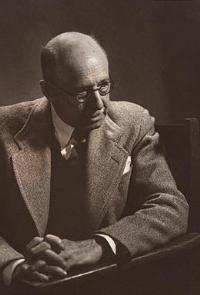
1886 Biddeford, Maine - 1967 Christ Church, Barbados. Known for: Land/waterscape, figure and genre painting, teaching.
John Goodwin Lyman CAS, EGP (1886 - 1967). "In the 1930s, Montreal was the one centre in Canada that encouraged a "modernist" approach to art, because of the influence of a single artist: John... Read full biography
John Goodwin Lyman CAS, EGP (1886 - 1967). "In the 1930s, Montreal was the one centre in Canada that encouraged a "modernist" approach to art, because of the influence of a single artist: John Lyman." - Page 42, Landmarks of Canadian Art (1978), by Peter Mellen (see AskART book references). John... Read full biography
John Goodwin Lyman CAS, EGP (1886 - 1967). "In the 1930s, Montreal was the one centre in Canada that encouraged a "modernist" approach to art, because of the influence of a single artist: John Lyman." - Page 42, Landmarks of Canadian Art (1978), by Peter Mellen (see AskART book references). John Goodwin Lyman was an important Canadian painter, draughtsman, art critic, art theorist, educator and leader in the art community. Hundreds of his works are in the permanent collections of Canadian... Read full biography
John Goodwin Lyman CAS, EGP (1886 - 1967). "In the 1930s, Montreal was the one centre in Canada that encouraged a "modernist" approach to art, because of the influence of a single artist: John Lyman." - Page 42, Landmarks of Canadian Art (1978), by Peter Mellen (see AskART book references). John Goodwin Lyman was an important Canadian painter, draughtsman, art critic, art theorist, educator and leader in the art community. Hundreds of his works are in the permanent collections of Canadian museums. However, his major role in the development of Canadian art in the 20th century was as a bulwark against what he viewed as its isolationism. Lyman was a key catalyst advocating the School of Paris* and the internationalization of Canadian art.... Read full biography
John Goodwin Lyman CAS, EGP (1886 - 1967). "In the 1930s, Montreal was the one centre in Canada that encouraged a "modernist" approach to art, because of the influence of a single artist: John Lyman." - Page 42, Landmarks of Canadian Art (1978), by Peter Mellen (see AskART book references). John Goodwin Lyman was an important Canadian painter, draughtsman, art critic, art theorist, educator and leader in the art community. Hundreds of his works are in the permanent collections of Canadian museums. However, his major role in the development of Canadian art in the 20th century was as a bulwark against what he viewed as its isolationism. Lyman was a key catalyst advocating the School of Paris* and the internationalization of Canadian art. Given his background, he was the perfect person for the job . Quote: "Lyman... Read full biography
Artist Biography
Biography page for John Goodwin Lyman ((1886 - 1967)), known for Land/waterscape, figure and genre painting, teaching. Showing 1 biographical entries and 0 sample artworks.
John Goodwin Lyman - Artist Info
About John Goodwin Lyman
Biography from the Archives of askART
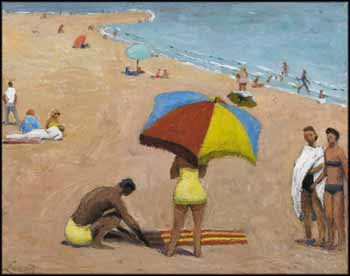 John Goodwin Lyman CAS, EGP (1886 - 1967)
"In the 1930s, Montreal was the one centre in Canada that encouraged a "modernist" approach to art, because of the influence of a single artist: John Lyman." - Page 42, Landmarks of Canadian Art (1978), by Peter Mellen (see AskART book references).
John Goodwin Lyman was an important Canadian painter, draughtsman, art critic, art theorist, educator and leader in the art community. Hundreds of his works are in the permanent collections of Canadian museums. However, his major role in the development of Canadian art in the 20th century was as a bulwark against what he viewed as its isolationism. Lyman was a key catalyst advocating the School of Paris* and the internationalization of Canadian art. Given his background, he was the perfect person for the job .
Quote: "Lyman was one of the best trained, most informed painters Canada has known. He also was one of the best organizers and propagandists in the cause of creative painting." - Page 83 Four Decades: The Canadian Group of Painters and their Contemporaries, 1930 - 1970 (1972), Paul Duval (see AskART book references).
Though Lyman's parents had emigrated to Montreal, Canada from the USA before he was born, his birth occurred in Biddeford, Maine while his mother was staying with family there; and, he died while vacationing in Christ Church, Barbados, an occurrence that isn't surprising given his perpetual globe-trotting. Never-the-less, his lifetime home (when in Canada) was Montreal, Quebec. (1)
Lyman came from a wealthy family and throughout his life spent many months a year outside Canada; and in one instance many years. From 1907 to 1931, he lived mostly in Paris with vacation homes in the south of France; Bermuda; Los Angeles; Provincetown (Massachusetts); Spain; and Tunisia. After returning to Montreal in 1931, he frequently wintered or summered, as the case may be, in Cape Cod (Massachusetts); Barbados (Caribbean); St. Vincent (Caribbean); St. Lucia (Caribbean); Burlington, Vermont; Suriname (South America); and Martinique (Caribbean). The frequent foreign subjects of his paintings reflect the influence of this life-style. (2)
His subjects were nudes, figures, landscapes, portraits, still life, harbor scenes, beaches, street scenes, genre*; and, as a modernist - shape, color and texture. Their locations were the cities and countryside near where he lived and travelled; the images include a preponderance of exotic genre and scenery. His mediums were oil, watercolor, charcoal, ink, graphite, Conte Crayon*, and pencil crayon. His styles included Realism*; but Fauvism*, and the influence of Matisse, was by far the most prevalent. AskART have some good illustrations of his work. (3)
Lyman's formal education began at McGill University, Montreal in 1905; however he left for Paris in 1907. His formal art education started there with drawing classes (1907) under Pierre Amedee Marcel-Beronneau (4); it continued at the Royal College of Art, South Kensington, London (1907 - 1908); then the Académie Julian*, Paris (1908) under Jean-Paul Laurens; and finally the Académie Matisse (1909 - 1910) under his most significant inspiration Henri Matisse. (5)
Lyman's career as a teacher started in the early 1930s instructing independent summer classes for a few years in St. Jovite, Quebec, about 50 miles northwest of Montreal, and at the Atelier [see below] (c. 1931 - 1936). In 1949, he became an art professor at McGill University; and in 1953 was appointed director of its Fine Arts Department; where he worked until retirement in 1958. Paterson Ewen was one of his students. (6)
Throughout his life, Lyman's great cause was his battle against the isolationism of Canadian art epitomized and facilitated by the Group of Seven* and their followers; whom he believed were standing in the way of artistic progress in Canada. His objective was to introduce Canadian artists and collectors to more foreign influence; at first French post-impressionism, but later it included Automatism*, Surrealism*, and Abstract Expressionism* - almost anything but paintings of Georgian Bay. He was one of the first supporters of Paul-Emile Borduas and the advanced styles of art taking root in French Canada. (7)
Quote: "In preparing exhibitions for abroad it might be to the advantage of this country to take into account the fact that the relative importance given the Group of Seven collectively at home, where the work is endowed with the romance of a pioneer saga, is not fully apparent to outsiders who judge painting by itself." - John Lyman reviewing the Canadian selections for the Golden Gate International Exposition* (1939). Source: Page 288, The Group of Seven: Art for a Nation (1995), by Charles C. Hill (see AskART book references).
Quote: "…the emphasis [on the Group of Seven] has been misplaced…The real trail must be blazed towards a perception of universal relations that are present in every parcel of creation, not towards the Arctic Circle." - John Lyman (1932) - Page 273, The Group of Seven: Art for a Nation (1995), by Charles C. Hill (see AskART book references).
Lyman wasn't alone in this belief… in 1927 Clarence Gagnon wrote - "Nothing can be done to change matters as long as the Group of Seven will fight and dictate to all other artists in Canada, nothing will happen to make things better." - Page 331, Painting in Canada: a History (1966), by J. Russell Harper (see AskART book references).
Quote: "… John Lyman and Marc-Aurele Fortin were already light-years ahead of the Group in terms of adherence to modernist painting ideas. The Group of Seven was, truthfully speaking, a Toronto-based regional school of painting, which made a national name for itself by painting in various parts of the country." - Page 184 The Group of Seven and Tom Thomson (2003), by David Silcox (see AskART book references).
To try and improve the situation Lyman lectured, taught and wrote...
Quote: "… in March 1936, Lyman began an art column in The Montrealer that over the next four years would even more effectively promote the values of pure painting as typified by the School of Paris. Lucid, intelligent, entertaining, he established a level of art criticism previously unknown in Canada." - Page 203 The Concise History of Canadian Painting (1973), by Dennis Reid (see AskART book references).
He also founded, in progression, three art associations - the Atelier (1931 - 1933), the Eastern Group of Painters* (1938 - 1950) and its off-spring the Contemporary Arts Society* (1939 - 1948). All were dedicated to providing exhibition venues for avant-garde artists and encouraging a modernist approach in the creation of art. (8)
Quote: "In 1945, The Contemporary Arts Society expanded its activities to include Toronto… [it] came as a shocking experience to a city where abstract - or even semi-abstract - art was practiced by only an isolated artist or two, and was roundly condemned both by painters and the public" - Page 84 Four Decades (1972), by Paul Duval (see AskART book references).
In addition to exhibiting with the three art associations he founded, Lyman also exhibited with the Art Association of Montreal [now the Montreal Museum of fine Arts] from 1910 to 1955 and with the Canadian Group of Painters* in 1936, 1937 and 1939. He also exhibited with Eric Goldberg, Good ridge Roberts and Philip Surrey at the Montreal Museum of Fine Arts in 1949; and, the information form he submitted to the National Gallery of Canada on September 9, 1942 lists several other exhibition venues, but without dates, they are: Salon des Independents*, Salon' Automne*, and Salon des Tuileries*. He also lists "Art of the Americas", Dallas, Texas (1938). (9)
His works were the subject of several solo and retrospective exhibitions starting in 1913 at the Art Association of Montreal. Then reviews were so hostile against his advanced painting style - "… an atrocious disregard for every known canon of sane art, are here." - that many said it was the reason he returned to Europe, and lived there for the next 18 years. Much later, and posthumously, his works have been the subject of solo and retrospective exhibitions at the National Gallery of Canada (1963); Montreal Museum of Fine Arts (1963); Art Gallery of Hamilton, Ontario(1963); Quebec Museum of Fine Arts, Quebec City (1966); Montreal Museum of Contemporary Art (1967); Art Gallery of Ontario, Toronto (1986); Agnes Etherington Art Centre, Kingston, Ontario (1986); and the Montreal Museum of Contemporary Art, "John Lyman 1886 - 1967: I Live by My Eyes" (1987). (10)
His works have also been included in numerous important group exhibitions at major public venues such as the Sixth Biennial Exhibition of Canadian Painting, National Gallery of Canada (1965); "Three Hundred Years of Canadian Art", National Gallery of Canada (1967); "Canadian Painting in the Thirties", National Gallery of Canada (1975); "The Arts of Quebec", Montreal Museum of Contemporary Art (1974); "Three Generations of Quebec Painting", Montreal Museum of Contemporary Art (1976); "Major Movements in Twentieth Century Canadian Art", Edmonton Art Gallery [now Art Gallery of Alberta] (1978); "The Contemporary Arts Society: 1939 - 1948", Montreal Museum of Contemporary Art (1981); "Modern Art in Quebec 1916 - 1946", National Gallery of Canada (1982); "The Advent of Modernism", High Museum of Art, Atlanta, Georgia (1986); "The Division of Vision", Montreal Museum of Contemporary Art (1994); "The Birth of the Modern: Post-Impressionism in Canadian Art, 1900 - 1920", Robert McLaughlin Gallery, Oshawa, Ontario (2001); and "The Place of Magic, Quebec in the 40s, 50s and 60s", Montreal Museum of Contemporary Art (2006).
Through the years his works were also exhibited at several important commercial venues including Valentine Gallery, New York City; Dominion Gallery, Montreal; and Watson Art Galleries, Montreal.
Lyman's works are avidly collected in Canada; and they are in numerous public collections. According to the Canadian Heritage Information Network* there are 257 of his works in the permanent collections of museums across the country. They include: the Winnipeg Art Gallery (Manitoba), Art Gallery of Hamilton (Ontario), Art Gallery of Nova Scotia (Halifax), Art Gallery of Greater Victoria (B.C.), Art Gallery of Alberta (Edmonton), McMichael Canadian Art Collection (Kleinburg, Ontario), Agnes Etherington Art Centre (Kingston, Ontario), Art Gallery of Ontario (Toronto), Mendel Art Gallery (Saskatoon, Saskatchewan), Leonard & Bina Ellen Art Gallery (Concordia University, Montreal), Quebec Museum of Fine Arts (Quebec City), Montreal Museum of Fine Arts, Montreal Museum of Contemporary Art, Beaverbrook Art Gallery (Fredericton, New Brunswick), Joliette Art Museum (Quebec), and the National Gallery of Canada, which houses 40 of his works.
John Lyman's art and the very influential role he played in the development of modern art in Canada are discussed in virtually every Canadian art history book, virtually every Canadian history of modern art book and … virtually every book about the Group of Seven. There are also monographs from many of his solo and retrospective exhibitions; one of the most substantial being John Lyman 1886 - 1967 (1986), by Louise Dompierre published by the Agnes Etherington Art Centre.
Footnotes:
(1) Sources: A Dictionary of Canadian Artists (1974), by Colin S. MacDonald (see AskART book references); and the National Gallery of Canada - http://cybermuse.gallery.ca/cybermuse/search/bio_e.jsp?iartistid=3403.
(2) Source: A Dictionary of Canadian Artists (1974), by Colin S. MacDonald (see AskART book references).
(3) Sources: AskART Images; and museum illustrations and descriptions of mediums in the Canadian Heritage Information Network* data base.
(4) All artist teachers, and artist associates mentioned in this biography have their own pages in AskART.
(5.1) Sources: Information forms deposited by Lyman with the National Gallery of Canada in 1942, 1965, and three undated, are the core sources for much of the data on education, association memberships, and exhibitions. Additional sources are noted in the respective footnotes. The NGC Information forms can be viewed at: NGC 1942 - http://cybermuse.gallery.ca/cybermuse/servlet/imageserver?src=DO9236&ext=x.pdf; NGC 1965 - http://cybermuse.gallery.ca/cybermuse/servlet/imageserver?src=DO9237&ext=x.pdf; NGC undated - http://cybermuse.gallery.ca/cybermuse/servlet/imageserver?src=DO9238&ext=x.pdf; NGC undated - http://cybermuse.gallery.ca/cybermuse/servlet/imageserver?src=DO9239&ext=x.pdf; and NGC undated (c.after 1960) http://cybermuse.gallery.ca/cybermuse/servlet/imageserver?src=DO9240&ext=x.pdf.
(5.2) "Matisse visited us only once a fortnight and then his criticism usually took the form of a long chat about fundamental principles and qualities …Once Matisse invited us to his house at Issy-les-Moulineaux, the house with the large studio where, besides the two versions of 'La Desserte', the 'Red Interior' and dozens of other well-known pictures, he painted 'The Dance', which was there at the time. Later I came to know the model with the glowing skin (we nicknamed her the Italian sunset) whom Matisse had taken south with him in the summer and who, posing among green pines against the Mediterranean blue, had suggested the colour of 'The Dance'." Sources: Canadian Art, Vol. 12, No. 2, Winter, 1955 "Adieu, Matisse" by John Lyman, pages 44-46; and A Dictionary of Canadian Artists (1974), by Colin S. MacDonald (see AskART book references).
(5.3) Note: Other Lyman influences, mentioned in many sources, are James Wilson Morrice, Matthew Smith, Per Krog, and Hans Purrmann; all were friends in Paris.
(6) Source: NGC information forms.
(7) Source: Landmarks of Canadian Art (1978), by Peter Mellen (see AskART book references).
(8) Sources: Ibid; NGC information forms; and A Dictionary of Canadian Artists (1974), by Colin S. MacDonald (see AskART book references). Note: He was also a charter member of the Arts Club of Montreal (1912).
Also note: When John failed the physical to join the Army in World War I, both he and his wife joined the Red Cross and served for a year and half in France until John became seriously ill at Marseilles. Source: A Dictionary of Canadian Artists (1974), by Colin S. MacDonald (see AskART book references).
(9) Sources: NGC information forms; Four Decades (1972), by Paul Duval; The Collector's Dictionary of Canadian Artists at Auction (2001), by Anthony R. Westbridge and Diana L. Bodnar; and A Dictionary of Canadian Artists (1974), by Colin S. MacDonald (see AskART book references).
(10) Exhibition sources: NGC information forms; the Montreal Museum of Contemporary Art and the Art Gallery of Ontario, both have extensive archived catalogues online; and A Dictionary of Canadian Artists (1974), by Colin S. MacDonald (see AskART book references). The review quote, written by Samuel Morgan-Powell, is taken from page 57 The Group of Seven: Art for a Nation (1995), by Charles C. Hill (see AskART book references).
* For more in-depth information about these terms and others, see AskART.com Glossary http://www.askart.com/AskART/lists/Art_Definition.aspx.
Prepared and contributed to askART by M.D. Silverbrooke.