Page loaded successfully. Showing biography for John Henry Foley.
John Henry Foley BIOGRAPHY
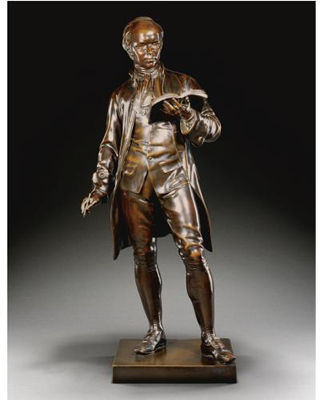
1818 Dublin, Ireland - 1874 London, England. Known for: Monumental heroic statue sculpture.
John Henry Foley (1818-1874). The first major figure in Irish sculpture, John Henry Foley was born in Montgomery Street, Dublin in 1818. He is best known for his heroic and monumental statues,... Read full biography
John Henry Foley (1818-1874). The first major figure in Irish sculpture, John Henry Foley was born in Montgomery Street, Dublin in 1818. He is best known for his heroic and monumental statues, including that of Daniel O'Connell (The Liberato') on O'Connell Street, Oliver Goldsmith and Edmund Burke... Read full biography
John Henry Foley (1818-1874). The first major figure in Irish sculpture, John Henry Foley was born in Montgomery Street, Dublin in 1818. He is best known for his heroic and monumental statues, including that of Daniel O'Connell (The Liberato') on O'Connell Street, Oliver Goldsmith and Edmund Burke on the grounds of Trinity College, Dublin and Henry Grattan on College Green, Dublin. Foley showed great talent at an early age and at 13 began to study modeling, architectural drawing, studies of the... Read full biography
John Henry Foley (1818-1874). The first major figure in Irish sculpture, John Henry Foley was born in Montgomery Street, Dublin in 1818. He is best known for his heroic and monumental statues, including that of Daniel O'Connell (The Liberato') on O'Connell Street, Oliver Goldsmith and Edmund Burke on the grounds of Trinity College, Dublin and Henry Grattan on College Green, Dublin. Foley showed great talent at an early age and at 13 began to study modeling, architectural drawing, studies of the human form and ornamental design at the Royal Dublin Society, where he went on to win several prizes. At the age of 17 he moved to London to continue his studies at the Royal Academy, where he was later to become an associate member in 1849 and a... Read full biography
John Henry Foley (1818-1874). The first major figure in Irish sculpture, John Henry Foley was born in Montgomery Street, Dublin in 1818. He is best known for his heroic and monumental statues, including that of Daniel O'Connell (The Liberato') on O'Connell Street, Oliver Goldsmith and Edmund Burke on the grounds of Trinity College, Dublin and Henry Grattan on College Green, Dublin. Foley showed great talent at an early age and at 13 began to study modeling, architectural drawing, studies of the human form and ornamental design at the Royal Dublin Society, where he went on to win several prizes. At the age of 17 he moved to London to continue his studies at the Royal Academy, where he was later to become an associate member in 1849 and a full member in 1858. His first public success came in 1840 when he exhibited his Death of Abel an... Read full biography
Artist Biography
Biography page for John Henry Foley ((1818 - 1874)), known for Monumental heroic statue sculpture. Showing 2 biographical entries and 0 sample artworks.
John Henry Foley - Artist Info
About John Henry Foley
Biography from the Archives of askART
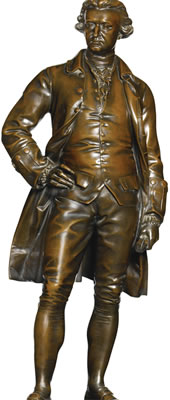 John Henry Foley (1818-1874)
The first major figure in Irish sculpture, John Henry Foley was born in Montgomery Street, Dublin in 1818. He is best known for his heroic and monumental statues, including that of Daniel O'Connell (The Liberato') on O'Connell Street, Oliver Goldsmith and Edmund Burke on the grounds of Trinity College, Dublin and Henry Grattan on College Green, Dublin.
Foley showed great talent at an early age and at 13 began to study modeling, architectural drawing, studies of the human form and ornamental design at the Royal Dublin Society, where he went on to win several prizes.
At the age of 17 he moved to London to continue his studies at the Royal Academy, where he was later to become an associate member in 1849 and a full member in 1858. His first public success came in 1840 when he exhibited his Death of Abel and Innocence and Ino and the Infant Bacchus, which resulted in a commission from the Earl of Ellesmere, who wanted a version executed in marble for his collection at Bridgewater House. This success was quickly followed by others, including Lear and Cordelia and Death of Lear, exhibited in 1841; Venus Rescuing Aeneas and The Houseless Wanderer, exhibited in 1842 and Prospero and Miranda in 1843.
When The Act of Union (1800) moved the center of power from Dublin to London, many Irish artists moved to London. Foley, along with his contemporaries such as John Lawlor (1820-1901) and Samuel Ferris Lynn (1834-76), worked with British sculptors to produce large scale works including the Albert Memorial in Hyde Park. Among Foley's portrait sculptures, those considered to be the most important include that of Viscount Hardinge (Calcutta, 1858), Sir James Outram (Calcutta, 1864) and Lord Herbert (1864) in Waterloo Place.
Although a master in both stone and bronze, Foley's sculpture never quite reached the artistic heights of artists like Rodin or Michelangelo, but he did produce some wonderful no-nonsense style, monumental portraits. This tradition continued into the twentieth century with the works of Irish sculptors Oisin Kelly (1915-1981), Hilary Heron (1923-77) and Seamus Murphy (1907-74) who pioneered the use of new casting techniques and promoted the concept of an Irish type of sculpture.
John Henry Foley died at Hampstead, London on 27 August 1874 and was buried in the Crypt at St. Paul's Cathedral. It was declared in his obituaries that the death of a sculptor of such great skill to be a "national loss, for power to produce works so large and in so grand a style is very rare". They praised his "careful and scholarly" work, "good, honest and intelligent workmanship" and "thorough sense of style". On his death, which was a major blow to the history of Irish art, he donated his models to the Royal Dublin Society, and a significant portion of his property to the Artists Benevolent Fund.
Source:
Online Encyclopedia of irish and World Art
http://www.visual-arts-cork.com/irish-sculpture/john-henry-foley.htmBiography from Whyte's
John Henry Foley (1818-1874) was probably the most influential sculptor in Irish history. Born in Dublin, his breath-taking statues and equestrian masterpieces strode across city squares and parklands from Dublin to Kolkata to Virginia. His best-known Irish works include the Daniel O'Connell monument on O'Connell Street and the Father Mathew statue in Cork. Queen Victoria personally requested Foley to create the statue of her beloved husband for the Albert Memorial in London. When Foley died, the queen decreed the gifted Irishman be buried in Westminster Abbey, an extraordinary honour for a man born into relative poverty in Dublin's northside. A boy genius, he was educated at the Royal Dublin Society's Drawing Schools at Leinster House, where he won numerous prizes in modelling. He moved to the Royal Academy in London to develop his career. In 1844 he won a contest to sculpt two figures for the newly restored Houses of Parliament at Westminster. He was never short of portrait commissions in Britain, Ireland and across the Empire. Foley's works were fated to provoke controversy long after his death. His hat-trick of imperialist equestrian statues in Kolkatta were dismantled after Indian independence. Several of his Irish works were also destroyed -his statue of Lord Dunkellin was heaved into the River Corrib by the people of Galway in 1922; his Dublin monuments to Lord Carlisle and General Gough were blown sky-high in the 1950s. In February 2018, the Oireachtas Petitions Committee rejected a petition seeking the removal of Foley's statue of Prince Albert from Leinster Lawn by Dáil Éireann. To mark the bicentenary of Foley's birth, filmmaker Sé Merry Doyle and historian Turtle Bunbury teamed up with the OPW to host 'Ireland Salutes John Henry Foley'. This included an afternoon of film, talks and debate at Dublin Castle on May 20, 2018. The other speakers who gathered to consider Foley's life and times were Dr Patrick Wallace, Dr Paula Murphy, Jason Ellis and Ronan Sheehan.