Page loaded successfully. Showing biography for John Leith Craxton.
John Leith Craxton BIOGRAPHY
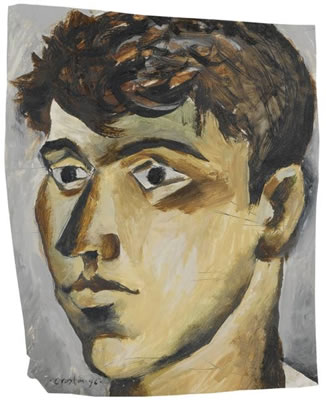
1922 - 2009. Known for: Mediterranean-inspired art, close ties with notable British artists.
John Leith Craxton, RA, (b. October 3, 1922 - d. November 17, 2009) . Sometimes known as an English neo-Romantic painter, he preferred to be known as an Arcadian. He applied for Chelsea School of Art... Read full biography
John Leith Craxton, RA, (b. October 3, 1922 - d. November 17, 2009) . Sometimes known as an English neo-Romantic painter, he preferred to be known as an Arcadian. He applied for Chelsea School of Art but was considered to be too young to attend nude life classes. He studied instead at the Académie... Read full biography
John Leith Craxton, RA, (b. October 3, 1922 - d. November 17, 2009) . Sometimes known as an English neo-Romantic painter, he preferred to be known as an Arcadian. He applied for Chelsea School of Art but was considered to be too young to attend nude life classes. He studied instead at the Académie Julian and the Académie de la Grande Chaumière in Paris during 1939, until the outbreak of war meant he had to complete his studies in London, at Westminster School of Art and the Central School of... Read full biography
John Leith Craxton, RA, (b. October 3, 1922 - d. November 17, 2009) . Sometimes known as an English neo-Romantic painter, he preferred to be known as an Arcadian. He applied for Chelsea School of Art but was considered to be too young to attend nude life classes. He studied instead at the Académie Julian and the Académie de la Grande Chaumière in Paris during 1939, until the outbreak of war meant he had to complete his studies in London, at Westminster School of Art and the Central School of Art. Between 1941 and 1942, having been rejected for military service, he attended Goldsmiths College, then toured the wilds of Pembrokeshire with Graham Sutherland in 1943. His first solo exhibition was in London in 1942 at the Swiss Cottage Café, and... Read full biography
John Leith Craxton, RA, (b. October 3, 1922 - d. November 17, 2009) . Sometimes known as an English neo-Romantic painter, he preferred to be known as an Arcadian. He applied for Chelsea School of Art but was considered to be too young to attend nude life classes. He studied instead at the Académie Julian and the Académie de la Grande Chaumière in Paris during 1939, until the outbreak of war meant he had to complete his studies in London, at Westminster School of Art and the Central School of Art. Between 1941 and 1942, having been rejected for military service, he attended Goldsmiths College, then toured the wilds of Pembrokeshire with Graham Sutherland in 1943. His first solo exhibition was in London in 1942 at the Swiss Cottage Café, and his first major solo show at the Leicester Galleries in 1944. His work was seen as part of the neo-romantic revival, an... Read full biography
Artist Biography
Biography page for John Leith Craxton ((1922 - 2009)), known for Mediterranean-inspired art, close ties with notable British artists. Showing 2 biographical entries and 0 sample artworks.
John Leith Craxton - Artist Info
About John Leith Craxton
Biography from the Archives of askART
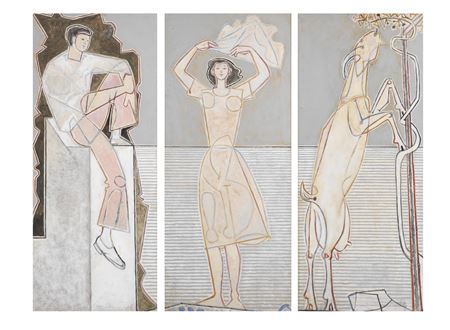 John Leith Craxton, RA, (b. October 3, 1922 - d. November 17, 2009)
Sometimes known as an English neo-Romantic painter, he preferred to be known as an Arcadian.
He applied for Chelsea School of Art but was considered to be too young to attend nude life classes. He studied instead at the Académie Julian and the Académie de la Grande Chaumière in Paris during 1939, until the outbreak of war meant he had to complete his studies in London, at Westminster School of Art and the Central School of Art. Between 1941 and 1942, having been rejected for military service, he attended Goldsmiths College, then toured the wilds of Pembrokeshire with Graham Sutherland in 1943. His first solo exhibition was in London in 1942 at the Swiss Cottage Café, and his first major solo show at the Leicester Galleries in 1944. His work was seen as part of the neo-romantic revival, and his early pre-1945 work shows the influence of Samuel Palmer and Graham Sutherland, and he was also heavily influenced by friend and patron Peter Watson.
After the war he traveled to the Isles of Scilly, Switzerland, Istanbul, Spain, Italy, but mainly Greece especially Crete, from 1946-1966. He moved permanently to Crete from about 1970, and switched between living in Crete and in London. The writer Richard Olney remembered Craxton in Paris, en-route to Greece during the summer of 1951;
"Most nights, John Craxton, a young English painter, arrived to share my bed; we kept each other warm. He moved in a bucolic dreamworld, peopled with beautiful Greek goat herders. Soon he left for Greece."
In 1951 Craxton was a ballet designer for the Royal Ballet's production of Daphnis and Chloë, at a time when ballet stage design provided a haven for the neo-Romantic arts. He was able to use his first-hand experience of Greece to inform his ballet designs.
He had numerous shows of his paintings in both England and Greece. A major retrospective show was held at Whitechapel Art Gallery in 1967. His later work became more formal, structured and decorative, although still expressing Romantic pastoral themes.
He produced the scenery and costumes for the Royal Opera House's 1968 production of Igor Stravinsky's Apollo.
His work was also reproduced in magazines such as New Writing, Horizon, and he has illustrated the books of Patrick Leigh Fermor. He produced lithographs for several anthologies edited by Geoffrey Grigson, including Visionary Poems (1944).
His older brother Harold Antony Craxton (1918-1999) became a leading television producer and outside broadcaster. His sister Janet became a notable oboist.
He was elected Royal Academician in 1993. Craxton lived and worked in both Chania, Crete and London. His love of Crete extended to his being one of the British Honorary Consuls there. He never married; he died aged 87, survived by his long-term partner Richard Riley.
Source:
wikipedia.orgBiography from Roseberys
John Leith Craxton, a British artist who flourished in the 20th century, shared a studio in London with Lucien Freud early in his career. He developed close ties with other notable British artists such as Graham Sutherland, Robert Colquhoun, and John Piper. Craxton was fascinated by Arcadian life and this theme fueled his art for much of his career. He became a Royal Academician in 1993 and his works are held in prestigious collections such as the Tate and V&A. In 2022, a major touring show of his work was launched at the Benaki Museum, and a retrospective titled 'John Craxton: A Modern Odyssey' is set to begin at Pallant House Gallery in October 2023.