Page loaded successfully. Showing biography for John Luke.
John Luke BIOGRAPHY
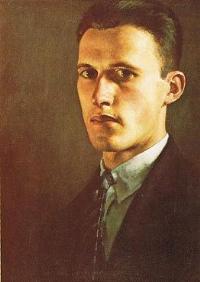
1906 Belfast, Ireland - 1975 Belfast, Ireland. Known for: Landscape and figure painting, murals.
John Luke RUA (1906-75). The Irish landscape artist and figurative painter John Luke was born in Belfast and worked in a shipyard and Flax Mill before taking night classes at the Belfast School of... Read full biography
John Luke RUA (1906-75). The Irish landscape artist and figurative painter John Luke was born in Belfast and worked in a shipyard and Flax Mill before taking night classes at the Belfast School of Art. There, he won a scholarship and the following year a prize in a Royal Dublin Society competition... Read full biography
John Luke RUA (1906-75). The Irish landscape artist and figurative painter John Luke was born in Belfast and worked in a shipyard and Flax Mill before taking night classes at the Belfast School of Art. There, he won a scholarship and the following year a prize in a Royal Dublin Society competition which led him to travel to London to study fine art painting, drawing and sculpture at the Slade School of Art* under Henry Tonks. The artists Tom Carr and F. E. McWilliam were his contemporaries at... Read full biography
John Luke RUA (1906-75). The Irish landscape artist and figurative painter John Luke was born in Belfast and worked in a shipyard and Flax Mill before taking night classes at the Belfast School of Art. There, he won a scholarship and the following year a prize in a Royal Dublin Society competition which led him to travel to London to study fine art painting, drawing and sculpture at the Slade School of Art* under Henry Tonks. The artists Tom Carr and F. E. McWilliam were his contemporaries at the time. After exhibiting at the Redfern Galleries in London, he completed a mural for a travel company, spending the proceeds on a trip to Paris. After this, he took evening classes in figure painting at the Westminster School of Art* under Walter... Read full biography
John Luke RUA (1906-75). The Irish landscape artist and figurative painter John Luke was born in Belfast and worked in a shipyard and Flax Mill before taking night classes at the Belfast School of Art. There, he won a scholarship and the following year a prize in a Royal Dublin Society competition which led him to travel to London to study fine art painting, drawing and sculpture at the Slade School of Art* under Henry Tonks. The artists Tom Carr and F. E. McWilliam were his contemporaries at the time. After exhibiting at the Redfern Galleries in London, he completed a mural for a travel company, spending the proceeds on a trip to Paris. After this, he took evening classes in figure painting at the Westminster School of Art* under Walter Bayes and showed at the Leger Gallery. In 1931 he returned to Belfast. By now, landscape painting was his dom... Read full biography
Artist Biography
Biography page for John Luke ((1906 - 1975)), known for Landscape and figure painting, murals. Showing 2 biographical entries and 0 sample artworks.
John Luke - Artist Info
About John Luke
Biography from the Archives of askART
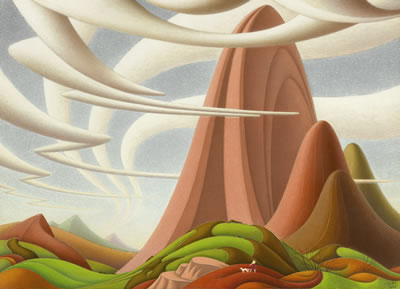 John Luke RUA (1906-75)
The Irish landscape artist and figurative painter John Luke was born in Belfast and worked in a shipyard and Flax Mill before taking night classes at the Belfast School of Art. There, he won a scholarship and the following year a prize in a Royal Dublin Society competition which led him to travel to London to study fine art painting, drawing and sculpture at the Slade School of Art* under Henry Tonks. The artists Tom Carr and F. E. McWilliam were his contemporaries at the time. After exhibiting at the Redfern Galleries in London, he completed a mural for a travel company, spending the proceeds on a trip to Paris. After this, he took evening classes in figure painting at the Westminster School of Art* under Walter Bayes and showed at the Leger Gallery.
In 1931 he returned to Belfast. By now, landscape painting was his dominant interest. In 1933 he exhibited with the Northern Ireland Guild of Artists. More exhibitions followed, in Belfast and at the Royal Hibernian Academy* (RHA) in Dublin. In 1938 he assisted in the painting of a frieze for the Ulster Pavilion in the Empire Exhibition in Glasgow. The following year he represented Northern Ireland at the New York World Fair. During WWII Luke stopped painting for a spell and retired to a cottage in County Armagh, earning his living by teaching art at Manor House school.
In 1946, Luke had a solo exhibition of his oil and tempera paintings at the Belfast Museum and Art Gallery: a total of 85 artworks including four sculptures. In 1947 John Luke's work was included at an exhibition of noted Ulster artists in London. Then, in 1948, the Northern Ireland Council For Encouragement of Music and The Arts (CEMA), the forerunner of the arts council of Northern Ireland, held a retrospective for Luke in Belfast. In 1951, Luke painted a mural for the Festival of Britain in his characteristically, formalized style. There is another mural of his in the Masonic Hall, Rosemary Street, Belfast, and an oil The Old Callan Bridge in the County Museum, Armagh. From 1953 he lectured at Belfast College of Art.
John Luke spent his final years - after the death of his mother - in relative poverty in a flat in Duncairn Gardens, Belfast, and died in the Mater Hospital in 1975. The following year, the Arts Councils of Ireland mounted a comprehensive exhibition of his work at the Ulster Museum and the Douglas Hyde Gallery in Dublin. His artworks appear in several public and private collections, including: Ulster Museum, Belfast; County Museum, Armagh; Queen's University Belfast; and many more.
Source:
Online Encyclopedia of Irish and World Art
http://www.visual-arts-cork.com/irish-artists/john-luke.htm
* For more in-depth information about these terms and others, see AskART.com Glossary http://www.askart.com/AskART/lists/Art_Definition.aspxBiography from Roseberys
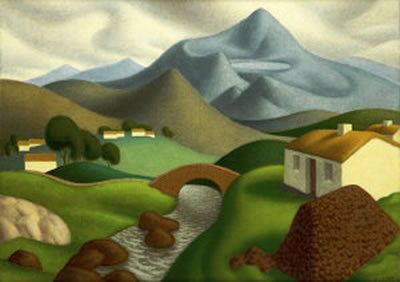 John Luke was an Irish artist. He was the fifth of seven sons and one daughter of James Luke and his wife Sarah, originally from Ahoghill. He attended the Hillman Street National School and in 1920 went to work at the York Street Flax Spinning Company. He then went on soon after to become a riveter at the Workman, Clark shipyard and whilst working there he enrolled in evening classes at the Belfast College of Art.
Luke excelled at the college under the tutelage of Seamus Stoupe and Newton Penpraze. His contemporaries included Romeo Toogood, Harry Cooke Knox, George MacCann, and Colin Middleton. In 1927, he won the coveted Dunville Scholarship which enabled him to attend the Slade School of Art in London, where he studied painting and sculpture under the celebrated Henry Tonks, who greatly influenced his development as a draughtsman.
Luke remained at the Slade School until 1930, in which year he won the Robert Ross Scholarship. On leaving the Slade he stayed in London, intent on establishing himself in the art world. For a time he shared a flat with fellow-Ulsterman F.E. McWilliam (1909–1992), and enrolled as a part-time student of Walter Bayes at the Westminster School of Art to study wood-engraving. He began to exhibit his work and in October 1930 showed two paintings, The Entombment and Carnival, in an exhibition of contemporary art held at Leger Galleries. The latter composition, depicting a group of masked merry-makers, was singled out by the influential critic, P.G. Konody of the Daily Mail (3 October 1930), as 'one of the most attractive features of the exhibition'. But the economic climate was deteriorating and a year later, at the end of 1933, he was driven back to Belfast by the recession. He remained in Belfast, apart from a time during the Second World War when he went to Killylea, County Armagh.
Source: Wikipedia