Page loaded successfully. Showing biography for John Orth.
John Orth BIOGRAPHY
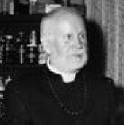
1889 Bavaria/ Marksteft, Germany - 1976 Santa Ana, California. Known for: Portrait, psychic creations, still-life and landscape painting.
The following information is provided by Frances Baggett of Huntington Beach, California, who is writing a biography of this artist. From Santa Anna, California where he died in 1976, John Orth was... Read full biography
The following information is provided by Frances Baggett of Huntington Beach, California, who is writing a biography of this artist. From Santa Anna, California where he died in 1976, John Orth was one of the last in that area to paint in the style of the Old Masters. Late in his life, he adopted a... Read full biography
The following information is provided by Frances Baggett of Huntington Beach, California, who is writing a biography of this artist. From Santa Anna, California where he died in 1976, John Orth was one of the last in that area to paint in the style of the Old Masters. Late in his life, he adopted a gothic style. His forte was portraiture of well known persons that included Winston Churchill, Charles Laughton, and Albert Einstein. He was originally from Bavaria and migrated to the United States... Read full biography
The following information is provided by Frances Baggett of Huntington Beach, California, who is writing a biography of this artist. From Santa Anna, California where he died in 1976, John Orth was one of the last in that area to paint in the style of the Old Masters. Late in his life, he adopted a gothic style. His forte was portraiture of well known persons that included Winston Churchill, Charles Laughton, and Albert Einstein. He was originally from Bavaria and migrated to the United States in 1923. He and his wife Didi led very interesting lives, and she served as the model for most of his figure paintings. Orth studied at the Nuremberg College of Fine Arts in Bavaria; the Julian Academy in Paris, and the Academy of Fine Arts in Munich.... Read full biography
The following information is provided by Frances Baggett of Huntington Beach, California, who is writing a biography of this artist. From Santa Anna, California where he died in 1976, John Orth was one of the last in that area to paint in the style of the Old Masters. Late in his life, he adopted a gothic style. His forte was portraiture of well known persons that included Winston Churchill, Charles Laughton, and Albert Einstein. He was originally from Bavaria and migrated to the United States in 1923. He and his wife Didi led very interesting lives, and she served as the model for most of his figure paintings. Orth studied at the Nuremberg College of Fine Arts in Bavaria; the Julian Academy in Paris, and the Academy of Fine Arts in Munich.... Read full biography
Artist Biography
Biography page for John Orth ((1889 - 1976)), known for Portrait, psychic creations, still-life and landscape painting. Showing 3 biographical entries and 0 sample artworks.
John Orth - Artist Info
About John Orth
Biography from the Archives of askART
 The following information is provided by Frances Baggett of Huntington Beach, California, who is writing a biography of this artist.
From Santa Anna, California where he died in 1976, John Orth was one of the last in that area to paint in the style of the Old Masters. Late in his life, he adopted a gothic style. His forte was portraiture of well known persons that included Winston Churchill, Charles Laughton, and Albert Einstein.
He was originally from Bavaria and migrated to the United States in 1923. He and his wife Didi led very interesting lives, and she served as the model for most of his figure paintings.
Orth studied at the Nuremberg College of Fine Arts in Bavaria; the Julian Academy in Paris, and the Academy of Fine Arts in Munich.Biography from the Archives of askART
 Born in Marksteft, Germany on July 26, 1889. Orth studied in Nuremberg, Munich, and in Paris at Académie Julian. He arrived in the U.S. in 1923 and was active in Houston and Kansas City before settling in Los Angeles in 1938. Sitters for his portraits included Albert Einstein and Winston Churchill; his wife modeled for his figure paintings. Orth died in Santa Ana, CA on May 26, 1976.
Exhibition:
Painters & Sculptors of Los Angeles, 1940s; Laguna Beach Art Association, 1945.Biography from John W. Orth Studio (CLOSED)
John W. Orth was born in Bavaria in 1889. He sold his first painting, a water color, when he was 13. At age 15 studied under a scholarship at Nuremberg's College of Fine Arts. Three years later, again on a scholarship, he attended Munich's Academy of Fine Arts. From there he went on to study at the Art Academy Julien in Paris and then traveled throughout Europe, studying work by the Old Masters.
For Nuremberg's Albrecht Durer Museum, he was commissioned to reproduce a number of Durer's paintings, and representatives of The Rhineland's Barmen Museum purchased his painting of The Prodigal Son. In 1922, Louis Mayer, an accomplished artist himself, purchased Orth's The Prophet from among thousands of paintings displayed at Munich's Glas Palast. He declared Orth's painting "the work of a genius," and for three years The Prophet was hung, by invitation, in the Brooklyn Art Museum.
Already an established artist at age 34, Orth left his troubled country in 1923 to escape certain persecution for his outspoken liberal views on race, religion and politics. He came to America to start anew. Here, he felt certain, his restless spirit could continue to grow, his career to flourish in an environment of freedom, which encouraged individual expression and unrestrained thought.
In the United States, John Orth did portraits of notables including Winston Churchill, Albert Einstein, John F. Kennedy, Richard M. Nixon, Marian Anderson, Charles Laughton and Zazu Pitts. In Houston, Texas the financier Jesse H. Jones, now deceased, commissioned Orth to do portraits of all the U.S. presidents. The paintings now hang in the University of Houston's Anderson Memorial Library, and the collection of the Texas Hall of Remembrance in Austin his portrait of President Eisenhower. His double portrait of John F. Kennedy with his brother Robert earned one of Orth's most cherished rewards, a letter from the late Robert F. Kennedy warmly commending him for his exceptional artistry.
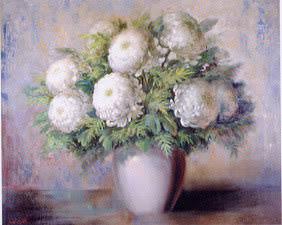
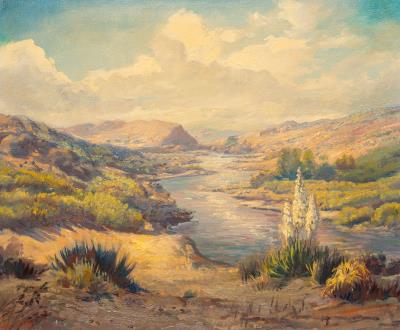
The paintings of William Orth range from impeccable miniatures to sweeping murals and encompass a wide range of subjects: florals, landscapes, seascapes, nudes, portraits, religious scenes and his latest works, "meditations of the soul." Orth has earned worked in other media including sculpture, mosaic creations, architectural designs and models.
Today (1968), at 79, Orth remains productive. He paints eight hours a day---but with a difference from his earlier days. No longer does he paint to live; he lives to paint. He calls his work "meditations of the soul," and it is an earnest striving to help people achieve a deeper insight into life's meaning. Toward this end Orth draws upon his lifetime of work, his own experiences of hardship, suffering, joy and love. These psychoanalytical paintings are intended to speak to everyone and to provoke thought in the beholder, stirring an emotional response. The goal is to jog the memory or prick the conscience recalling an experience, a mood, or an observation on the stream of life. Orth's "soul paintings" cover a wide range of themes, evincing his restless probing of the heartbeat of mankind, for he observes: "There are more things between heaven and earth than this world dreams of."
The purpose of Orth's work, as stated by him, is to translate to canvas his boundless interest and love for humanity. For example, the frightened child peeking from behind a tattered drape, while a wolf pack races toward the background, suggests the innocence of a new generation entering a disillusioned world torn by strife, misery and want. Another canvas depicting figures striving to reach the heights above a tottering column suggests man's persevering ambitions to achieve a better world in the face of staggering adversities. In another, the African woman turned majestically toward the light of a new dawn suggests the higher dignity to which this tormented race aspires.
In these and other soul paintings Orth injects his deepest feelings and fullest insight with the hope that the viewer will respond with his or her own emotions.
Signed - - - Robert J. Kirkpatrick, written in 1968
Museums for John William Orth, Submitted July 2006 by Steven Sanchez:
Albrecht Durer Museum
Nuremberg, Germany
Anderson Memorial Library
Houston, TX
Brooklyn Art Museum
New York, NY
Munich Glas Palast Museum
Munich, Germany
Rhineland's Barmen Museum
Barmen, Germany
Texas Hall of Remembrance
Austin, TX