Page loaded successfully. Showing biography for John Warwick Smith.
John Warwick Smith BIOGRAPHY
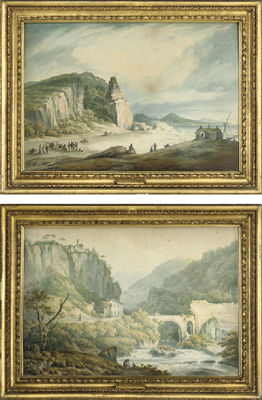
1749 Irthington, Cumberland, England - 1831 Middlesex Place, London. Known for: Watercolor landscape painting, book illustration, topography drawing.
John "Warwick" Smith (26 July 1749 – 22 March 1831) was a British watercolour landscape painter and illustrator. Smith was born at Irthington, near Carlisle, Cumberland, the son of a gardener to the... Read full biography
John "Warwick" Smith (26 July 1749 – 22 March 1831) was a British watercolour landscape painter and illustrator. Smith was born at Irthington, near Carlisle, Cumberland, the son of a gardener to the Gilpin family, and educated at St. Bees. The fortunate social connection allowed him to study art... Read full biography
John "Warwick" Smith (26 July 1749 – 22 March 1831) was a British watercolour landscape painter and illustrator. Smith was born at Irthington, near Carlisle, Cumberland, the son of a gardener to the Gilpin family, and educated at St. Bees. The fortunate social connection allowed him to study art under the animal painter Sawrey Gilpin. Becoming known as a skilful topographical draughtsman, he was employed on Samuel Middiman's Select Views in Great Britain, and obtained the patronage of George... Read full biography
John "Warwick" Smith (26 July 1749 – 22 March 1831) was a British watercolour landscape painter and illustrator. Smith was born at Irthington, near Carlisle, Cumberland, the son of a gardener to the Gilpin family, and educated at St. Bees. The fortunate social connection allowed him to study art under the animal painter Sawrey Gilpin. Becoming known as a skilful topographical draughtsman, he was employed on Samuel Middiman's Select Views in Great Britain, and obtained the patronage of George Greville, 2nd Earl of Warwick, which enabled him to travel to Italy between 1776 and 1781. While there he met other British artists such as Francis Towne, Thomas Hearne and William Pars. He came to be known as "Warwick" or "Italian" Smith. In his... Read full biography
John "Warwick" Smith (26 July 1749 – 22 March 1831) was a British watercolour landscape painter and illustrator. Smith was born at Irthington, near Carlisle, Cumberland, the son of a gardener to the Gilpin family, and educated at St. Bees. The fortunate social connection allowed him to study art under the animal painter Sawrey Gilpin. Becoming known as a skilful topographical draughtsman, he was employed on Samuel Middiman's Select Views in Great Britain, and obtained the patronage of George Greville, 2nd Earl of Warwick, which enabled him to travel to Italy between 1776 and 1781. While there he met other British artists such as Francis Towne, Thomas Hearne and William Pars. He came to be known as "Warwick" or "Italian" Smith. In his subsequent works, which were largely views in Italy, he gradually abandoned the simple tinting to which watercolour work had pre... Read full biography
Artist Biography
Biography page for John Warwick Smith ((1749 - 1831)), known for Watercolor landscape painting, book illustration, topography drawing. Showing 3 biographical entries and 0 sample artworks.
John Warwick Smith - Artist Info
About John Warwick Smith
Name variants
Warwick Smith
Biography from the Archives of askART
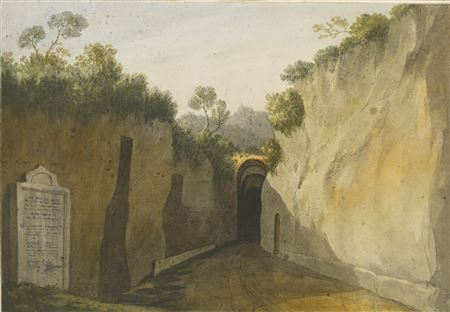 John "Warwick" Smith (26 July 1749 – 22 March 1831) was a British watercolour landscape painter and illustrator.
Smith was born at Irthington, near Carlisle, Cumberland, the son of a gardener to the Gilpin family, and educated at St. Bees. The fortunate social connection allowed him to study art under the animal painter Sawrey Gilpin.
Becoming known as a skilful topographical draughtsman, he was employed on Samuel Middiman's Select Views in Great Britain, and obtained the patronage of George Greville, 2nd Earl of Warwick, which enabled him to travel to Italy between 1776 and 1781. While there he met other British artists such as Francis Towne, Thomas Hearne and William Pars.
He came to be known as "Warwick" or "Italian" Smith. In his subsequent works, which were largely views in Italy, he gradually abandoned the simple tinting to which watercolour work had previously been limited for a more effective mode of colouring, the novelty and beauty of which was much admired.
He returned to England in 1781 in the company of Francis Towne, travelling through the Italian lakes and Switzerland. He settled in Warwick, making frequent visits to Wales from 1784; he also toured the Lake District in the late 1780s and early 1790s. In 1783 he married Elizabeth Gerrard – still a minor – at St Mary's church, Warwick. He visited Italy again in 1785–6, this time in the company of Lord Warwick. Lord Warwick acquired a large collection of his work, which was eventually dispersed at an auction in 1936.
On one of his tours of Wales, at some time after 1788, Smith was accompanied by Lord Warwick's brother, Robert Fulke Greville, and the artist Julius Caesar Ibbetson . They spent a considerable time at Hafod, near Aberystwyth, the home of the bibliophile Thomas Johnes.
Hafod was destroyed by fire in 1807, and three years later Sir J. E. Smith published A Tour to Hafod, illustrated with fifteen aquatints by J. G. Stadler from watercolours, by " Warwick " Smith, possibly made in the course of the visit with Ibbetson.
Other books illustrated with engravings after works by Smith include Select Views in Italy (1792–6); Views of the Lakes of Cumberland, with twenty aquatints by James Merigot (1791–5); William Byrne's Britannia Depicta and William Sotheby's Tour through Wales (1794).
This last book was subtitled "Odes and other Poems. With Engravings from Drawings taken on the Spot by J. Smith". In the preface, Sotheby wrote "the author of the following Poems thinks proper to signify, that the present edition is published solely for the emolument of the artist, who has stamped a value on the descriptive parts of the Welsh Tour, by the embellishments of his accurate and masterly pencil". The plates were etched in aquatint by Samuel Alken.
Smith moved to London in 1807. In that year he began exhibiting with Watercolour Society, which he had joined two years before. He remained a major contributor to its exhibitions until 1823, when he resigned his membership. He was elected president of the society in 1814, 1817, and 1818, secretary in 1816, and treasurer in 1819, 1821, and 1822.
Smith died in Middlesex Place, London, on 22 March 1831, and was interred in the St George's burial-ground in the Uxbridge Road.
Source:
Wikipedia, 2020Biography from Chiswick Auctions
John Warwick Smith went to Italy in 1780 with Francis Towne. He became a full member of the Old Watercolour Society in 1806, later becoming both treasurer and secretary.Biography from Bonhams Bond Street
John Warwick Smith, also known as Warwick Smith, was an artist who travelled to Italy in 1776 under the patronage of the second Earl of Warwick. He remained in Italy until 1781 and was closely associated with Lord Warwick, which led to him being called 'Warwick' Smith. Smith created watercolour landscapes, with one of his works depicting a view at Vietri, inscribed as his residence for two successive summers. It is believed that Smith sketched the present view near Amalfi while staying nearby, and many of his Italian views were developed into watercolours after his return to England.