Jorge Castillo BIOGRAPHY
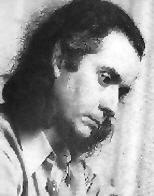
Artist Biography
Biography page for Jorge Castillo ((1933 - 2020)), known for Engraving and painting. Showing 4 biographical entries and 0 sample artworks.
Jorge Castillo - Artist Info
About Jorge Castillo
Name variants
Biography from Dreweatts & Bloomsbury Auctions
Born in the Spanish province of Galicia in 1933, Castillo is a painter, graphic artist and sculptor. A year after his birth, Castillo and his family immigrated to Buenos Aries in Argentina where he spent his childhood and youth. After entering a competition in 1941, Castillo was admitted to the Ecole des Beaux-Arts , however he remained there for only a short time before starting an apprenticeship in technical drawing in 1948. It was during this time that Castillo met Surrealist Raquel Forner, who undoubtedly influenced the younger artist, and in 1955, when he returned to Spain, he continued working on Surrealist ink drawings and gouaches. These were then exhibited in his first exhibition at the Galeria Altamira, Madrid, in 1959.
After a brief sojourn in Paris, Castillo returned to Spain this time settling in Barcelona, where he stayed for six years. It was during this time that, inspired by the 17 January 1966 Palomares B-52 crash where a United States Air Force bomber collided with a KC-135 tanker during mid-air refueling killing seven, Castillo produced a triptych composition which bought him international recognition. Later that year, Castillo moved to Geneva and during this period, he would often spend his summers in Boissano on the Ligurian coast. Three years later, with a scholarship from the Deutscher Akademischer Austauschdienst, Castillo moved to Berlin where he would stay for six years before returning to Barcelona in 1975. It was around this time that he produced his most important etching sequences, including El Mundo de Federico Garcia Lorca , 1972 and Grands Amants, 1973.
Art critic and writer, Carter Ratcliffe writes that Castillo s work combines Surrealism biomorphism with Euclidean clarities of geometric abstraction and whilst taking clear inspiration from Picasso, Velázquez, Goya and Max Ernst, a distinctive light is employed in each of Castillo s canvases; together with a quality of emotional weather which surpasses this synthesis of influence and draws our attention to one specific aspect of the world depicted. (Carter, Ratcliffe, Ed. Rizzoli, New York, 1986).
Since the early 1980s Castillo has lived in New York, and has been commissioned to create public sculptures in La Coruna, Messina and Barcelona.Biography from Setdart
Since he was a child, Jorge Castillo has been passionate about drawing, and when he was only ten years old, he made his first copy of Rubens with colored pencils. According to Castillo, Rubens' painting taught him to understand the cubism of Braque and Picasso. He has lived in Argentina, Spain, France, Italy, Germany and the United States, and since 2008 he has lived in Ibiza. He grew up in Buenos Aires, where he spent long hours at the port, besides dedicating his time to painting and writing. During these years he began to show his paintings, even exhibiting at the Salón de Mayo. He also published poems and short stories in magazines. However, at the age of twenty-two he decided to leave his city and go to Paris. However, for economic reasons he settled in Spain, specifically in Madrid, where he spent six years, between 1957 and 1963, the first three of them living as a vagabond. However, his contact with Viola and Jorge Cela, who were impressed by his drawings, would change the course of his life. During these years he would gradually opt for the technique of engraving, which from then on would be one of his main means of expression. He then began to emerge as an artist, to sell his first works and to establish some important contacts, protected by Luis González Robles, who in 1960 took him to the São Paulo Biennial. There, his works surprised and obtained praiseworthy reviews, and during these years he also exhibited in Madrid and Barcelona, as well as in San Francisco, Lisbon, Pittsburgh and Tokyo. And it was in 1964, the year of his participation in the Venice Biennial, when the doors of Paris finally opened for him, thanks to the contract he signed with the art dealer André Schoeller. In 1967 Castillo left Paris and moved to Geneva, although he soon left the city to settle in Boissano, Italy. In 1969 he was invited by the German government to work in Berlin, where he lived until 1975. In 1970 he exhibited at the Nationalgalerie in the German capital, the first major museum exhibition dedicated to a specific period of his career, and later in numerous Berlin galleries. When he left Berlin Castillo moved to Barcelona, by then a recognized painter in Europe and America. There he exhibited regularly at the Joan Prats gallery, and met Salvador Dalí. During these years he began to visit New York and finally settled there in 1981, remaining in the city until 1992. There he was hired by the prestigious Marlborough Gallery, and his successes continued. Throughout his career, Castillo won prizes such as the International Drawing and Painting Awards of Darmstadt, the City of Pontevedra, and the Cultura Viva de las Artes Plásticas. He is currently represented at the Museum of Fine Arts in Lausanne, the Juan March Foundation, the National Galleries of Edinburgh and Berlin, the Museums of Modern Art in San Francisco and Vitoria, the Kunsthalle in Bremen, the Albertina in Vienna, the National Library of Spain and the Guggenheim in New York, among others.
Biography from Setdart
The son of Spanish emigrants in Argentina, Jorge Castillo returned to Spain in 1957. He entered the artistic circles of Madrid, and in 1958 he began to sell his drawings in the Biosca gallery. He gradually turned to the technique of engraving, which would eventually become his main means of expression, although he alternated it with painting.
From 1960 onwards he exhibited his work internationally, in galleries and museums in New York, San Francisco, Tokyo, Paris, Lisbon, Turin, Hanover, Düsseldorf and Geneva. He won prizes such as the International Drawing and Painting Prizes in Darmstadt, the City of Pontevedra and the Cultura Viva de las Artes Plásticas.
He is represented in the Museum of Fine Arts in Lausanne, the Juan March Foundation, the National Galleries of Edinburgh and Berlin, the San Francisco and Vitoria Museums of Modern Art, the Kunsthalle in Bremen, the Albertina in Vienna, the National Library of Spain and the Guggenheim in New York, among others.Biography from Auctionata
Jorge Castillo, a Spanish painter and graphic artist, with places of activity in Barcelona, New York and Berlin, belongs to the protagonists of contemporary Spanish art. Around 1966 Castillo became internationally famous and was in invited to join the 4 documenta in Kassel with several works.
Today his works are represented in various European and American collections and museums and Castillo is one of the most important representatives of Surrealism and Art Informel.