Page loaded successfully. Showing biography for Joseph Sieger.
Joseph Sieger BIOGRAPHY
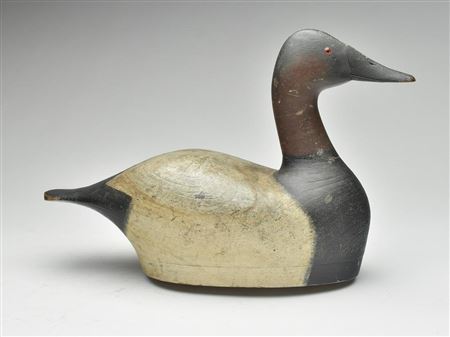
1871 Wolf River Township, Wisconsin - 1959 Wolf River Township, Wisconsin. Known for: Decoy carving.
Lots Sold: 100%, High Price: Subscribe.
Joseph Sieger. Sieger's parents, John and Frederikke, were born in Germany and arrived in the United States in 1853. They travelled to Wisconsin and purchased 100 acres of farmland along Alder Creek... Read full biography
Joseph Sieger. Sieger's parents, John and Frederikke, were born in Germany and arrived in the United States in 1853. They travelled to Wisconsin and purchased 100 acres of farmland along Alder Creek and route 2 in Wolf River Township. They must have been hard working and industrious for they... Read full biography
Joseph Sieger. Sieger's parents, John and Frederikke, were born in Germany and arrived in the United States in 1853. They travelled to Wisconsin and purchased 100 acres of farmland along Alder Creek and route 2 in Wolf River Township. They must have been hard working and industrious for they eventually purchased an additional several hundred acres of tillable land and marsh, extending their property to the shores of the Wolf River. It was here, on the family farm, that Joseph was born, married... Read full biography
Joseph Sieger. Sieger's parents, John and Frederikke, were born in Germany and arrived in the United States in 1853. They travelled to Wisconsin and purchased 100 acres of farmland along Alder Creek and route 2 in Wolf River Township. They must have been hard working and industrious for they eventually purchased an additional several hundred acres of tillable land and marsh, extending their property to the shores of the Wolf River. It was here, on the family farm, that Joseph was born, married his wife Addie, had a son Grant, worked his entire life, and died. The Wolf River flows past Freemont to the north and Lake Poygon to the south. Freemont was home to the early, well known, decoy maker DeWitt Wakefield (1849 – 1942) and Tustin,... Read full biography
Joseph Sieger. Sieger's parents, John and Frederikke, were born in Germany and arrived in the United States in 1853. They travelled to Wisconsin and purchased 100 acres of farmland along Alder Creek and route 2 in Wolf River Township. They must have been hard working and industrious for they eventually purchased an additional several hundred acres of tillable land and marsh, extending their property to the shores of the Wolf River. It was here, on the family farm, that Joseph was born, married his wife Addie, had a son Grant, worked his entire life, and died. The Wolf River flows past Freemont to the north and Lake Poygon to the south. Freemont was home to the early, well known, decoy maker DeWitt Wakefield (1849 – 1942) and Tustin, directly on the Lake, was home to established carver August Moak (1849 – 1912). Lake Poygan, as well as other local lakes, were ideal for the g... Read full biography
Artist Biography
Biography page for Joseph Sieger ((1871 - 1959)), known for Decoy carving. Showing 1 biographical entries and 0 sample artworks.
Joseph Sieger - Artist Info
About Joseph Sieger
Biography from Guyette & Deeter, Inc.
Joseph Sieger
Sieger's parents, John and Frederikke, were born in Germany and arrived in the United States in 1853. They travelled to Wisconsin and purchased 100 acres of farmland along Alder Creek and route 2 in Wolf River Township. They must have been hard working and industrious for they eventually purchased an additional several hundred acres of tillable land and marsh, extending their property to the shores of the Wolf River. It was here, on the family farm, that Joseph was born, married his wife Addie, had a son Grant, worked his entire life, and died.
The Wolf River flows past Freemont to the north and Lake Poygon to the south. Freemont was home to the early, well known, decoy maker DeWitt Wakefield (1849 – 1942) and Tustin, directly on the Lake, was home to established carver August Moak (1849 – 1912). Lake Poygan, as well as other local lakes, were ideal for the growth of aquatic vegetation such as wild rice and wild celery, which, in turn, attracted thousands of migrating waterfowl annually.
The highly desirable canvasback arrived in such numbers that the region became known as the Chesapeake of the West. Hunting clubs sprang up along the local waters and the demand for shooting sites along the river and lake became a valuable commodity. Joe was aware of this demand and was quick to capitalize on it by leasing out portions of his land for gunning.
For his own part, Sieger enjoyed the outdoors and he set out to produce a decoy rig of his own. He was probably aware of Wakefield's carvings, but we know that he became friendly with Moak and the two men often hunted together. Moak's designs must have appealed to Sieger, for they certainly appear to be the inspiration for his own decoys. It proved to be the case of the student exceeding the master.
About 1920, Sieger constructed a rig of canvasbacks. His production was extremely limited and reportedly numbered no more than two or three dozen. They adhered to the basic local design tradition, being full bodied and hollow carved with alert high heads. His finished product resulted in the most pleasing, finely finished, and graceful rig floating on the local waters.
When Joe passed away at age 88, his son, Grant, assumed the daily operation of the now generational farm and the decoys were carefully stored away in a small shed on the property. There they remained, undisturbed, until, fortuitously, they were unearthed by local decoy collector/historian/hunter Dave Spengler in the early 1970's.
Obviously Sieger was an accomplished craftsman, producing many of his own sporting necessities and a number of fine violins, but it is his decoys that have given him his widest, and well deserved, recognition. His carvings are considered among the cornerstones of the some of the finest collections, not only in Wisconsin, but throughout the United States.