Page loaded successfully. Showing biography for Jules Moigniez.
Jules Moigniez BIOGRAPHY
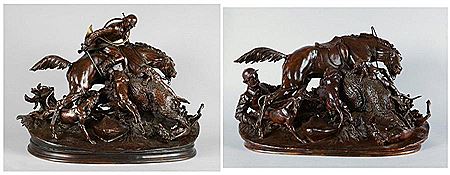
1835 Senlis sur L'Oise, France - 1894 Saint-Martin-du-Teire, France. Known for: Bronze sculptures of birds, horses, and dogs.
Jules Moigniez (1835-1894). Jules Moigniez was born in Senlis sur L'Oise, France in 1835 and died in Saint-Martin-du-Teire, France on May 29, 1894. The son of a metal gilder, Moigniez was a student... Read full biography
Jules Moigniez (1835-1894). Jules Moigniez was born in Senlis sur L'Oise, France in 1835 and died in Saint-Martin-du-Teire, France on May 29, 1894. The son of a metal gilder, Moigniez was a student of Paul Comolera. He debuted at the Exposition Universelle in 1855 with Pointer and Pheasant and... Read full biography
Jules Moigniez (1835-1894). Jules Moigniez was born in Senlis sur L'Oise, France in 1835 and died in Saint-Martin-du-Teire, France on May 29, 1894. The son of a metal gilder, Moigniez was a student of Paul Comolera. He debuted at the Exposition Universelle in 1855 with Pointer and Pheasant and Falcon and Weasel each in plaster. He contributed regularly to the Paris Salon from 1859 to 1892 during which he exhibited over thirty sculptures including Pointer and Pheasant and Falcon and Weasel in... Read full biography
Jules Moigniez (1835-1894). Jules Moigniez was born in Senlis sur L'Oise, France in 1835 and died in Saint-Martin-du-Teire, France on May 29, 1894. The son of a metal gilder, Moigniez was a student of Paul Comolera. He debuted at the Exposition Universelle in 1855 with Pointer and Pheasant and Falcon and Weasel each in plaster. He contributed regularly to the Paris Salon from 1859 to 1892 during which he exhibited over thirty sculptures including Pointer and Pheasant and Falcon and Weasel in bronze. He was awarded an honorable mention at the Salon and received a medal in London at the Great Exposition in 1862. He lived most of his life in Paris. During his career he was widely popular in France, England and America. His bronzes were most... Read full biography
Jules Moigniez (1835-1894). Jules Moigniez was born in Senlis sur L'Oise, France in 1835 and died in Saint-Martin-du-Teire, France on May 29, 1894. The son of a metal gilder, Moigniez was a student of Paul Comolera. He debuted at the Exposition Universelle in 1855 with Pointer and Pheasant and Falcon and Weasel each in plaster. He contributed regularly to the Paris Salon from 1859 to 1892 during which he exhibited over thirty sculptures including Pointer and Pheasant and Falcon and Weasel in bronze. He was awarded an honorable mention at the Salon and received a medal in London at the Great Exposition in 1862. He lived most of his life in Paris. During his career he was widely popular in France, England and America. His bronzes were most decorative, particularly those of game birds. He also sculpted dogs, farm animal... Read full biography
Artist Biography
Biography page for Jules Moigniez ((1835 - 1894)), known for Bronze sculptures of birds, horses, and dogs. Showing 2 biographical entries and 0 sample artworks.
Jules Moigniez - Artist Info
About Jules Moigniez
Name variants
Jules Moignez
Biography from the Archives of askART
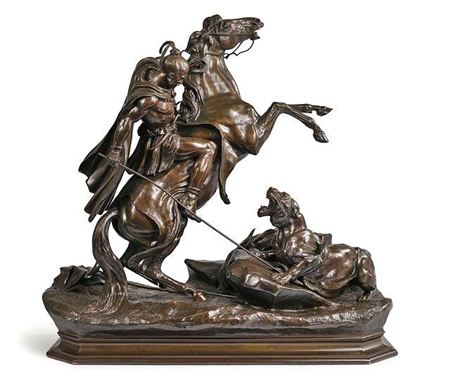 Jules Moigniez (1835-1894)
Jules Moigniez was born in Senlis sur L'Oise, France in 1835 and died in Saint-Martin-du-Teire, France on May 29, 1894. The son of a metal gilder, Moigniez was a student of Paul Comolera. He debuted at the Exposition Universelle in 1855 with Pointer and Pheasant and Falcon and Weasel each in plaster. He contributed regularly to the Paris Salon from 1859 to 1892 during which he exhibited over thirty sculptures including Pointer and Pheasant and Falcon and Weasel in bronze. He was awarded an honorable mention at the Salon and received a medal in London at the Great Exposition in 1862.
He lived most of his life in Paris. During his career he was widely popular in France, England and America. His bronzes were most decorative, particularly those of game birds. He also sculpted dogs, farm animals and equestrian groups. Moigniez's dogs reflected the "naturalism" style of Pierre Jules Mene. His bird sculptures were reminiscent of paintings by deHondecoeter, Casteels and Snyders. His sculptures of birds reflect dynamic movement, as if captured through a high-speed photographic portrait.
Moigniez bronzes were edited, (cast), by the foundry his father opened in 1857. A wide variety of patinations, including silver plate, golden bronze and gilding were unique to these lifetime casts. After his death, most of his bronzes were cast by A. Gouge, who also edited most of Comolera's sculptures.
Sources:
1. Dictionnaire des Peintres, Sculpteurs, Dessinateurs et Graveurs, E. Benezit, 1956;
2. Bronze Sculpture of "Les Animaliers", Jane Horswell, 1971
3. Dr. Dave WelchBiography from Setdart
Jules Moigniez was a French animal sculptor who worked during the 19th century. His production was mainly in bronze and he frequently exhibited his sculptures at the Paris Salon. He was best known for his bronzes depicting birds, although his skill and versatility allowed him to produce quality horse sculptures (mainly racehorses), dog sculptures, and hunting scenes. His bird sculptures were among the finest created in his time.
Moigniez was known for the fine detail and chiseling of his sculptures. His bronzes, usually cast using the lost wax method, were always immaculately chased and patinated, and were especially popular in England and Scotland.
More than half of his output during his lifetime was sold in the United Kingdom. In the late 19th century, his sculpture also became popular in the United States.
Unlike other animalists of the period, such as P. J. Mêne and Antoine-Louis Barye, Moigniez's bird sculptures often incorporated highly detailed bases with shrubs, extensive foliage, and undergrowth. His castings were generally of excellent quality with a variety of patinas, with gold and silver patinas being the most desired and sought after by collectors.
His Chien braque arrêtant un faisan (1859), cast in bronze, was acquired by the French government for the Château de Compiègne.