Page loaded successfully. Showing biography for Julian Dashper.
Julian Dashper BIOGRAPHY
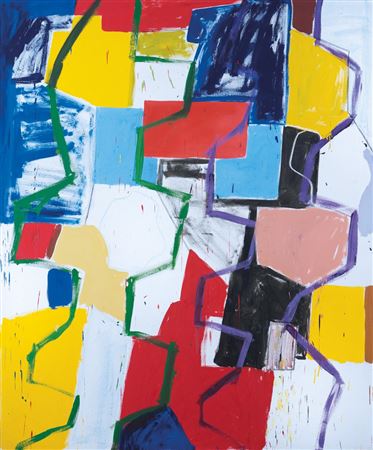
Born 1960. Known for: Sculpture, design tables/furniture, abstract painting.
In the history of New Zealand art, Julian Dashper (1960–2009) stands out as unique. He is well known for his distinctive blending of international conceptualism with tongue-in-cheek references to... Read full biography
In the history of New Zealand art, Julian Dashper (1960–2009) stands out as unique. He is well known for his distinctive blending of international conceptualism with tongue-in-cheek references to local artists. This combination proved compelling, and Dashper became one of the nation’s most... Read full biography
In the history of New Zealand art, Julian Dashper (1960–2009) stands out as unique. He is well known for his distinctive blending of international conceptualism with tongue-in-cheek references to local artists. This combination proved compelling, and Dashper became one of the nation’s most critically acclaimed conceptual artists. His work remains sharp and incisive to this day – 14 years after his death – and it is held in public and private collections, including Auckland Art Gallery Toi o... Read full biography
In the history of New Zealand art, Julian Dashper (1960–2009) stands out as unique. He is well known for his distinctive blending of international conceptualism with tongue-in-cheek references to local artists. This combination proved compelling, and Dashper became one of the nation’s most critically acclaimed conceptual artists. His work remains sharp and incisive to this day – 14 years after his death – and it is held in public and private collections, including Auckland Art Gallery Toi o Tamaki, The Chartwell Collection and the Museum of New Zealand Te Papa Tongarewa. Dashper studied at Elam School of Fine Arts in the late 1970s and early 1980s. He subsequently created paintings that engaged in a playful re-imagining of abstract... Read full biography
In the history of New Zealand art, Julian Dashper (1960–2009) stands out as unique. He is well known for his distinctive blending of international conceptualism with tongue-in-cheek references to local artists. This combination proved compelling, and Dashper became one of the nation’s most critically acclaimed conceptual artists. His work remains sharp and incisive to this day – 14 years after his death – and it is held in public and private collections, including Auckland Art Gallery Toi o Tamaki, The Chartwell Collection and the Museum of New Zealand Te Papa Tongarewa. Dashper studied at Elam School of Fine Arts in the late 1970s and early 1980s. He subsequently created paintings that engaged in a playful re-imagining of abstract expressionism, employing the expressive brushstrokes but eschewing the self-seriousness of the movement. He would give such... Read full biography
Artist Biography
Biography page for Julian Dashper ((Born 1960)), known for Sculpture, design tables/furniture, abstract painting. Showing 1 biographical entries and 0 sample artworks.
Julian Dashper - Artist Info
About Julian Dashper
Name variants
Julian Daspher
Biography from Webb's
In the history of New Zealand art, Julian Dashper (1960–2009) stands out as unique. He is well known for his distinctive blending of international conceptualism with tongue-in-cheek references to local artists. This combination proved compelling, and Dashper became one of the nation’s most critically acclaimed conceptual artists.
His work remains sharp and incisive to this day – 14 years after his death – and it is held in public and private collections, including Auckland Art Gallery Toi o Tamaki, The Chartwell Collection and the Museum of New Zealand Te Papa Tongarewa. Dashper studied at Elam School of Fine Arts in the late 1970s and early 1980s. He subsequently created paintings that engaged in a playful re-imagining of abstract expressionism, employing the expressive brushstrokes but eschewing the self-seriousness of the movement.
He would give such pieces quirky titles, after pop songs or locations. In the early 1990s, Dashper moved further toward conceptual art by presenting a collection of drum kits bearing the names of notable New Zealand artists, such as ‘The Colin McCahon’s’. These works wryly presented artists as rock stars. Some iterations moved further into conceptualism, without referring to any particular artist. This example is one such work.
The wall-mounted piece is fashioned from a drumhead, presenting a pared-back version of one of Dashper’s most recognisable artistic themes. In an obituary essay, writer and curator Robert Leonard states, “Dashper was often rebuked for self-promotion.
He may have been the first New Zealand artist to print his own business cards, and he pumped out publications for every second show, but his work was anti-heroic. It embodied a critique of the romantic-heroic ideal of the artist, typified in New Zealand by ‘visionaries’ such as McCahon, Philip Clairmont, and Tony Fomison. But, if Dashper presented the artist, by contrast, as part of a system, he was deeply romantic about that system and its trappings — he loved the life.”1
As Leonard captures, Dashper was a unique artist who left an important and insightful legacy. 1 Robert Leonard, “Julian Dashper 1960–2009,” Art and Australia 47, no. 2, Summer 2009, https://robertleonard.org/julian-dashper-1960-2009/