Page loaded successfully. Showing biography for Karl Blechen.
Karl Blechen BIOGRAPHY
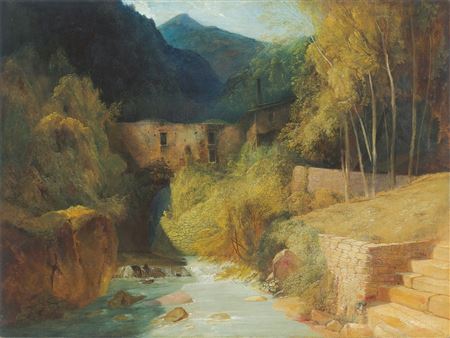
1798 - 1840. Known for: Painting.
Karl Blechen was born in 1798 in Germany. Blechen is one of the most important German landscape painters of the first half of the 19th Century. After training in a Berlin bank and subsequent military... Read full biography
Karl Blechen was born in 1798 in Germany. Blechen is one of the most important German landscape painters of the first half of the 19th Century. After training in a Berlin bank and subsequent military service, he began studying painting at the Berlin Academy in 1822. He was first employed as a... Read full biography
Karl Blechen was born in 1798 in Germany. Blechen is one of the most important German landscape painters of the first half of the 19th Century. After training in a Berlin bank and subsequent military service, he began studying painting at the Berlin Academy in 1822. He was first employed as a decorative painter at the Königsstädtisches Theatre in Berlin in 1824, thanks to the intervention of Karl Friedrich Schinkel, and from 1827 he worked as a freelance artist. His journey to Italy, which he... Read full biography
Karl Blechen was born in 1798 in Germany. Blechen is one of the most important German landscape painters of the first half of the 19th Century. After training in a Berlin bank and subsequent military service, he began studying painting at the Berlin Academy in 1822. He was first employed as a decorative painter at the Königsstädtisches Theatre in Berlin in 1824, thanks to the intervention of Karl Friedrich Schinkel, and from 1827 he worked as a freelance artist. His journey to Italy, which he embarked on in late autumn 1828, left its mark on Blechen both personally and artistically. '' [. ] as a new man he returned home from the south. The melancholy that had weighed on Blechen's soul since the days of childhood had vanished. The artist... Read full biography
Karl Blechen was born in 1798 in Germany. Blechen is one of the most important German landscape painters of the first half of the 19th Century. After training in a Berlin bank and subsequent military service, he began studying painting at the Berlin Academy in 1822. He was first employed as a decorative painter at the Königsstädtisches Theatre in Berlin in 1824, thanks to the intervention of Karl Friedrich Schinkel, and from 1827 he worked as a freelance artist. His journey to Italy, which he embarked on in late autumn 1828, left its mark on Blechen both personally and artistically. '' [. ] as a new man he returned home from the south. The melancholy that had weighed on Blechen's soul since the days of childhood had vanished. The artist was also reinvented. [. ] Wherever the artist turned his eyes, the sun shone on him. The shadow itself shone. Blechen cam... Read full biography
Artist Biography
Biography page for Karl Blechen ((1798 - 1840)), known for Painting. Showing 1 biographical entries and 0 sample artworks.
Karl Blechen - Artist Info
About Karl Blechen
Biography from Neumeister Kunstauktionen, Munich
Karl Blechen was born in 1798 in Germany. Blechen is one of the most important German landscape painters of the first half of the 19th Century. After training in a Berlin bank and subsequent military service, he began studying painting at the Berlin Academy in 1822. He was first employed as a decorative painter at the Königsstädtisches Theatre in Berlin in 1824, thanks to the intervention of Karl Friedrich Schinkel, and from 1827 he worked as a freelance artist. His journey to Italy, which he embarked on in late autumn 1828, left its mark on Blechen both personally and artistically. '' [...] as a new man he returned home from the south. The melancholy that had weighed on Blechen's soul since the days of childhood had vanished. The artist was also reinvented. [...] Wherever the artist turned his eyes, the sun shone on him. The shadow itself shone. Blechen came to Italy and realised that there is no black in nature - three years before he had painted pitch-black pictures. [...] It is not the 'thing in itself', but the impression, which is decisive for the painter. Later artistic language called this type of painting 'Impressionist' painting. What Manet demands has happened here.'' (Kern, see below, p. 67 onwards). From this point on, Blechen's artistic interest lied in aesthetic values, moods, the light and colour of the landscapes depicted. The representative is subordinated to this interest. The approximately 100 small-scale works in oil on paper, which originated in Italy, convey this impression for the first time and point to the further development of Blechen's landscape painting. These small-scale works are wrongly referred to as ''oil sketches'' and classified as study material. However, many of these works were created by the artist as independent small paintings. They were shown at exhibitions in Berlin and Paris and found a very positive reception among collectors. Karl Friedrich Schinkel regarded them as ''something real of art'' (cf. Schenk-Sorge, see below, p. 40). However, it took years for the general public to appreciate Carl Blechen's art. If potential buyers found these paintings, they were not ready to pay a fair price. Blechen complained in 1830: ''Is it possible, I ask, how can it be that because I am conscious of having recognised and sensed the nature of God - and I hope that I have sensed it better than certain other members of my profession - and because my brush does not tremble so, and goes beyond the scope of artists' primers [...], I must be subjected to the insult of being humiliated with a small, reduced sum, for the ridicule of every colleague and stranger in the public negotiations!'' (cited after Kern, see below, p. 86 onwards). TEMPORA NON MUTANTUR ...! Literature: Kern, Guido Josef, Karl Blechen. Sein Leben und seine Werke. Berlin 1911. - Rave, Paul Ortwin, Karl Blechen. Leben - Würdigungen - Werk. Berlin 1940, p. 296, catalogue raisonné no. 997 (with illustration, p. 295).