Page loaded successfully. Showing biography for Karl Zerbe.
Karl Zerbe BIOGRAPHY
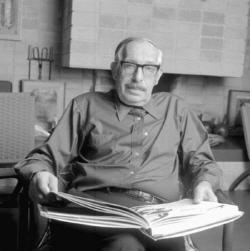
1903 Berlin, Germany - 1972 Tallahassee, Florida. Known for: Surreal figure-animal, expressionism.
Known as an expressionist painter, Karl Zerbe along with Hyman Bloom and Jack Levine, achieved national recognition in the 1940s as the first generation of Boston Expressionists. They produced work... Read full biography
Known as an expressionist painter, Karl Zerbe along with Hyman Bloom and Jack Levine, achieved national recognition in the 1940s as the first generation of Boston Expressionists. They produced work that was shockingly different from the genteel work of older established Boston artists, such as John... Read full biography
Known as an expressionist painter, Karl Zerbe along with Hyman Bloom and Jack Levine, achieved national recognition in the 1940s as the first generation of Boston Expressionists. They produced work that was shockingly different from the genteel work of older established Boston artists, such as John Singer Sargent and Edmund C. Tarbell. Although the Boston Expressionists differed stylistically from one another, they were linked by their interest in humanism as they perceived it in their... Read full biography
Known as an expressionist painter, Karl Zerbe along with Hyman Bloom and Jack Levine, achieved national recognition in the 1940s as the first generation of Boston Expressionists. They produced work that was shockingly different from the genteel work of older established Boston artists, such as John Singer Sargent and Edmund C. Tarbell. Although the Boston Expressionists differed stylistically from one another, they were linked by their interest in humanism as they perceived it in their surroundings in Boston. Their work was the beginning of a long tradition of humanist expressive work in Boston. Karl Zerbe was born in Berlin, Germany in 1903 and fled political persecution to the United States during World War II. From 1937 to 1954, he was... Read full biography
Known as an expressionist painter, Karl Zerbe along with Hyman Bloom and Jack Levine, achieved national recognition in the 1940s as the first generation of Boston Expressionists. They produced work that was shockingly different from the genteel work of older established Boston artists, such as John Singer Sargent and Edmund C. Tarbell. Although the Boston Expressionists differed stylistically from one another, they were linked by their interest in humanism as they perceived it in their surroundings in Boston. Their work was the beginning of a long tradition of humanist expressive work in Boston. Karl Zerbe was born in Berlin, Germany in 1903 and fled political persecution to the United States during World War II. From 1937 to 1954, he was Head of the Painting Department at the Museum School of the Boston Museum of Fine Arts, Massachusetts, and in this capacity introduced students... Read full biography
Artist Biography
Biography page for Karl Zerbe ((1903 - 1972)), known for Surreal figure-animal, expressionism. Showing 2 biographical entries and 0 sample artworks.
Karl Zerbe - Artist Info
About Karl Zerbe
Biography from the Archives of askART
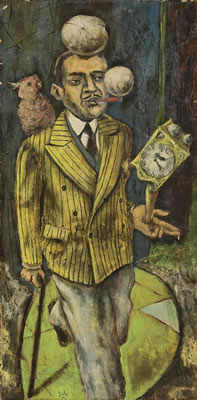 Known as an expressionist painter, Karl Zerbe along with Hyman Bloom and Jack Levine, achieved national recognition in the 1940s as the first generation of Boston Expressionists. They produced work that was shockingly different from the genteel work of older established Boston artists, such as John Singer Sargent and Edmund C. Tarbell. Although the Boston Expressionists differed stylistically from one another, they were linked by their interest in humanism as they perceived it in their surroundings in Boston. Their work was the beginning of a long tradition of humanist expressive work in Boston.
Karl Zerbe was born in Berlin, Germany in 1903 and fled political persecution to the United States during World War II. From 1937 to 1954, he was Head of the Painting Department at the Museum School of the Boston Museum of Fine Arts, Massachusetts, and in this capacity introduced students to the work of the prominent German Expressionists. In 2000, the University of New Hampshire held an exhibition, "Against the Grain", of twenty-one artists who came into prominence in the 1950's and 60's and whose work evolved from the Boston Expressionist philosophy espoused by Zerbe, Bloom, and Levine.
Of this exhibition, a critic wrote: "This is a rare opportunity to see many of Boston's important figurative expressionists together in one show. Not only were these artists joined by the same artistic philosophies, but also by friendship. Rejecting the abstract expressionist style of artists like Jackson Pollock, the Boston Expressionists worked "against the grain," retaining the figurative element in their work. . . .In the case of Zerbe, a German born artist and, for many years, the head of the painting department at the Museum School, there was an amazing, semi-abstract head of the artist Oskar Kokoschka.
In 1954, Zerbe moved to Florida, and taught at Florida State University at Tallahassee from 1954 into the 1960s. He died in 1972 in Tallahassee.
Source:
Peter Falk, "Who Was Who in American Art"
http://wuga.wustl.edu/archives/caughtbypolitics/
http://www.tfaoi.com/aa/2aa/2aa229.htm
http://www.gis.net/scatt/mirski_boris/mirski_index.htmlBiography from The Johnson Collection
A painter and, later, avid birder, Karl Zerbe became an influential teacher at one of the most prestigious American institutions: the School of the Museum of Fine Arts, Boston, or SMFA (now SMFA at Tufts University). His paintings, often rendered in encaustic, are generally Expressionist, although he experimented with a range of styles, from Cubism to Pop Art.
Zerbe was born in Berlin, but his family moved to Paris for a decade shortly after his birth. Returning to Germany, he first lived in Frankfurt and in 1920 he worked in an architect’s office and began studies in chemistry at Technische Hochschule (the technical university) in Friedberg. From 1921 to 1923, he studied at the Munich Academy of Art and at the Debschitz Art School, a role model for the Bauhaus where Anni Albers and Josef Albers taught for years. With funding from the city of Munich, Zerbe enjoyed a two-year sojourn traveling and working in Italy. The Third Reich declared his art “degenerate” and destroyed some of his work, prompting him to flee to Boston in 1934.
In 1937 Zerbe became head of the painting department at SFMA, a position he held for seventeen years. With like-minded painters he became a seminal member of the group known as the “Boston Expressionists.” His frustration with the slow drying time of oil paints led him to paint largely in gouache until he developed a facility with encaustic, often lecturing on the process. He also worked in fresco, and inspired his students to experiment with various materials.
Zerbe mentored Charleston artist William Halsey and encouraged him and his wife Corrie McCallum to use the school’s travelling fellowship in Mexico to avoid the imminent war in Europe. Having traveled there before, Zerbe offered them contacts abroad and urged that they leave as soon as possible, before the committee returned from summer break to overturn this change in destination. It was a life-altering experience for the young couple. In a 1987 interview Halsey stated: “Zerbe immediately noticed my work and he was very good for me. I mean, I got a lot through him.” Zerbe visited Charleston in 1940, perhaps at Halsey’s invitation.
In 1954 Zerbe took a leave of absence from the SFMA and began teaching at Florida State University, in Tallahassee, where he remained until his retirement as professor emeritus in 1971, a year before his death. An activist, Zerbe served as president of the Artists Equity Association, founded in the late 1940s to ensure the economic well-being of artists. Among its members were several artists with Southern connections: Jacob Lawrence, George Biddle, Charles Burchfield, and Ben Shahn.
In the early 1960s Zerbe took inspiration from the Civil Rights Movement, reflected in a series of brush drawings and acrylic collages inspired by the Albany Movement, a series of civil rights protests in Albany, Georgia, led by members of the Student Nonviolent Coordinating Committee and the National Association for the Advancement of Colored People. Zerbe engaged with civil rights issues through literary analysis as well; he wrote an article deconstructing the relevant racial themes of Porgy and Bess, a 1935 opera centered on the struggles within a Black community in Charleston, South Carolina.
His final body of work focused on birds. Expressive interpretations, this series of ornithological prints and paintings were anthropomorphic, and conveyed his belief in the connectivity and interdependency of all life forms. His time in Berlin at the start of the Third Reich, his successive involvement with the American Civil Rights Movement, and his later-in-life dedication to the natural world contributed to a theme of racial and environmental harmony.
Source:
The Johnson Collection, Spartanburg, South Carolina thejohnsoncollection.org