Page loaded successfully. Showing biography for Kenneth Rowntree.
Kenneth Rowntree BIOGRAPHY
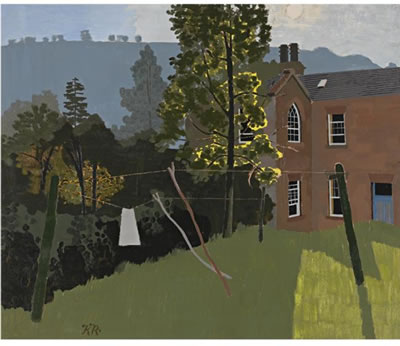
1915 Scarborough, England - 1997. Known for: Landscape, still life.
Kenneth Rowntree (1915-1997). He was an artist and illustrator who relished everyday, overlooked subjects, incorporating modernist space and traditional objects with an almost toy-like neatness that... Read full biography
Kenneth Rowntree (1915-1997). He was an artist and illustrator who relished everyday, overlooked subjects, incorporating modernist space and traditional objects with an almost toy-like neatness that often verged on the abstract. Rowntree attended the Ruskin School of Drawing in Oxford and then the... Read full biography
Kenneth Rowntree (1915-1997). He was an artist and illustrator who relished everyday, overlooked subjects, incorporating modernist space and traditional objects with an almost toy-like neatness that often verged on the abstract. Rowntree attended the Ruskin School of Drawing in Oxford and then the Slade School of Fine Art in London. At the outbreak of war he became, like Richard Eurich, an Official War Artist - although he remained a conscientious objector. With a gift for evoking particular... Read full biography
Kenneth Rowntree (1915-1997). He was an artist and illustrator who relished everyday, overlooked subjects, incorporating modernist space and traditional objects with an almost toy-like neatness that often verged on the abstract. Rowntree attended the Ruskin School of Drawing in Oxford and then the Slade School of Fine Art in London. At the outbreak of war he became, like Richard Eurich, an Official War Artist - although he remained a conscientious objector. With a gift for evoking particular places, he took part in the Pilgrim Trust along with sixty other artists, commissioned by the government, to record the appearance and landscape of England and Wales before any changes caused by wartime activities and destruction. After the War he held... Read full biography
Kenneth Rowntree (1915-1997). He was an artist and illustrator who relished everyday, overlooked subjects, incorporating modernist space and traditional objects with an almost toy-like neatness that often verged on the abstract. Rowntree attended the Ruskin School of Drawing in Oxford and then the Slade School of Fine Art in London. At the outbreak of war he became, like Richard Eurich, an Official War Artist - although he remained a conscientious objector. With a gift for evoking particular places, he took part in the Pilgrim Trust along with sixty other artists, commissioned by the government, to record the appearance and landscape of England and Wales before any changes caused by wartime activities and destruction. After the War he held his first solo exhibition at Leicester Galleries (1946) and in 1949 he became head... Read full biography
Artist Biography
Biography page for Kenneth Rowntree ((1915 - 1997)), known for Landscape, still life. Showing 1 biographical entries and 0 sample artworks.
Kenneth Rowntree - Artist Info
About Kenneth Rowntree
Biography from Sotheby's London, New Bond Street
Kenneth Rowntree (1915-1997)
He was an artist and illustrator who relished everyday, overlooked subjects, incorporating modernist space and traditional objects with an almost toy-like neatness that often verged on the abstract.
Rowntree attended the Ruskin School of Drawing in Oxford and then the Slade School of Fine Art in London. At the outbreak of war he became, like Richard Eurich, an Official War Artist - although he remained a conscientious objector. With a gift for evoking particular places, he took part in the Pilgrim Trust along with sixty other artists, commissioned by the government, to record the appearance and landscape of England and Wales before any changes caused by wartime activities and destruction.
After the War he held his first solo exhibition at Leicester Galleries (1946) and in 1949 he became head of the Royal College of Arts mural painting studios. From 1959, he served as Professor of Fine Arts at the University of Newcastle-upon-Tyne which, alongside Richard Hamilton and Victor Pasmore, was one of the most progressive art schools in Britain.