Page loaded successfully. Showing biography for Kim Dingle.
Kim Dingle BIOGRAPHY
Born 1951 Pomona, California. Known for: Abstract child figure painting, installation art, sculpture, photography.
Kim Dingle (born 1951) is a Los Angeles-based contemporary artist working in a multitude of series using painting, sculpture, photography, found imagery and installation. Dingle was born in Pomona,... Read full biography
Kim Dingle (born 1951) is a Los Angeles-based contemporary artist working in a multitude of series using painting, sculpture, photography, found imagery and installation. Dingle was born in Pomona, California. Her family moved to Los Angeles when she was two months old. In 1988, she earned a... Read full biography
Kim Dingle (born 1951) is a Los Angeles-based contemporary artist working in a multitude of series using painting, sculpture, photography, found imagery and installation. Dingle was born in Pomona, California. Her family moved to Los Angeles when she was two months old. In 1988, she earned a Bachelor of Fine Arts from Cal State Los Angeles and in 1990, a Master of Fine Arts from Claremont Graduate School. Her first mainstream solo exhibition, “Portraits from the Dingle Library,” combined images... Read full biography
Kim Dingle (born 1951) is a Los Angeles-based contemporary artist working in a multitude of series using painting, sculpture, photography, found imagery and installation. Dingle was born in Pomona, California. Her family moved to Los Angeles when she was two months old. In 1988, she earned a Bachelor of Fine Arts from Cal State Los Angeles and in 1990, a Master of Fine Arts from Claremont Graduate School. Her first mainstream solo exhibition, “Portraits from the Dingle Library,” combined images of her mother, Cram, with portraits of iconic figures such as George Washington, Queen Elizabeth II and George Foreman As a Baby. Her inspiration for these works began with her mother’s belief that she is related to both George Washington and Queen... Read full biography
Kim Dingle (born 1951) is a Los Angeles-based contemporary artist working in a multitude of series using painting, sculpture, photography, found imagery and installation. Dingle was born in Pomona, California. Her family moved to Los Angeles when she was two months old. In 1988, she earned a Bachelor of Fine Arts from Cal State Los Angeles and in 1990, a Master of Fine Arts from Claremont Graduate School. Her first mainstream solo exhibition, “Portraits from the Dingle Library,” combined images of her mother, Cram, with portraits of iconic figures such as George Washington, Queen Elizabeth II and George Foreman As a Baby. Her inspiration for these works began with her mother’s belief that she is related to both George Washington and Queen Elizabeth II, and also to the artist's belief that a baby she once saw in a grocery store looked like her mother at the tim... Read full biography
Artist Biography
Biography page for Kim Dingle ((Born 1951)), known for Abstract child figure painting, installation art, sculpture, photography. Showing 1 biographical entries and 0 sample artworks.
Kim Dingle - Artist Info
About Kim Dingle
Biography from the Archives of askART
 Kim Dingle (born 1951) is a Los Angeles-based contemporary artist working in a multitude of series using painting, sculpture, photography, found imagery and installation.
Dingle was born in Pomona, California. Her family moved to Los Angeles when she was two months old. In 1988, she earned a Bachelor of Fine Arts from Cal State Los Angeles and in 1990, a Master of Fine Arts from Claremont Graduate School.
Her first mainstream solo exhibition, “Portraits from the Dingle Library,” combined images of her mother, Cram, with portraits of iconic figures such as George Washington, Queen Elizabeth II and George Foreman As a Baby. Her inspiration for these works began with her mother’s belief that she is related to both George Washington and Queen Elizabeth II, and also to the artist's belief that a baby she once saw in a grocery store looked like her mother at the time or as George Foreman as a baby.
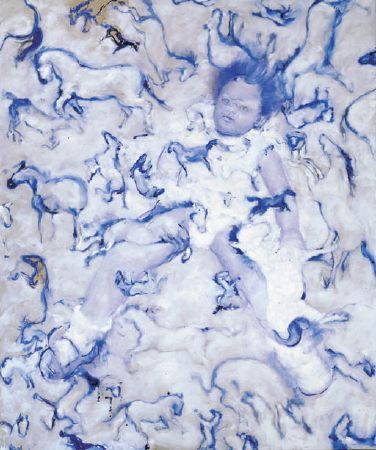
Shortly after the Cram portrait series, Dingle created the "Paintings of the West" series employing vintage wallpaper and other imagery as her canvas along with a hundred curated drawings of "Horses by Teenage Girls." Dingle began a critique of girlhood innocence with a character based on Dingle’s niece, Wadow, who exhibited surprising violent bursts as a result of prenatal brain damage. Wadow was a major source of inspiration for the new girl characters in Dingle's art. Dingle often inserted this version of Wadow and her cohorts, the "Wild Girls," into well-known historic scenes.
These images reclaim famous American myths like George Washington and the cherry tree for her fleshy heroines and question the semiotics of patriotism. For example, in Untitled (Girls with Dresspole) (1998), Dingle’s leading ladies raise a "dresspole" (a long pole with a dress attached to the top) in a pose reminiscent of the famous photograph of soldiers raising the flag on Iwo Jima.
The "wild girl" works led to another series of works for Dingle, this time employing the characters "Fatty" and "Fudge". Fatty, a white girl, and Fudge, a black girl, partner up to enact their diabolic whims. Their exploits and frustrations often turn on themselves, and Fatty and Fudge inevitable resort to attacking each other. In the "Never in School" series, Dingle introduced anonymous school mates, whom Fatty and Fudge blissfully dominate in the absence of adults or boys.
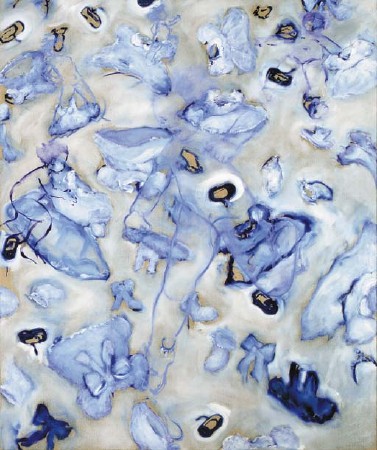
Dingle created three-dimensional works featuring Fatty and Fudge in 1997 and were renamed "Priss". The Prisses took the form of stodgy, fierce little tykes made out of porcelain and sporting extra coarse steel wool hair, thick prescription glasses and crunchy white dresses with patent leather Mary Jane shoes.
Dingle hired several assistants age 6 and under to help design the Priss installations, which included graffitied wallpapered nursery rooms with wooden cribs being broken down and used to make spears and darts, which were then used on target paintings.
These installations were first shown at Blum & Poe in Los Angeles and Jack Tilton in New York; they also toured European museums with Sunshine Noir: the Art of Los Angeles and The Smithsonian Museum of American Art, Washington D.C.
Priss now resides in the permanent collections at MOCA Los Angeles. Priss later took the form of a 1963 MG midget car and was the poster child for the 2000 Whitney Biennial.
David Winton Bell Gallery (Brown University) wrote that "her art illuminates the role that race, gender, stereotype and myth play in defining identity." Ana Honigman states, "For Dingle’s girls, ... strength does not lie in the ability to get grown-ups or men to protect them, but in their ability to be strong for themselves."
Honors and Accolades
Dingle was a participant in the 2000 Whitney Biennial. Dingle's works are included in the collections of MOCA Los Angeles, the Los Angeles County Museum of Art, Museum of Contemporary Art San Diego, the San Francisco Museum of Art, the Smithsonian American Art Museum and the Peter Norton Family Foundation, among others.
Kim Dingle’s work has been reviewed in Art in America, Arts Magazine, Art Issues, Artscene, Frieze, Artforum, London Financial Times, and Huffington Post.
Source:
"Kim Dingle," Wikipedia, Sep. 2017