Page loaded successfully. Showing biography for Knut Janson.
Knut Janson BIOGRAPHY
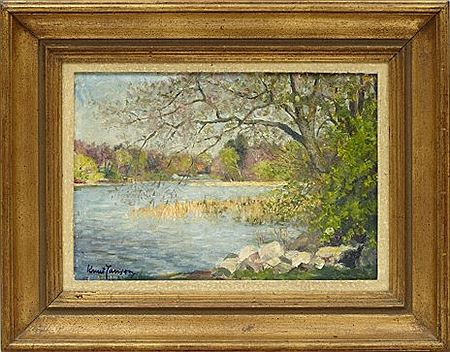
1882 - 1966. Known for: Painting.
"Knut Janson, tall as the king of Denmark, with gables as a specialty" (Isaac Grünewald's description of his good friend from the Artists' Association's third school) Knut Janson, 1882-1966 Sweden,... Read full biography
"Knut Janson, tall as the king of Denmark, with gables as a specialty" (Isaac Grünewald's description of his good friend from the Artists' Association's third school) Knut Janson, 1882-1966 Sweden, was part of the pioneering avant-garde group "De Unga", the artists' association that introduced... Read full biography
"Knut Janson, tall as the king of Denmark, with gables as a specialty" (Isaac Grünewald's description of his good friend from the Artists' Association's third school) Knut Janson, 1882-1966 Sweden, was part of the pioneering avant-garde group "De Unga", the artists' association that introduced modernism in Sweden in 1909 and which has gone down in history as "the men of 1909". The group had already been formed in the fall of 1907, an event that was noted in all the major daily newspapers. Knut... Read full biography
"Knut Janson, tall as the king of Denmark, with gables as a specialty" (Isaac Grünewald's description of his good friend from the Artists' Association's third school) Knut Janson, 1882-1966 Sweden, was part of the pioneering avant-garde group "De Unga", the artists' association that introduced modernism in Sweden in 1909 and which has gone down in history as "the men of 1909". The group had already been formed in the fall of 1907, an event that was noted in all the major daily newspapers. Knut Janson was, along with names like Isaac Grünewald, Gösta Sandels and Birger Simonsson, one of the ten original members. According to the statutes, the number of members would not exceed 18 and the election of new members took place by vote. However,... Read full biography
"Knut Janson, tall as the king of Denmark, with gables as a specialty" (Isaac Grünewald's description of his good friend from the Artists' Association's third school) Knut Janson, 1882-1966 Sweden, was part of the pioneering avant-garde group "De Unga", the artists' association that introduced modernism in Sweden in 1909 and which has gone down in history as "the men of 1909". The group had already been formed in the fall of 1907, an event that was noted in all the major daily newspapers. Knut Janson was, along with names like Isaac Grünewald, Gösta Sandels and Birger Simonsson, one of the ten original members. According to the statutes, the number of members would not exceed 18 and the election of new members took place by vote. However, not all passed the eye of the needle. One of the artists who applied for membership, but was not elected, was Gösta Adrian-Nilsson (GAN). "De Ung... Read full biography
Artist Biography
Biography page for Knut Janson ((1882 - 1966)), known for Painting. Showing 1 biographical entries and 0 sample artworks.
Knut Janson - Artist Info
About Knut Janson
Biography from Stockholm Auktionsverk
"Knut Janson, tall as the king of Denmark, with gables as a specialty" (Isaac Grünewald's description of his good friend from the Artists' Association's third school) Knut Janson, 1882-1966 Sweden, was part of the pioneering avant-garde group "De Unga", the artists' association that introduced modernism in Sweden in 1909 and which has gone down in history as "the men of 1909". The group had already been formed in the fall of 1907, an event that was noted in all the major daily newspapers. Knut Janson was, along with names like Isaac Grünewald, Gösta Sandels and Birger Simonsson, one of the ten original members. According to the statutes, the number of members would not exceed 18 and the election of new members took place by vote. However, not all passed the eye of the needle. One of the artists who applied for membership, but was not elected, was Gösta Adrian-Nilsson (GAN). "De Unga's" three legendary exhibitions at Hallin's art trade in Stockholm in 1909, 1910 and 1911 attracted great attention and came to change Swedish art life forever. There is therefore a special nimbus around the works of art that were included in these exhibitions. While the art that "De Unga" showed at the exhibition in 1909 was still characterized by the teachings of the Artists' Union and was therefore met by a consistently benevolent body of critics, there was a different sound in the scolding before the significantly more radical art that the group showed at the exhibitions in 1910 and 1911. Several reviewers were now strikingly eloquent and condescending in his criticism. At the 1910 exhibition, Isaac Grünewald showed for the first time his monumental painting "Comrades" (later usually called "Artists' Comrades"). Grünewald had done the famous painting, which is part of the collections at Prins Eugen's Waldemarsudde, a year earlier, in 1909. He then spent the summer together with Knut Janson, Birger Simonsson and Sigfrid Ullman in Simlångsdalen in Halland. It is also these three men who are depicted in life size on the 231x143 cm painting. In the center stands Knut Janson, wearing an elegant hat and with a confident posture. He is surrounded by Sigfrid Ullman on the left and Birger Simonsson on the right. The joint working summer of Knut Janson and his three friends in Simlångsdalen in 1909 has been described in the following way by the proletarian poet Leon Larsson in his surviving notes: "Anyone who superficially saw them and their summer days could easily be deceived and think that it was only play and jokes. But it was wrong, beneath the surface there was toil and work and bloody seriousness. It was not a butterfly game at all and a pleasant pastime. I saw men in the bitterest poverty fighting an almost hopeless battle for incomprehensible thoughts and incomprehensible painterly ideals. It was a fight with gritted teeth and grumbling stomachs. But there was never any talk of the purchase law and waiver. What they thought was right, was right. There was no way to fart. There were no bends, but the road would go straight ahead. - They were the men of the new art." "De Unga's" third and last exhibition had its opening at Hallin's art store on April 9, 1911. It was now that Knut Janson showed the auction's painting "The Red Barn" for the first time. In front of the painting, one will unbidden think of Isaac Grünewald's pithy description of his good friend and colleague: "Knut Janson, tall as the king of Denmark, with house gables as a specialty". Perhaps it was precisely this work that Grünewald had in mind when he passed judgment on the gables. With its strong colouring, the painting undeniably makes a striking impression. The house gables noticed by Grünewald function primarily as an arena for the frenzy of the color red and, in general, what is depicted in the motif is subordinated to the splendor of the colors. In this way, you can see a parallel to what Gothenburg colorists like Ivan Ivarson came to create much later. Although the exhibition in 1911 caused Gustaf Upmark to write in Post-och inrikes Tidningar about "orgies in careless drawing, disgusting color and ridiculous pretentiousness", other reviewers were considerably more nuanced. Georg Nordensvan highlighted in his review in Dagens Nyheter that one had to count on "De Unga" as "the bearers of the future from today". It is interesting to note how both Karl Wåhlin in Stockholms Dagblad and August Brunius in Svenska Dagbladet emphasized that with the exhibition in 1911 there had been a repositioning of "De Ungas" among themselves in terms of rank and importance. The group's previously prominent standard-bearers, Isaac Grünewald and Birger Simonsson, were considered to have had to step back for several of their comrades. Wåhlin now placed his hope on the more moderate representatives and also Brunius to highlight these. One of the artists who was counted among the more moderate among "The Young" was Knut Janson. His landscape paintings at the exhibition were considered "juicy green, colorful and decorative". A proof of the role that Knut Janson's painting "The Red Barn" has come to have as an exponent of early Swedish modernism is that it was also selected to be part of the National Museum's major exposé on the era, the exhibition "The Young Expressionism", which was shown 1944. Knut Janson had several solo exhibitions during his career, including at the Konstnärshuset in 1926 and the Swedish-French art gallery in 1929. When he had a retrospective exhibition at the Konstnärshuset in 1945, Otto G. Carlsund wrote the introductory text of the catalogue. In addition to these solo exhibitions, Knut Janson participated in a large number of group exhibitions in Sweden, of which we can mention "Younger Swedish artists" at Liljevalch's Art Gallery in 1918. He also participated in group exhibitions in Norway, Denmark, Finland, Germany, Poland and the USA. Knut Janson is represented at the Moderna Museet, the Gothenburg Museum of Art, the Norrköping Museum of Art and the Thielska Gallery.