Page loaded successfully. Showing biography for Knut Lundstrom.
Knut Lundstrom BIOGRAPHY
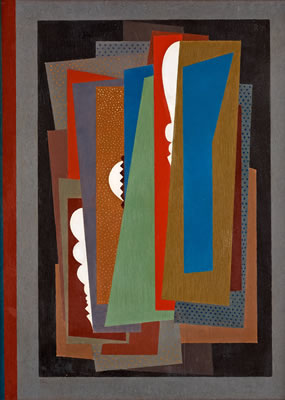
1892 - 1945. Known for: Abstract paintings inspired by music.
Knut Lundström was a pioneer in the non-figurative Swedish painting in the 1920s. After studying at Carl Wilhelm's school of painting in 1912 to 1915, he traveled in 1919 to Paris, where he lived... Read full biography
Knut Lundström was a pioneer in the non-figurative Swedish painting in the 1920s. After studying at Carl Wilhelm's school of painting in 1912 to 1915, he traveled in 1919 to Paris, where he lived until 1933. He studied one year with André Lhote and began experimenting with non-figurative color... Read full biography
Knut Lundström was a pioneer in the non-figurative Swedish painting in the 1920s. After studying at Carl Wilhelm's school of painting in 1912 to 1915, he traveled in 1919 to Paris, where he lived until 1933. He studied one year with André Lhote and began experimenting with non-figurative color plane and geometric compositions. These ideas were developed during the second half of the 1920s by those who beleived that line formations with expressive colors reflect the experience of music set to... Read full biography
Knut Lundström was a pioneer in the non-figurative Swedish painting in the 1920s. After studying at Carl Wilhelm's school of painting in 1912 to 1915, he traveled in 1919 to Paris, where he lived until 1933. He studied one year with André Lhote and began experimenting with non-figurative color plane and geometric compositions. These ideas were developed during the second half of the 1920s by those who beleived that line formations with expressive colors reflect the experience of music set to painting. Lundstrom's first solo exhibition in Paris in 1922 consisted of geometric compositions entitled Nature Morte. At the Exposition de L'Art Abstrait 1924, he gave the same type of compositions the title Evolution rytmique, giving his works... Read full biography
Knut Lundström was a pioneer in the non-figurative Swedish painting in the 1920s. After studying at Carl Wilhelm's school of painting in 1912 to 1915, he traveled in 1919 to Paris, where he lived until 1933. He studied one year with André Lhote and began experimenting with non-figurative color plane and geometric compositions. These ideas were developed during the second half of the 1920s by those who beleived that line formations with expressive colors reflect the experience of music set to painting. Lundstrom's first solo exhibition in Paris in 1922 consisted of geometric compositions entitled Nature Morte. At the Exposition de L'Art Abstrait 1924, he gave the same type of compositions the title Evolution rytmique, giving his works titles with references to different pieces of music and musical scales. It was onl... Read full biography
Artist Biography
Biography page for Knut Lundstrom ((1892 - 1945)), known for Abstract paintings inspired by music. Showing 2 biographical entries and 0 sample artworks.
Knut Lundstrom - Artist Info
About Knut Lundstrom
Biography from Stockholm Auktionsverk
Knut Lundström was a pioneer in the non-figurative Swedish painting in the 1920s. After studying at Carl Wilhelm's school of painting in 1912 to 1915, he traveled in 1919 to Paris, where he lived until 1933. He studied one year with André Lhote and began experimenting with non-figurative color plane and geometric compositions. These ideas were developed during the second half of the 1920s by those who beleived that line formations with expressive colors reflect the experience of music set to painting.
Lundstrom's first solo exhibition in Paris in 1922 consisted of geometric compositions entitled Nature Morte. At the Exposition de L'Art Abstrait 1924, he gave the same type of compositions the title Evolution rytmique, giving his works titles with references to different pieces of music and musical scales. It was only in the solo exhibition at Galerie Renaissance in Paris in 1932, in which he specified which piece of music inspired each of his paintings.
Lundström co-founded the group Les Artistes Musicalistes whose goal was to use their art to explain the relationship between color and tone. Lundström drafted a manifesto which was published in conjunction with his exhibition at Galerie Renaissance in 1932. The group was of the opinion that the musical tones are colors and colors are tones - lines, shapes and planes expresse tempi, themes and rhythms and vice versa. In Lundstrom's manifesto he explains the relationship between color and tone. The carefully rendered tables illustrated in the catalog correspond to different instruments with different colors and tempos with different shaped lines. With these at hand, you can "decipher" Lundstrom's paintings and bring out the significance of virtually each line and each color.Biography from Uppsala (also see Stockholms Auktionsverk)
Knut Lundström was a Swedish artist who became known for his abstract paintings inspired by music. He studied in Paris between 1919-1933, and was influenced by the prominent modernist André Lhote.
Lundström co-founded "Les Artistes Musicalistes" in Paris, which sought to explain the relationship between color and tone through art. He believed that one color plane concreted a tone, while several color planes formed a chord. Lundström's paintings often had titles with references to different color scales and pieces of music.
His art has remained relatively unknown, and during his lifetime, his pioneering compositions never had a major impact. Today, his music paintings are represented at the Moderna Museet and Nationalmuseum in Stockholm, Norrköping Art Museum, and Malmö Art Museum.