Page loaded successfully. Showing biography for Leon Richet.
Leon Richet BIOGRAPHY
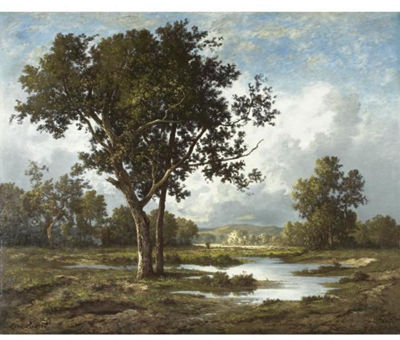
1847 Solesmes, France - 1907 Fountainbleau, France. Known for: Landscape, still-life and genre painting.
Léon Richet was born in Solesmes (Sathe), Normandy in 1847 and he died in Fountainbleau (Seine-et-Marne) on May 26, 1907. He was a student of Narcisse Virgle Diaz de La Pena (1807/9-1876), Charles... Read full biography
Léon Richet was born in Solesmes (Sathe), Normandy in 1847 and he died in Fountainbleau (Seine-et-Marne) on May 26, 1907. He was a student of Narcisse Virgle Diaz de La Pena (1807/9-1876), Charles Victor Eugéne Lefébvre (1805-1882) and Louis Jean Boulanger (1806/7-1867). Diaz had the greatest... Read full biography
Léon Richet was born in Solesmes (Sathe), Normandy in 1847 and he died in Fountainbleau (Seine-et-Marne) on May 26, 1907. He was a student of Narcisse Virgle Diaz de La Pena (1807/9-1876), Charles Victor Eugéne Lefébvre (1805-1882) and Louis Jean Boulanger (1806/7-1867). Diaz had the greatest impression on Richet, and it is Diaz is remembered historically. There was a great difference in age between Diaz and Richet, which most likely explains the great respect on the part of the student for his... Read full biography
Léon Richet was born in Solesmes (Sathe), Normandy in 1847 and he died in Fountainbleau (Seine-et-Marne) on May 26, 1907. He was a student of Narcisse Virgle Diaz de La Pena (1807/9-1876), Charles Victor Eugéne Lefébvre (1805-1882) and Louis Jean Boulanger (1806/7-1867). Diaz had the greatest impression on Richet, and it is Diaz is remembered historically. There was a great difference in age between Diaz and Richet, which most likely explains the great respect on the part of the student for his master. Richet began exhibiting in the Paris Salons in 1869. At the Salon of 1885, he was awarded honorable mention, and he was awarded a second place medal in the Salons of 1888 and 1901. Richet's best known landscapes are those set in the forest... Read full biography
Léon Richet was born in Solesmes (Sathe), Normandy in 1847 and he died in Fountainbleau (Seine-et-Marne) on May 26, 1907. He was a student of Narcisse Virgle Diaz de La Pena (1807/9-1876), Charles Victor Eugéne Lefébvre (1805-1882) and Louis Jean Boulanger (1806/7-1867). Diaz had the greatest impression on Richet, and it is Diaz is remembered historically. There was a great difference in age between Diaz and Richet, which most likely explains the great respect on the part of the student for his master. Richet began exhibiting in the Paris Salons in 1869. At the Salon of 1885, he was awarded honorable mention, and he was awarded a second place medal in the Salons of 1888 and 1901. Richet's best known landscapes are those set in the forest of Fountainbleau where Richet depicts a figure on a tree-lined path or standing by a lake or pond. I... Read full biography
Artist Biography
Biography page for Leon Richet ((1847 - 1907)), known for Landscape, still-life and genre painting. Showing 3 biographical entries and 0 sample artworks.
Leon Richet - Artist Info
About Leon Richet
Name variants
Leon Richer
Biography from The Cambridge Art Gallery
A member of the Barbizon School, Richet was a noted painter of landscapes, still lifes and genre scenes. Born in Solesne in 1847, the artist showed great talent at an early age and initially studied with Ambroise Detrez at the Academy of Valenciennes. His skills developed rapidly under the tutelage of such esteemed artists as Díaz de la Peña, Jules Lefebvre and Gustave Boulanger. Richet was also greatly influenced by Théodore Rousseau's powerful and mystical depictions of nature.
Collectorship of Richet's art gained momentum throughout Europe, culminating in the artist's debut in the Paris Salon of 1869, as well as inclusion in the Salon des Artistes Français. Richet is considered an important and respected figure from the Barbizon School and his paintings continue to be in great demand by collectors and museums throughout the world.
Museum collections:
The Hermitage, St. Petersburg; Le Musée d'Art Moderne, Nice; Leeds Museum; Montreal Museum; Musée de Reims.Biography from Schiller & Bodo European Paintings
Born in Solesme, France in 1847, Léon Richet was of the generation of painters raised during the height of the Barbizon School. He was a student of Narcisse Virgile Diaz de la Pena, as well as Jules Lefebvre and Gustave Boulanger.
He began a Salon career in 1869, received an honorable mention in 1885, and was awarded second place medals in 1888 and 1901. However, his Barbizon-style works figure more importantly in his career than his Salon submissions.
Richet was very influenced by the works of Rousseau. The majority of Richet's landscapes are of the forest of Fountainebleau, although he did also paint views at Moret sur Loing, Loiret, Burgundy, Normandy, and along the Seine River.
His compositions are often airy and open, unlike the sometimes enclosed and dusky views of nature of some of his mentors and counterparts, such as Diaz and Corot. Richet was a very prolific artist and his works appear in many collections.
Museums:
Leeds, Montreal, Nice, Reims, RennesBiography from Modern Art Dealers
Léon Richet was born in Solesmes (Sathe), Normandy in 1847 and he died in Fountainbleau (Seine-et-Marne) on May 26, 1907. He was a student of Narcisse Virgle Diaz de La Pena (1807/9-1876), Charles Victor Eugéne Lefébvre (1805-1882) and Louis Jean Boulanger (1806/7-1867). Diaz had the greatest impression on Richet, and it is Diaz is remembered historically. There was a great difference in age between Diaz and Richet, which most likely explains the great respect on the part of the student for his master.
Richet began exhibiting in the Paris Salons in 1869. At the Salon of 1885, he was awarded honorable mention, and he was awarded a second place medal in the Salons of 1888 and 1901.
Richet's best known landscapes are those set in the forest of Fountainbleau where Richet depicts a figure on a tree-lined path or standing by a lake or pond. In these paintings, we can very easily sense those subjects which inspired Diaz's work. Striving to capture the profoundly agrarian aspect of nature, and he sought to study the effects of light in much the same way the Impressionists would do only a few years later.
Like many painters of the 19th century, Richet traveled extensively. He painted in the countryside of Auvergne, Picardie, and seascapes in Tréport and as far away as Guéret in the center of France. He even traveled to Belgium. His subjects were not limited to Barbizon or the Fountainbleau forest. Richet wanted to record the nature and the effects of light on the diverse landscapes of his travels.
Museums:
Leeds Museum, Forét de Fountainbleau
Montréal Museum, Vieux Chênes and Forét de Fountainbleau
Musee de Nice, Paysage
Musee de Reims, Paysage avec marais
Listed:
E. Benezit, Grund, vol.VIII, pg. 742
Thieme Becker Lexikon
Index of Artists, Mallet
Dictionnaire des Petits Maîtres de la peinture 1820-1920, Gérald Schurr & Pierre Cabanne, vol. I, pg. 336, illustrated pg. 337