Page loaded successfully. Showing biography for Lu Shi.
Lu Shi BIOGRAPHY
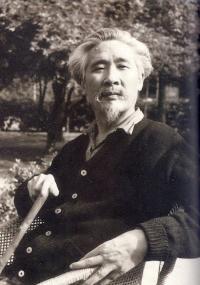
1919 Renshou County, Meishan, China - 1982 Xi'an, China. Known for: Calligraphy, watercolor and ink mountain scene images, wood block printing, poetry.
Shi Lu (Chinese: ??; pinyin: Shí Lu; 1919–1982), born Feng Yaheng (Chinese: ???), was a Chinese painter, wood block printer, poet and calligrapher. He based his pseudonym on two artists who greatly... Read full biography
Shi Lu (Chinese: ??; pinyin: Shí Lu; 1919–1982), born Feng Yaheng (Chinese: ???), was a Chinese painter, wood block printer, poet and calligrapher. He based his pseudonym on two artists who greatly influenced him, the landscape painter Shitao and writer Lu Xun. Shi Lu came from a wealthy land... Read full biography
Shi Lu (Chinese: ??; pinyin: Shí Lu; 1919–1982), born Feng Yaheng (Chinese: ???), was a Chinese painter, wood block printer, poet and calligrapher. He based his pseudonym on two artists who greatly influenced him, the landscape painter Shitao and writer Lu Xun. Shi Lu came from a wealthy land owning family in Renshou County, Sichuan Province. A student of the Chinese traditional painting style guohua, he studied at Dongfang Art College and West China Union University in Chengdu (1934-1940). He... Read full biography
Shi Lu (Chinese: ??; pinyin: Shí Lu; 1919–1982), born Feng Yaheng (Chinese: ???), was a Chinese painter, wood block printer, poet and calligrapher. He based his pseudonym on two artists who greatly influenced him, the landscape painter Shitao and writer Lu Xun. Shi Lu came from a wealthy land owning family in Renshou County, Sichuan Province. A student of the Chinese traditional painting style guohua, he studied at Dongfang Art College and West China Union University in Chengdu (1934-1940). He joined the Communist Party of China and in 1949 at the first national assembly was elected and executive member of the China Artists Association. In 1955 Shi Lu travelled to India to supervise the overall art design of a Chinese pavilion at an... Read full biography
Shi Lu (Chinese: ??; pinyin: Shí Lu; 1919–1982), born Feng Yaheng (Chinese: ???), was a Chinese painter, wood block printer, poet and calligrapher. He based his pseudonym on two artists who greatly influenced him, the landscape painter Shitao and writer Lu Xun. Shi Lu came from a wealthy land owning family in Renshou County, Sichuan Province. A student of the Chinese traditional painting style guohua, he studied at Dongfang Art College and West China Union University in Chengdu (1934-1940). He joined the Communist Party of China and in 1949 at the first national assembly was elected and executive member of the China Artists Association. In 1955 Shi Lu travelled to India to supervise the overall art design of a Chinese pavilion at an international expo. In 1956 he attended the Asian-African National Art Exhibition in Egypt. During these travels he made many sketches of the p... Read full biography
Artist Biography
Biography page for Lu Shi ((1919 - 1982)), known for Calligraphy, watercolor and ink mountain scene images, wood block printing, poetry. Showing 2 biographical entries and 0 sample artworks.
Lu Shi - Artist Info
About Lu Shi
Biography from the Archives of askART
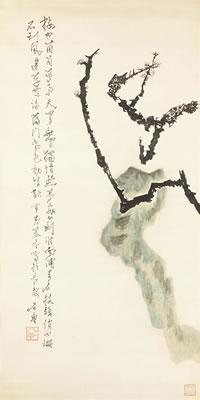 Shi Lu (Chinese: ??; pinyin: Shí Lu; 1919–1982), born Feng Yaheng (Chinese: ???), was a Chinese painter, wood block printer, poet and calligrapher. He based his pseudonym on two artists who greatly influenced him, the landscape painter Shitao and writer Lu Xun.
Shi Lu came from a wealthy land owning family in Renshou County, Sichuan Province. A student of the Chinese traditional painting style guohua, he studied at Dongfang Art College and West China Union University in Chengdu (1934-1940). He joined the Communist Party of China and in 1949 at the first national assembly was elected and executive member of the China Artists Association.
In 1955 Shi Lu travelled to India to supervise the overall art design of a Chinese pavilion at an international expo. In 1956 he attended the Asian-African National Art Exhibition in Egypt. During these travels he made many sketches of the people he observed developing his technique of Western drawing and Chinese brushwork.
In 1959 he was commissioned to produce a large scale painting to be displayed in the Great Hall of the People in Beijing to commemorate the 10th anniversary of the forming of the People's Republic of China. By this time Shi Lu had developed a mature style and looked upon the opportunity to create what is now considered his masterpiece. The painting depicts Mao Zedong standing on the precipice of the Shaanxi mountains in 1947, leading his troops against the National Revolutionary Army. The painting was criticized for the small image of Mao with a grand landscape and his back turned to the viewer.
One critic saying that he appeared "isolated and at the end of the road". Shi Lu refused to revise the painting when asked and further uncompromising stances on his artistic vision lead to his eventual persecution by the Red Guards during the Cultural Revolution. His art was publicly denounced, he was put in prison and not allowed to touch a brush for three years.
During this time Shi Lu suffered a mental breakdown and was diagnosed with schizophrenia. After his release in 1970 he quickly returned to painting, taking some of the water color landscape sketches he had made in India and Egypt and adding a dense overlayer of ink painting that exhibited a darker and more erratic style, similar to that sometimes found in the work of people with schizophrenia.
Source:
Wikipedia, 2020Biography from Museum of Modern Art, New York
"A Chinese Artist in Delhi: Shi Lu and the Art of Diplomacy," By Yang Wang Posted on October 3, 2017
In the 1950s, the People's Republic of China (PRC) relied on artist Shi Lu to represent the country abroad. Shi Lu's 1955 trip to India to oversee the design of the Chinese Pavilion at the Indian Industries Fair and his 1956 trip to Egypt for the Afro-Asian Art Conference offer a lens for understanding the PRC's outreach and artistic diplomacy in the Cold War era. This essay discusses Shi Lu's political forays, an often overlooked component of modern Chinese art history and, by extension, global postwar modernism.
The Chinese Pavilion at the 2017 Venice Biennale offers an academic narrative that connects art history, contemporary art, and traditional craft through diagrams and flowcharts. This presentation reveals that China continues to engage with its past as subject matter for the present. The curator is the pioneer experimental artist Qiu Zhijie, best known for his 1995 Tattoo 2, a photograph of the artist with the character bu (“no”), which, painted across his torso, extends to the wall behind him—a trompe l’oeil with political overtones. The contrast between the experimental boldness of Tattoo 2 and the pedantic arrangement of his Venice exhibition is stark, and points to the duality of the artist’s role as both political agitator at home and state emissary abroad.
The dual role of the artist as autonomous creator and agent of the state finds precedent in the previous century. In the early People’s Republic of China (1949– ), the Chinese state tapped another artist to represent itself abroad. The story of Shi Lu (1919–1982) and his political forays represent an under-recognized component of modern Chinese art history and, by extension, global postwar modernism.
Against the backdrop of the Non-Aligned Movement in the mid-1950s, Maoist China tried to position itself at the center of a global “Third World” alliance and enlisted members of the Chinese art world to forge diplomatic alliances. One such enlistee was the rising star Shi Lu, hailing from the city Xi’an, who would eventually paint one of the most iconic images of Mao Zedong: Fighting in Northern Shaanxi (1959). Before he would do so, the impressionable young artist participated in two trips abroad that would shape the trajectory of his career.
Capturing global headlines in 1954, China and India signed the Five Principles of Peaceful Coexistence, an agreement that temporarily halted border tensions between the two countries. As heads of states conducted diplomacy in the limelight, artists of the Maoist period conducted a parallel program of cultural-exchange activities to reiterate the national agenda. In the year after the ratification of the Five Principles, China and India engaged in an active cultural exchange in which visual and performing artists traveled between the two countries as facilitators of friendship and goodwill. Shi Lu’s youth and natural charisma made him an ideal candidate to represent China on two such trips.
In 1955, he traveled to Delhi, India, to oversee the design of the Chinese Pavilion at the Indian Industries Fair. Large-scale international expositions, to which China was a relative newcomer, served as the arena for the world’s major and emerging powers to jostle for position and form alliances. This particular fair attracted the participation of the Soviet Union and the United States in addition to China. Rising Cold War tensions between the Capitalist West and the Communist Bloc were acutely seen and felt through national pavilions. To court non-aligned nations such as India, Capitalist and Communist nations alike devised propaganda programs to portray positive images of themselves.
As the USSR and the United States showcased their industrial achievements in manufacturing and atomic energy, respectively, China vied for a position among the powers by adopting an alternative approach: the exhibition of its traditional culture, including ink painting, ceramics, textiles, and handicrafts. China’s focus on its pre-modern achievements highlighted its strengths rather than exposing its inferior industrial capabilities, which matched its domestic shift toward revitalizing traditional Chinese culture. Although it remains unclear if Shi Lu designed the Chinese Pavilion or implemented the construction of someone else’s designs, his eventual reflections on the importance of national heritage and traditional art forms such as ink painting seemed to have been articulated through the distinctive Chinese design of the pavilion.
According to Jack Masey, former United States Information Agency officer and the designer of the US Pavilion at the same fair, the Chinese Pavilion was notable for its traditional palace-style building and an enormous seated statue of Mao Zedong at the entrance. Although the true extent of Shi Lu’s contributions to the 1955 fair remains unknown, it appears that he understood his role to promote China at the fair and performed it well.
After the conclusion of the event, Shi Lu continued on to his second mission of the trip—sketching the people and scenery of India. A selection of finished paintings based on his sketches were published as a set of postcards titled Quick Sketches from India, Painted by Shi Lu. These images of local scenery focused on ordinary people in rural environments, and exhibited the orientalizing gaze of the Chinese artist, who featured the subject’s most prominent ethnographic features and the bucolic quaintness of the landscape. Despite their appeal to Chinese viewers, the paintings are surprisingly absent of revolutionary content. Shi Lu’s realistic renderings of mundane life defied the expectations of robust, heroic figures mandated by Socialist Realism, a style typically associated with Maoist China, but which was actually inconsistent with the abstract fluidity of traditional ink arts.
A year later, the Chinese government dispatched Shi Lu and his colleague Zhao Wangyun (1906–1977) to Cairo, Egypt, to attend the Afro-Asian Art Conference. Taking place one year after the historic Bandung Conference and just three months after Egyptian president Gamal Abdel Nasser formally recognized Communist China, the artists’ visit to Egypt resulted from the political alliance between the two countries.
Harnessing the plein air skills they had developed at home, the artists tried to sketch and paint the local scenery as much as they could during their three-month trip.8 The resulting paintings were exhibited in Beijing and published in a high quality, large-format catalogue.
While Zhao Wangyun largely returned to his affairs after the trip, Shi Lu became an “expert” on Arab and African affairs as China expressed support for “anti-imperial” revolutions that swept across Africa in the 1950s and ’60s. In addition to his artistic activities, Shi Lu also wrote about African politics and held administrative roles in Sino-African friendship associations. In response to the 1960 execution of Patrice Lumumba, the first democratically elected prime minister of Congo, Shi Lu published an impassionate denouncement of the incident in the People’s Daily.
The artist’s unexpected foray into the world of international politics raises questions about his qualifications for such a task and, more importantly, about the intersection of art and international affairs in Maoist China. Shi Lu’s life would eventually take a tragic turn during the Cultural Revolution, a topic beyond the scope of this essay, but unlike many artists of the Maoist period who tepidly engaged in politics out of pressure, Shi Lu was an enthusiastic participant.
The totality of his activities suggests that the artist viewed art as a necessity for preserving the Chinese civilization, which in the twentieth century also meant a recognition of art’s role in nation-building and diplomacy. His deft navigation of the domestic art sphere, an integral part of the Chinese sociopolitical infrastructure, adds another historical strand to the global postwar legacy.