Page loaded successfully. Showing biography for Lucille Leggett.
Lucille Leggett BIOGRAPHY
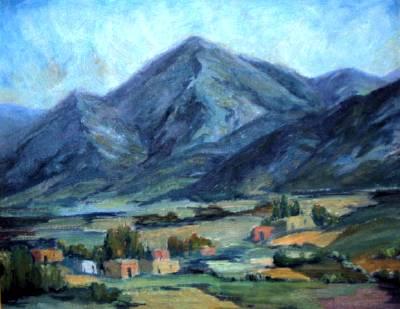
1896 Henry County, Tennessee - 1966 Santa Fe, New Mexico. Known for: Southwest landscape, adobe structures and Native American painting.
Born in Henry County, Tennessee, Lucille Leggett was a painter of southwest subjects including adobe homes, ghost towns, ranches, Native Americans and desert landscapes. She also did painings in... Read full biography
Born in Henry County, Tennessee, Lucille Leggett was a painter of southwest subjects including adobe homes, ghost towns, ranches, Native Americans and desert landscapes. She also did painings in California in Monterey and Carmel, and in the 1960s did a series of historical scenes for the community... Read full biography
Born in Henry County, Tennessee, Lucille Leggett was a painter of southwest subjects including adobe homes, ghost towns, ranches, Native Americans and desert landscapes. She also did painings in California in Monterey and Carmel, and in the 1960s did a series of historical scenes for the community of El Paso, Texas. Leggettt moved to New Mexico from Tennesse in 1914 and then after marriage to a railroad engineer, moved to El Paso, Texas. There she studied art at the local college. Later she... Read full biography
Born in Henry County, Tennessee, Lucille Leggett was a painter of southwest subjects including adobe homes, ghost towns, ranches, Native Americans and desert landscapes. She also did painings in California in Monterey and Carmel, and in the 1960s did a series of historical scenes for the community of El Paso, Texas. Leggettt moved to New Mexico from Tennesse in 1914 and then after marriage to a railroad engineer, moved to El Paso, Texas. There she studied art at the local college. Later she painted in Capitan, Carrizozo and Ruidoso, New Mexico, and in 1952, moved to Santa Fe where for many years she had a studio home on Canyon Road. Source:. Phil Kovinick and Marian Yoshiki Kovinick, An Illustrated Encyclopedia of Women Artists of the... Read full biography
Born in Henry County, Tennessee, Lucille Leggett was a painter of southwest subjects including adobe homes, ghost towns, ranches, Native Americans and desert landscapes. She also did painings in California in Monterey and Carmel, and in the 1960s did a series of historical scenes for the community of El Paso, Texas. Leggettt moved to New Mexico from Tennesse in 1914 and then after marriage to a railroad engineer, moved to El Paso, Texas. There she studied art at the local college. Later she painted in Capitan, Carrizozo and Ruidoso, New Mexico, and in 1952, moved to Santa Fe where for many years she had a studio home on Canyon Road. Source:. Phil Kovinick and Marian Yoshiki Kovinick, An Illustrated Encyclopedia of Women Artists of the American West... Read full biography
Artist Biography
Biography page for Lucille Leggett ((1896 - 1966)), known for Southwest landscape, adobe structures and Native American painting. Showing 2 biographical entries and 0 sample artworks.
Lucille Leggett - Artist Info
About Lucille Leggett
Biography from the Archives of askART
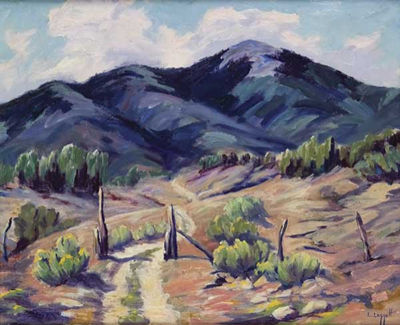 Born in Henry County, Tennessee, Lucille Leggett was a painter of southwest subjects including adobe homes, ghost towns, ranches, Native Americans and desert landscapes. She also did painings in California in Monterey and Carmel, and in the 1960s did a series of historical scenes for the community of El Paso, Texas.
Leggettt moved to New Mexico from Tennesse in 1914 and then after marriage to a railroad engineer, moved to El Paso, Texas. There she studied art at the local college. Later she painted in Capitan, Carrizozo and Ruidoso, New Mexico, and in 1952, moved to Santa Fe where for many years she had a studio home on Canyon Road.
Source:
Phil Kovinick and Marian Yoshiki Kovinick, An Illustrated Encyclopedia of Women Artists of the American WestBiography from William R Talbot Fine Art
Lucille Leggett (1896-1966) was born in Tennessee and as a teenager moved to New Mexico in 1914. She married a railroad engineer and relocated to El Paso, Texas, where she studied art at a local college. She later became captivated by the desert landscape of New Mexico, especially the south-central mountains around Capitan, Carrizozo, and Ruidoso, which lay within a couple of hours' driving distance of El Paso. In time, she gravitated north to Santa Fe, moving there in 1952 to a studio home on Canyon Road. The villages and landscape between Santa Fe and Taos soon became the primary subjects of her art.
Working with the high-keyed palette and individualized brushwork of impressionism, Leggett conveyed the sun-drenched colors and pellucid light of the desert sky in paintings of adobe churches, houses, ranches, ghost towns, and natural features. She was particularly interested in the local way of life and its heritage. Leggett's lively, bright colors suggest influences from the folk traditions indigenous to the borderlands of the United States and Mexico.
Beginning in the late nineteenth century, East Coast artists began to flock to the nearby village of Taos, attracted by the clarity of the air, the charismatic light, and the vibrant colors of the landscape. Kindred spirits—artists like Leggett, writers, and free thinkers—followed in their wake and contributed to the formation of a world-famous art colony.
Refs.: Phil Kovinick and Marian Yoshiki Kovinick. An Illustrated Encyclopedia of Women Artists of the American West (Austin: University of Texas Press, 1998); Samuels' Encyclopedia of Artists of the American West, p. 284.