Page loaded successfully. Showing biography for Manabu Mabe.
Manabu Mabe BIOGRAPHY
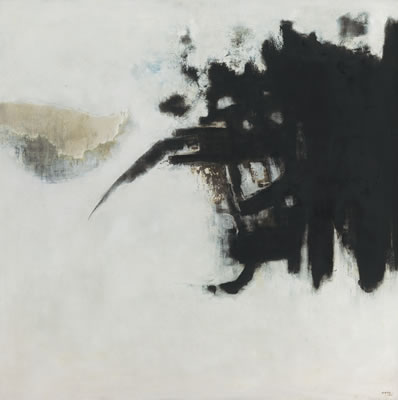
1924 Kumamoto, Japan - 1997 Sao Paulo, Brazil. Known for: Organic abstract and realist painting, hand painted commercial art.
On January 30, 1979, after an exhibition in Tokyo, 53 of his paintings were on board a Varig cargo Boeing 707-323C en route from Tokyo - Narita to Rio de Janeiro-Galeão via Los Angeles. The aircraft... Read full biography
On January 30, 1979, after an exhibition in Tokyo, 53 of his paintings were on board a Varig cargo Boeing 707-323C en route from Tokyo - Narita to Rio de Janeiro-Galeão via Los Angeles. The aircraft went missing over the Pacific Ocean some 30 minutes (200 km ENE) from Tokyo. The cause is unknown... Read full biography
On January 30, 1979, after an exhibition in Tokyo, 53 of his paintings were on board a Varig cargo Boeing 707-323C en route from Tokyo - Narita to Rio de Janeiro-Galeão via Los Angeles. The aircraft went missing over the Pacific Ocean some 30 minutes (200 km ENE) from Tokyo. The cause is unknown since the wreck was never found. The paintings were lost. Mabe died in São Paulo on September 22, 1997. Source:. "Manabu Mabe," Wikipedia, Apr. 2018... Read full biography
On January 30, 1979, after an exhibition in Tokyo, 53 of his paintings were on board a Varig cargo Boeing 707-323C en route from Tokyo - Narita to Rio de Janeiro-Galeão via Los Angeles. The aircraft went missing over the Pacific Ocean some 30 minutes (200 km ENE) from Tokyo. The cause is unknown since the wreck was never found. The paintings were lost. Mabe died in São Paulo on September 22, 1997. Source:. "Manabu Mabe," Wikipedia, Apr. 2018... Read full biography
On January 30, 1979, after an exhibition in Tokyo, 53 of his paintings were on board a Varig cargo Boeing 707-323C en route from Tokyo - Narita to Rio de Janeiro-Galeão via Los Angeles. The aircraft went missing over the Pacific Ocean some 30 minutes (200 km ENE) from Tokyo. The cause is unknown since the wreck was never found. The paintings were lost. Mabe died in São Paulo on September 22, 1997. Source:. "Manabu Mabe," Wikipedia, Apr. 2018... Read full biography
Artist Biography
Biography page for Manabu Mabe ((1924 - 1997)), known for Organic abstract and realist painting, hand painted commercial art. Showing 2 biographical entries and 0 sample artworks.
Manabu Mabe - Artist Info
About Manabu Mabe
Biography from the Archives of askART
 On January 30, 1979, after an exhibition in Tokyo, 53 of his paintings were on board a Varig cargo Boeing 707-323C en route from Tokyo - Narita to Rio de Janeiro-Galeão via Los Angeles. The aircraft went missing over the Pacific Ocean some 30 minutes (200 km ENE) from Tokyo.
The cause is unknown since the wreck was never found. The paintings were lost.
Mabe died in São Paulo on September 22, 1997.
Source:
"Manabu Mabe," Wikipedia, Apr. 2018Biography from Heritage Auctions
The celebrated Brazilian artist Manabu Mabe incorporated a highly autobiographical vision into his organic abstract paintings. Born in 1924 in Kumamoto, Japan, he immigrated to Brazil at the age of ten, helping support his poor family by working on a coffee plantation. Foregoing formal education, he started a home business designing hand-painted neckties and napkins, which he sold on the streets of São Paulo.
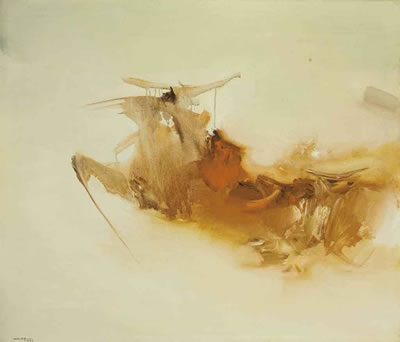
His 1940s paintings—Impressionistic landscapes and still lifes rendered on cardboard—borrowed subjects from household calendars and books. In the 1950s, Mabe shifted toward Cubism, ultimately leading him to pure abstraction. Closely related to French tachisme, a gesture painting with "spotting,"
Mabe's mature abstractions combine drips and flicks of paint, which stem from his practice of calligraphy, with earthy colors and vegetal shapes inspired by the natural surroundings of his childhood. Ever positive, Mabe insisted that all of his abstractions exuded "mabism," the energy of life.
Overnight, Mabe became an international success. Within a year of exhibiting his first abstractions in São Paolo galleries, he won in 1959 the Grant Award and the Braun Award at the First Paris Biennial, the Best National Painter Award at the Fifth São Paolo Biennial, and the Purchase Award at the Dallas Museum of Fine Arts. Time Magazine even covered his lightning-fast rise to fame in an article entitled "Mabe's Golden Year."
Numerous other accolades quickly followed: the 1960 Fiat Prize at the 30th Venice Biennial, the 1961 First Prize in the Second Biennial of Young Artists in Paris, and the 1962 First Prize in the First Inter-American Biennial of Art in Córdoba. Mabe exhibited his paintings widely, not merely in cities throughout Latin America, but in Washington, D.C., Boston, New York, London, Vienna, Madrid, Rome, Paris, Stockholm, Basel, and Osaka.