Page loaded successfully. Showing biography for Marc Sterling.
Marc Sterling BIOGRAPHY
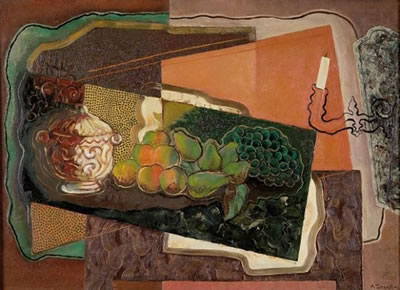
1897 Pryluky, Ukraine - 1976 Paris, France. Known for: Nature morte, constructivism, fantasy, still life painting.
Marc Sterling (1895-1976). Born in Ukraine, he studied iconography and then in 1909 began his art studies at Odesa Art College. In 1916 Sterling entered the Art School in Moscow and later in 1917 he... Read full biography
Marc Sterling (1895-1976). Born in Ukraine, he studied iconography and then in 1909 began his art studies at Odesa Art College. In 1916 Sterling entered the Art School in Moscow and later in 1917 he joined the avant-garde movement and became a student of Tatlin, working at the famous VHUTEMAS.... Read full biography
Marc Sterling (1895-1976). Born in Ukraine, he studied iconography and then in 1909 began his art studies at Odesa Art College. In 1916 Sterling entered the Art School in Moscow and later in 1917 he joined the avant-garde movement and became a student of Tatlin, working at the famous VHUTEMAS. Sterling became a close friend of Mayakowski with whom he studied a propaganda art of poster. In 1922 the artist went to Berlin with Mayakowski, where he met his future wife of Polish origin, Basie. In... Read full biography
Marc Sterling (1895-1976). Born in Ukraine, he studied iconography and then in 1909 began his art studies at Odesa Art College. In 1916 Sterling entered the Art School in Moscow and later in 1917 he joined the avant-garde movement and became a student of Tatlin, working at the famous VHUTEMAS. Sterling became a close friend of Mayakowski with whom he studied a propaganda art of poster. In 1922 the artist went to Berlin with Mayakowski, where he met his future wife of Polish origin, Basie. In 1923 young Sterling and his wife move to Paris where the artist joined the circles of Montparnasse avant-garde artists with whom he became close friend. His circle included artists such as Gris, Metzinger, Leger and Ozenfant. His first solo exhibit... Read full biography
Marc Sterling (1895-1976). Born in Ukraine, he studied iconography and then in 1909 began his art studies at Odesa Art College. In 1916 Sterling entered the Art School in Moscow and later in 1917 he joined the avant-garde movement and became a student of Tatlin, working at the famous VHUTEMAS. Sterling became a close friend of Mayakowski with whom he studied a propaganda art of poster. In 1922 the artist went to Berlin with Mayakowski, where he met his future wife of Polish origin, Basie. In 1923 young Sterling and his wife move to Paris where the artist joined the circles of Montparnasse avant-garde artists with whom he became close friend. His circle included artists such as Gris, Metzinger, Leger and Ozenfant. His first solo exhibit took place in Lodz, Poland in 1923. During World War II he left Paris and lived in the French co... Read full biography
Artist Biography
Biography page for Marc Sterling ((1897 - 1976)), known for Nature morte, constructivism, fantasy, still life painting. Showing 2 biographical entries and 0 sample artworks.
Marc Sterling - Artist Info
About Marc Sterling
Biography from the Archives of askART
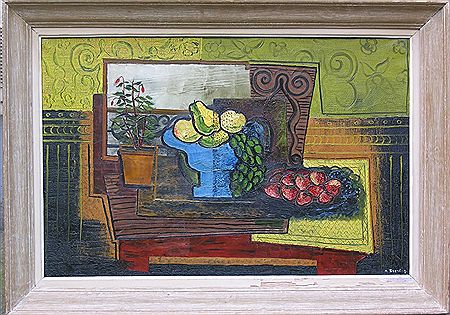 Marc Sterling (1895-1976)
Born in Ukraine, he studied iconography and then in 1909 began his art studies at Odesa Art College.
In 1916 Sterling entered the Art School in Moscow and later in 1917 he joined the avant-garde movement and became a student of Tatlin, working at the famous VHUTEMAS.
Sterling became a close friend of Mayakowski with whom he studied a propaganda art of poster.
In 1922 the artist went to Berlin with Mayakowski, where he met his future wife of Polish origin, Basie.
In 1923 young Sterling and his wife move to Paris where the artist joined the circles of Montparnasse avant-garde artists with whom he became close friend. His circle included artists such as Gris, Metzinger, Leger and Ozenfant.
His first solo exhibit took place in Lodz, Poland in 1923. During World War II he left Paris and lived in the French countryside. In 1953, he settled for three years in Peseux, near Neuchatel, Switzerland.
In 1956 the artist returned to Paris. During that year he traveled to Holland, Italy, Spain and Israel.
Sterling started as a cubo-futuristic painter and developed his style into expressive Ecole de Paris utilizing texture and contour to synthesize figures and objects in his paintings.
Sterling's first retrospective exhibit took place in Neuchatel in 1978.
Source:
Nadine Nieszawer, Marie Boyé, Paul Fogel. "Peintres Juifs à Paris 1905-1939 Ecole de Paris". Editons Denoel 2000Biography from Auctionata
Marc Sterling (1897-1976) comes from a Jewish Ukraine family and was born in Pryluky in 1897. He first studied in Odessa, in the early 1920s at Vkhutemas in Moscow.
His former works are strongly influenced by constructivism. 1921-22 he lived in Berlin, where also was his first exhibition. In 1923 he moved to Paris and joined the international circle of artists of the École de Paris.
During World War II he fled, but returned after the war with his family to Paris. His later works testify with the contact of the international artistic community in Paris, the encounter with Cubism up to his personal lyrical style of his later years, a sort of fantastic realism.
He exhibits regularly in galleries and salons until his death in 1976.