Page loaded successfully. Showing biography for Marcantonio Franceschini.
Marcantonio Franceschini BIOGRAPHY
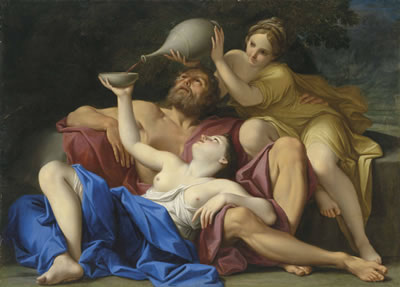
1648 Bologna, Italy - 1729 Bologna, Italy. Known for: Figure, religious genre painting, church altarpieces, ceiling decoration, fresco.
The Bolognese Marcantonio Franceschini was a young age student of Giovanni Maria Galli da Bibiena (1625-1665) and worked from the age of 20 in the workshop Carlo Cignanis (1628-1719) in the... Read full biography
The Bolognese Marcantonio Franceschini was a young age student of Giovanni Maria Galli da Bibiena (1625-1665) and worked from the age of 20 in the workshop Carlo Cignanis (1628-1719) in the Emilia-Romagna on numerous commissions, notably frescoes. Early 30s he set up his own workshop and acquired... Read full biography
The Bolognese Marcantonio Franceschini was a young age student of Giovanni Maria Galli da Bibiena (1625-1665) and worked from the age of 20 in the workshop Carlo Cignanis (1628-1719) in the Emilia-Romagna on numerous commissions, notably frescoes. Early 30s he set up his own workshop and acquired in a short time a reputation beyond the country's borders. For Franceschini significant contracts included the decoration of the Palazzo Ducale in Genoa in 1685, as well as numerous works from 1692... Read full biography
The Bolognese Marcantonio Franceschini was a young age student of Giovanni Maria Galli da Bibiena (1625-1665) and worked from the age of 20 in the workshop Carlo Cignanis (1628-1719) in the Emilia-Romagna on numerous commissions, notably frescoes. Early 30s he set up his own workshop and acquired in a short time a reputation beyond the country's borders. For Franceschini significant contracts included the decoration of the Palazzo Ducale in Genoa in 1685, as well as numerous works from 1692 until his death commissioned by Fürst Johann Adam Andreas I von Liechtenstein, for whom he had been working as an art agent, and in 1711 the appointment by Pope Clement XI. the design of the Choir Chapel of St. Peter in Rome. A lot of the incoming of... Read full biography
The Bolognese Marcantonio Franceschini was a young age student of Giovanni Maria Galli da Bibiena (1625-1665) and worked from the age of 20 in the workshop Carlo Cignanis (1628-1719) in the Emilia-Romagna on numerous commissions, notably frescoes. Early 30s he set up his own workshop and acquired in a short time a reputation beyond the country's borders. For Franceschini significant contracts included the decoration of the Palazzo Ducale in Genoa in 1685, as well as numerous works from 1692 until his death commissioned by Fürst Johann Adam Andreas I von Liechtenstein, for whom he had been working as an art agent, and in 1711 the appointment by Pope Clement XI. the design of the Choir Chapel of St. Peter in Rome. A lot of the incoming of foreign nobles ordered his work but he refused because he did not want to leave his hometown for a long time. Nevertheles... Read full biography
Artist Biography
Biography page for Marcantonio Franceschini ((1648 - 1729)), known for Figure, religious genre painting, church altarpieces, ceiling decoration, fresco. Showing 1 biographical entries and 0 sample artworks.
Marcantonio Franceschini - Artist Info
About Marcantonio Franceschini
Biography from Galerie Bassenge, Berlin
The Bolognese Marcantonio Franceschini was a young age student of Giovanni Maria Galli da Bibiena (1625-1665) and worked from the age of 20 in the workshop Carlo Cignanis (1628-1719) in the Emilia-Romagna on numerous commissions, notably frescoes. Early 30s he set up his own workshop and acquired in a short time a reputation beyond the country's borders. For Franceschini significant contracts included the decoration of the Palazzo Ducale in Genoa in 1685, as well as numerous works from 1692 until his death commissioned by Fürst Johann Adam Andreas I von Liechtenstein, for whom he had been working as an art agent, and in 1711 the appointment by Pope Clement XI. the design of the Choir Chapel of St. Peter in Rome. A lot of the incoming of foreign nobles ordered his work but he refused because he did not want to leave his hometown for a long time.
Nevertheless Franceschini left an extensive oeuvre, most of which compiled his own book (Libro dei Conti. Bologna, Biblioteca Communale) which is handed down. One of his closest aides was his brother-in-law Luigi Quaini (1643-1717), who was married to his sister Teresa. Quaini was often responsible for the architectural and landscape backgrounds.
"Franceschini represents the classic style of Bolognese painting and oriented at the direct and indirect models Francesco Albani, Annibale Carracci, Carlo Cignani, Domenichino and Guido Reni. He is one of the most prolific and respected artists of Bologna in the late 17th and early 18th centuries. The calculated harmonic balance of his composition, his painterly refinement and sensual decorative ease his handwriting make it one of the most important representatives of the Bolognese school. His landscapes with intimate sense of Arcadian poetry were among collectors in Western Europe, but particularly popular in German-speaking countries and prepared with an increasingly tending to pastel colors, the elegant lines and grace of the female figures Rococo before. "(Anna Matteoli, AKL , Vol. 43, p 300).