Page loaded successfully. Showing biography for Mario Buccellati.
Mario Buccellati BIOGRAPHY
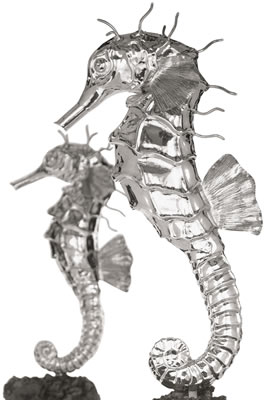
1891 Milan, Italy - 1965. Known for: Silver and gold craftsmanship, jewelry, birds, animals.
When Mario Buccellati (1891-1965) returned from war in 1918 to find that the company he had worked for since he was twelve had been sold and he no longer had a job he decided there was only one thing... Read full biography
When Mario Buccellati (1891-1965) returned from war in 1918 to find that the company he had worked for since he was twelve had been sold and he no longer had a job he decided there was only one thing to do, buy it back. And so it was that Milan’s prestigious jewellery firm Beltrami e Besnati, where... Read full biography
When Mario Buccellati (1891-1965) returned from war in 1918 to find that the company he had worked for since he was twelve had been sold and he no longer had a job he decided there was only one thing to do, buy it back. And so it was that Milan’s prestigious jewellery firm Beltrami e Besnati, where Mario had been apprenticed as a goldsmith, became Mario Buccellati in 1919 with a shop in the city centre on Largo Santa Margherita. Mario supplied the Milanese high society with diadems and... Read full biography
When Mario Buccellati (1891-1965) returned from war in 1918 to find that the company he had worked for since he was twelve had been sold and he no longer had a job he decided there was only one thing to do, buy it back. And so it was that Milan’s prestigious jewellery firm Beltrami e Besnati, where Mario had been apprenticed as a goldsmith, became Mario Buccellati in 1919 with a shop in the city centre on Largo Santa Margherita. Mario supplied the Milanese high society with diadems and necklaces, evening bags and cocktail rings and his success grew quickly. In 1921 he was invited to exhibit his jewels in Madrid at the palazzo di casa Errayz y Comp, where he was patronized by the Spanish Royal family and by 1925 he was able to open a second... Read full biography
When Mario Buccellati (1891-1965) returned from war in 1918 to find that the company he had worked for since he was twelve had been sold and he no longer had a job he decided there was only one thing to do, buy it back. And so it was that Milan’s prestigious jewellery firm Beltrami e Besnati, where Mario had been apprenticed as a goldsmith, became Mario Buccellati in 1919 with a shop in the city centre on Largo Santa Margherita. Mario supplied the Milanese high society with diadems and necklaces, evening bags and cocktail rings and his success grew quickly. In 1921 he was invited to exhibit his jewels in Madrid at the palazzo di casa Errayz y Comp, where he was patronized by the Spanish Royal family and by 1925 he was able to open a second boutique in Rome’s Via Condotti followed by another in Florence. The most distinguishing feature of Mario’s jewellery was h... Read full biography
Artist Biography
Biography page for Mario Buccellati ((1891 - 1965)), known for Silver and gold craftsmanship, jewelry, birds, animals. Showing 2 biographical entries and 0 sample artworks.
Mario Buccellati - Artist Info
About Mario Buccellati
Biography from the Archives of askART
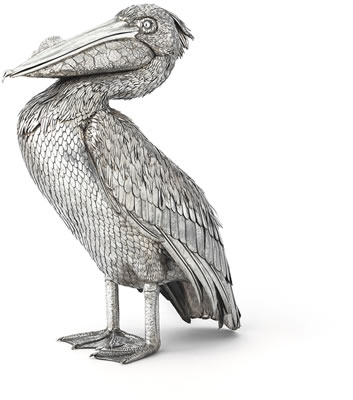 When Mario Buccellati (1891-1965) returned from war in 1918 to find that the company he had worked for since he was twelve had been sold and he no longer had a job he decided there was only one thing to do, buy it back.
And so it was that Milan’s prestigious jewellery firm Beltrami e Besnati, where Mario had been apprenticed as a goldsmith, became Mario Buccellati in 1919 with a shop in the city centre on Largo Santa Margherita. Mario supplied the Milanese high society with diadems and necklaces, evening bags and cocktail rings and his success grew quickly. In 1921 he was invited to exhibit his jewels in Madrid at the palazzo di casa Errayz y Comp, where he was patronized by the Spanish Royal family and by 1925 he was able to open a second boutique in Rome’s Via Condotti followed by another in Florence.
The most distinguishing feature of Mario’s jewellery was his gold work and he set out to fully explore his long held fascination with the metal and all that could be achieved with it. He researched age old techniques and experimented with antique-style tools in an effort to realise his design dreams. He was hugely inspired by the Renaissance era, in particular the opulent fabrics, delicate damasks and fine Venetian laces which he sought to emulate in his jewels. He elevated the art of engraving to new heights in an effort to leave no jewel with “untouched gold”. Every surface would be enhanced with a range of different engraving styles and he sought to create from metal the same lightness, fluidity and textures that were usually the preserve of fabric.
During the war gold was very scarce but Buccellati carried on working by utilising materials such as copper which he plated with a gold coloured alloy known as ‘Dutch gold’. He was also innovative in his use of gemstones by setting old or chipped stones upside down, thereby creating a similar look to cabochon stones, this proved very popular and was used on both jewellery and accessories such as compacts. As the 1940’s segued in to the 50’s Mario felt the time was right to expand the firm internationally. The decision was taken to start with New York and so with the help of his son Luca, he opened a boutique on 51st street in 1951. It was such a success that only three years later they opened another on Fifth Avenue followed in 1958 by a seasonal salon on the fashionable Worth Avenue in Palm Beach.
Mario’s son Gianmaria (1929- ) started working with his father when he was just 14 years old, learning both the business and the goldsmiths craft. When Mario passed away in 1965, Gianmaria took over the management of the workshops and the creative side of the business and alongside his brother Luca, focused on developing the business in the United States whilst his brothers Lorenzo and Frederico ran the existing shops in Italy. Over time various disputes eventually led to Gianmaria breaking away and establishing Gianmaria Buccellati boutiques in the Far East, starting with Hong Kong in 1970, the Middle East and the rest of Europe. In 1979 the brand became the first Italian jeweller to take up residence in the world famous Place Vendôme in Paris alongside such established French houses as Boucheron, Van Cleef & Arpels and Cartier.
In 1973 Gianmaria, alongside a group of professional colleagues, formed the Italian Gemological Institute of which he remained president for twenty five years. His dedication not only to jewellery but also to the quality of the gemstones used therein was enduring and is reflected in Buccellati jewels to this day. His son Andrea joined him in the firm in 1978 and they worked closely together to continue the worldwide expansion of the business. In 2000 the Smithsonian Institution’s National Museum of Natural History in Washington, D.C. hosted an exhibition ‘Buccellati: Art in Gold, Silver and Gems’ which celebrated the work of Mario and Gianmaria Buccellati. A year later Gianmaria presented the company’s first watch collection at the SIHH exhibition in Geneva and then in 2004 he unveiled the now famous Animalier collection. Inspired by his great love of baroque pearls, he designed a collection of unique brooches as a tribute to their perfectly imperfect forms. “From dragons with bright ruby tongues to snails with mysteriously gleaming eyes, this is a menagerie born from unbridled imagination.”In 2011 the Mario Buccellati and Gianmaria Buccellati brands were finally unified under the single name of Buccellati and in 2013 they secured a deal with the Italian equity fund Clessidra to sell the majority stake of the company. Andrea became President and remains so today, supported by his brother Gino who manages the silverware production and his sister Maria Cristina who runs the PR side of the business. Alongside his siblings, he is also accompanied by his daughter Lucrezia who joined the family business in 2014 as the company co-Creative Director and the first female designer in their almost 100 year history. Tasked with designing for the younger generations, she is ensuring that the tradition of fine, individually hand crafted jewels, for which this Italian jewellery house is world renowned, is carried forward and that her great grandfather’s legacy will endure for many years to come.Source:Website of Hancocks, London, 2024Biography from Nedra Matteucci Galleries
The versatility of the Italian Renaissance craftsman is perhaps nowhere more evident than it was in the delicate silver and gold work of Benvenuto Cellini. In his hands, the fine metals took on a life beyond their usual. This world renowned tradition was carried into the early 20th century by the Milanese jeweler, Mario Buccellati, and is continued today by his son Gianmaria.
The Buccellati family has continued to produce flatware and jewelry in the style of 15th century Italy. Buccellati presently makes works of fine silver in the 18th century classical Italian style and in the French baroque idiom as well. In each case, the resulting pieces are works of art.
Each is a one-of-a-kind, hand-crafted example of art. In addition to jewelry and flatware, Buccellati creates elegant trays and frames often filled with panels of malachite or other semi-precious stones. Striking decorative work, such as sterling centerpieces for large table settings and beautiful renditions in silver of Jacques Caillot figures, complement Buccellati's better known works.