Page loaded successfully. Showing biography for Mark Fisher.
Mark Fisher BIOGRAPHY
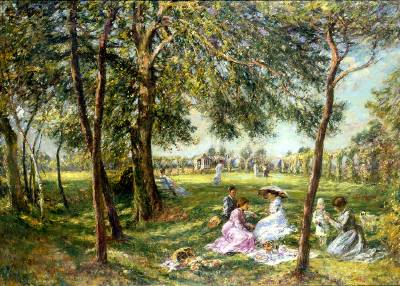
1841 Boston, Massachusetts - 1923 Hatfield Heath, England. Known for: Impressionist landscape, still life painting.
Influenced by study with the great George Inness to become a landscape painter, William Mark Fisher, born in 1841 in Boston, also studied as a youth at the Lowell Institute in Massachusetts. Fisher... Read full biography
Influenced by study with the great George Inness to become a landscape painter, William Mark Fisher, born in 1841 in Boston, also studied as a youth at the Lowell Institute in Massachusetts. Fisher went to Paris as a young man of twenty to study with academic artist, Charles Gleyre. In France, he... Read full biography
Influenced by study with the great George Inness to become a landscape painter, William Mark Fisher, born in 1841 in Boston, also studied as a youth at the Lowell Institute in Massachusetts. Fisher went to Paris as a young man of twenty to study with academic artist, Charles Gleyre. In France, he was influenced by Monet and the other artists who would later be known as Impressionists. Unfortunately, Fisher was unable to find any success upon his return to Boston after some years in France. In... Read full biography
Influenced by study with the great George Inness to become a landscape painter, William Mark Fisher, born in 1841 in Boston, also studied as a youth at the Lowell Institute in Massachusetts. Fisher went to Paris as a young man of twenty to study with academic artist, Charles Gleyre. In France, he was influenced by Monet and the other artists who would later be known as Impressionists. Unfortunately, Fisher was unable to find any success upon his return to Boston after some years in France. In 1877, he went to England and rapidly became one of their foremost painters of realistic landscape and animals. Like poet Robert Frost in the 20th Century, another American under-appreciated in his own country, Fisher achieved such a reputation in... Read full biography
Influenced by study with the great George Inness to become a landscape painter, William Mark Fisher, born in 1841 in Boston, also studied as a youth at the Lowell Institute in Massachusetts. Fisher went to Paris as a young man of twenty to study with academic artist, Charles Gleyre. In France, he was influenced by Monet and the other artists who would later be known as Impressionists. Unfortunately, Fisher was unable to find any success upon his return to Boston after some years in France. In 1877, he went to England and rapidly became one of their foremost painters of realistic landscape and animals. Like poet Robert Frost in the 20th Century, another American under-appreciated in his own country, Fisher achieved such a reputation in England that his fellow artists elected him to full membership in the Royal Academy, the New English Art Club and president of the Essex Clu... Read full biography
Artist Biography
Biography page for Mark Fisher ((1841 - 1923)), known for Impressionist landscape, still life painting. Showing 2 biographical entries and 0 sample artworks.
Mark Fisher - Artist Info
About Mark Fisher
Name variants
William Mark Fisher
Biography from the Archives of askART
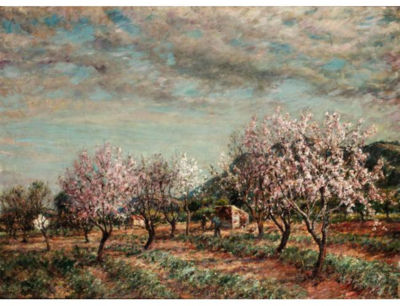 Influenced by study with the great George Inness to become a landscape painter, William Mark Fisher, born in 1841 in Boston, also studied as a youth at the Lowell Institute in Massachusetts.
Fisher went to Paris as a young man of twenty to study with academic artist, Charles Gleyre. In France, he was influenced by Monet and the other artists who would later be known as Impressionists. Unfortunately, Fisher was unable to find any success upon his return to Boston after some years in France.
In 1877, he went to England and rapidly became one of their foremost painters of realistic landscape and animals. Like poet Robert Frost in the 20th Century, another American under-appreciated in his own country, Fisher achieved such a reputation in England that his fellow artists elected him to full membership in the Royal Academy, the New English Art Club and president of the Essex Club.
Fisher exhibited in expositions in Chicago, St. Louis and Paris, winning medals. The artist's works in the collection of the Museum of Fine Arts in Boston include "Noon," 1872, "On the Cam," 1876, and "The Meadows," 1877. "Feeding the Fowls" is in the Tate Gallery in London.
William Mark Fisher died in 1923.
Source:
Michael David Zellman, 300 Years of American ArtBiography from Rehs Galleries, Inc.
William Mark Fisher was born in Boston, MA in 1841. His family was poor, and he spent a good part of his childhood working. At the age of 14, he was apprenticed to his cousin - a sign and house painter - William Lawless. From this point on he began to study art - initially taking drawing classes during the winter months at the Lowell Institute.
By the age of 18 or 19, he was working as a portrait painter, and he had the good fortune of meeting George Cass, a student of the American landscape artist George Inness. Cass introduced Fisher to Inness, and he too began studying under the master. Fisher remarked that Inness found him to be "…a most promising youth and it was finally arranged I should go and stay with him as a pupil without fees."
In 1863 Fisher met one of Inness' patrons who proposed that he travel to Paris to continue his studies. He left for Paris and entered the atelier of Gleyre where met many other artists, including Sisley. After finishing his training, he returned to Boston and continued to paint, but his work, which had a more impressionist style to it, met with little success and he finally decide to leave for Europe again. By 1871 he was on his way, first landing in Brest and then moving on to Normandy.
In 1872, he left France and headed for England, where he would not only take up permanent residence, but also find great success. In Benjamin's "Contemporary Art in Europe", the author remarks that: "Mark Fisher, a Boston artist, who had to leave his native land in order to find the appreciation he deserves, has won a front rank in the landscape art of his adopted country, and seems to have no superior there in the interpretation of certain aspects of nature. Upon his arrival in England he took up residence in London, but soon found the countryside was more to his liking and moved to Sussex."
By 1901 he was living in Hatfield Heath, where he would remain for the rest of his life. He was a frequent exhibitor at the Royal Academy - displaying his first work there in 1872 and continued to exhibit there until his death in 1923; showing more than 100 works (l). Fisher was elected A.R.A. in 1911 and a full member in 1919.
Among his exhibited paintings are: Noon (1872); Early Summer (1875); The Siesta (1877); Milking Time (1881); Early Summer - Sussex (1883); Environs of Algiers (1896); A Hampshire Village (1903); Ponds at Bexley (1906); Harlow Mill (1912); Cote d'azur (1913); White poplars: September (1915); Mont Canaille, Cassis (1917); and On the Shore at Emsworth (1921).
It is interesting to note that Fisher is considered one of the first artists to bring the Impressionist style to England and was noted by George Moore, in 1893, as being [England's] greatest living landscape painter.
Fisher died on April 30, 1923.