Page loaded successfully. Showing biography for Max Klinger.
Max Klinger BIOGRAPHY
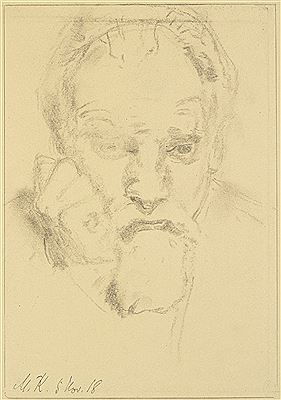
1857 Leipzig, Germany - 1920 Grossjena. Known for: Symbolist, romantic style painting, graphics.
Max Klinger was born in Leipzig, Germany in 1857. He was brought up in the correct milieu of provincial German society. He was aware of a split between his paintings and his more private graphics.... Read full biography
Max Klinger was born in Leipzig, Germany in 1857. He was brought up in the correct milieu of provincial German society. He was aware of a split between his paintings and his more private graphics. Klinger the painter moved sedately between a professorship in Leipzig and his country vineyard,... Read full biography
Max Klinger was born in Leipzig, Germany in 1857. He was brought up in the correct milieu of provincial German society. He was aware of a split between his paintings and his more private graphics. Klinger the painter moved sedately between a professorship in Leipzig and his country vineyard, turning out the portraits and allegories his patrons sought and trying to ignore the themes that particularly haunted him: fetishism and an erotic consciousness of death. These themes dominated his... Read full biography
Max Klinger was born in Leipzig, Germany in 1857. He was brought up in the correct milieu of provincial German society. He was aware of a split between his paintings and his more private graphics. Klinger the painter moved sedately between a professorship in Leipzig and his country vineyard, turning out the portraits and allegories his patrons sought and trying to ignore the themes that particularly haunted him: fetishism and an erotic consciousness of death. These themes dominated his strangest and best known series of etchings. Klinger died in 1920, after a career of prolonged and dull success. The paintings from which he earned a handsome living were promptly forgotten and his strange etchings, too. It is on the resonance of his imagery... Read full biography
Max Klinger was born in Leipzig, Germany in 1857. He was brought up in the correct milieu of provincial German society. He was aware of a split between his paintings and his more private graphics. Klinger the painter moved sedately between a professorship in Leipzig and his country vineyard, turning out the portraits and allegories his patrons sought and trying to ignore the themes that particularly haunted him: fetishism and an erotic consciousness of death. These themes dominated his strangest and best known series of etchings. Klinger died in 1920, after a career of prolonged and dull success. The paintings from which he earned a handsome living were promptly forgotten and his strange etchings, too. It is on the resonance of his imagery that Klinger's work depends for its enduring value. His strength was neurosis and the best of his et... Read full biography
Artist Biography
Biography page for Max Klinger ((1857 - 1920)), known for Symbolist, romantic style painting, graphics. Showing 2 biographical entries and 0 sample artworks.
Max Klinger - Artist Info
About Max Klinger
Biography from the Archives of askART
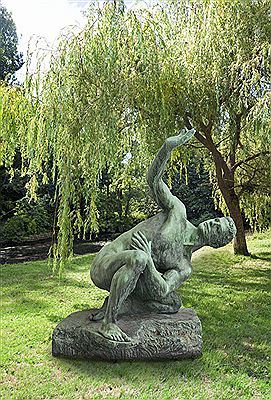 Max Klinger was born in Leipzig, Germany in 1857. He was brought up in the correct milieu of provincial German society. He was aware of a split between his paintings and his more private graphics. Klinger the painter moved sedately between a professorship in Leipzig and his country vineyard, turning out the portraits and allegories his patrons sought and trying to ignore the themes that particularly haunted him: fetishism and an erotic consciousness of death. These themes dominated his strangest and best known series of etchings.
Klinger died in 1920, after a career of prolonged and dull success. The paintings from which he earned a handsome living were promptly forgotten and his strange etchings, too. It is on the resonance of his imagery that Klinger's work depends for its enduring value. His strength was neurosis and the best of his etchings, with their strangely modern battles of id and antimacassar, are illustrations of a Freudian maxim: civilization is repression.
Written and compiled by Jean Ershler Schatz, artist and researcher from Laguna Woods, California.
Source:
Robert Hughes in Time Magazine, August 30, 1971.Biography from Annex Galleries
A printmaker, painter, and sculptor, Max Klinger began his art education in 1874 in Karlsruhe, Germany, at the dawn of the Nouveau renaissance. His introduction to art came from one of Germany's most prominent "daring painters", Karl von Gussow. At a time when Symbolism was often considered separate from traditional artistic styles, Klinger would transcend the barrier, and his work would come to fall into several categories—in particular, his graphic works. Symbolist in nature while romantic and realist in execution, his etchings appeal to the viewer in vivid line and contrast, yet perhaps hold more power in their mystery.
An admirer of Chavannes, Goya, and Daumier, Klinger built his portfolios, including 14 major cycles, comprising of 265 plates, on personal observations of what underlies daily life: love, death, poverty, sex, obsession, and violence. He tackled predominant social and political issues on the one hand, while giving shape to fantastic and sometimes terrifying dreamscapes on the other. These themes were often portrayed in stark landscapes and simplified situations: A sailor rescuing a glove from a tossing sea; the body of a dead man lying in the middle of a tranquil, empty path; a woman walking alone along a dark shoreline, crying.
By the same token, his careful, detailed contrast of motion and stillness provided a powerful subtlety: A crowded roller-skating rink where a fallen child—feet still suspended in mid-air— is noticed only by the lapdog of one of the many adults surrounding her.
His work would come to influence Käthe Kollwitz, Edvard Munch, Max Ernst, Salvador Dali, and many others.
Source: Varnedoe and Streicher, Graphic Works of Max Klinger, Dover Art Collections, 1977
Art Directory GmbH: http://www.klinger-max.de/e/index.shtml