Page loaded successfully. Showing biography for Merton D Simpson.
Merton D Simpson BIOGRAPHY
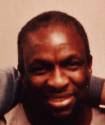
1928 Charleston, South Carolina - 2013 Manhattan, New York City. Known for: Abstract expressionist painting, portraits, gallery owner.
The following was submitted by the artist, September 2004. One of eight children, Merton Simpson was born in 1928 and grew up in Charleston, South Carolina. While hospitalized with childhood... Read full biography
The following was submitted by the artist, September 2004. One of eight children, Merton Simpson was born in 1928 and grew up in Charleston, South Carolina. While hospitalized with childhood diphtheria, he took to drawing. His talent was soon recognized by several Charlestonians, among them William... Read full biography
The following was submitted by the artist, September 2004. One of eight children, Merton Simpson was born in 1928 and grew up in Charleston, South Carolina. While hospitalized with childhood diphtheria, he took to drawing. His talent was soon recognized by several Charlestonians, among them William Halsey, an artist who gave private instruction to the young Simpson. While working with Halsey, Simpson also worked at the Gibbes Museum, the only African American in the still segregated... Read full biography
The following was submitted by the artist, September 2004. One of eight children, Merton Simpson was born in 1928 and grew up in Charleston, South Carolina. While hospitalized with childhood diphtheria, he took to drawing. His talent was soon recognized by several Charlestonians, among them William Halsey, an artist who gave private instruction to the young Simpson. While working with Halsey, Simpson also worked at the Gibbes Museum, the only African American in the still segregated institution. Though not an orphan, Simpson was also a member of the Jenkins Orphanage Band, another important early experience, as music has been a lifelong inspiration to the artist. Simpson moved to New York in 1948 where he studied at the Cooper Union and at... Read full biography
The following was submitted by the artist, September 2004. One of eight children, Merton Simpson was born in 1928 and grew up in Charleston, South Carolina. While hospitalized with childhood diphtheria, he took to drawing. His talent was soon recognized by several Charlestonians, among them William Halsey, an artist who gave private instruction to the young Simpson. While working with Halsey, Simpson also worked at the Gibbes Museum, the only African American in the still segregated institution. Though not an orphan, Simpson was also a member of the Jenkins Orphanage Band, another important early experience, as music has been a lifelong inspiration to the artist. Simpson moved to New York in 1948 where he studied at the Cooper Union and at New York University, where one of his professors was Hale Woodruff. He also worked at Benevy's Fra... Read full biography
Artist Biography
Biography page for Merton D Simpson ((1928 - 2013)), known for Abstract expressionist painting, portraits, gallery owner. Showing 3 biographical entries and 0 sample artworks.
Merton D Simpson - Artist Info
About Merton D Simpson
Biography from the Archives of askART
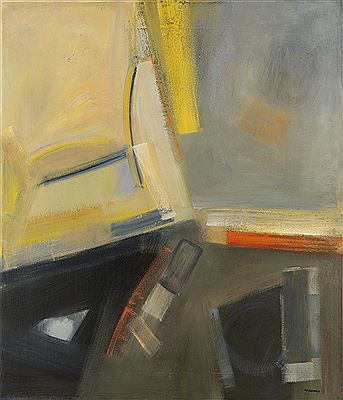 The following was submitted by the artist, September 2004
One of eight children, Merton Simpson was born in 1928 and grew up in Charleston, South Carolina. While hospitalized with childhood diphtheria, he took to drawing. His talent was soon recognized by several Charlestonians, among them William Halsey, an artist who gave private instruction to the young Simpson.
While working with Halsey, Simpson also worked at the Gibbes Museum, the only African American in the still segregated institution. Though not an orphan, Simpson was also a member of the Jenkins Orphanage Band, another important early experience, as music has been a lifelong inspiration to the artist.
Simpson moved to New York in 1948 where he studied at the Cooper Union and at New York University, where one of his professors was Hale Woodruff. He also worked at Benevy's Frame shop, an experience Simpson calls his "real college." There he met artists Hans Hofmann, Max Weber and others who would encourage him by commenting on his work. His confidence was further bolstered when one of his works, Nocturnal City, was exhibited at the Metropolitan Museum of Art in 1952.
College was interrupted when Simpson joined the Air Force in 1951. Designated an official Air Force artist, he painted portraits of officers including one of General Eisenhower, and he also played in a jazz combo on the base. After concluding his military service in 1954, Simpson returned to New York to resume his studies and employment at the frame shop.
Simpson continued to paint and his work was included in two very noteworthy museum exhibitions-Younger American Painters at the Guggenheim Museum in 1954 and Eight New York Painters at the University of Michigan in 1956. During this period he began looking at African sculpture, and in 1954, he opened his Madison Avenue gallery which concurrently featured African art and modern art.
In 1959, he took his first trip to Europe, primarily to see the best in African art, but he also relished being among the expatriate African-American writers, artists and musicians living in Paris including the writer, James Baldwin; artists, Larry Potter, Beauford Delaney and Herbert Gentry; and musicians, Count Basie, Thad Jones and the Mel Lewis Orchestra.
In 1963, Simpson was invited to join a group of African-American artists to meet to discuss how they could contribute to the civil rights movement. The result of the meeting was the formation of the Spiral Group, which Simpson joined along with Romare Bearden, Norman Lewis, Charles Alston, Hale Woodruff, Richard Mayhew, Emma Amos, Alvin Hollingsworth, Reginald Gammon and others.
For Simpson, this heightened sense of social consciousness led to his Confrontation series (1964-69), a group of mostly black and white canvases which expresses the anger and frustration of the times.
In the 1970s, Simpson traveled extensively in West Africa in search of African art. In so doing, he strongly connected to Africa and to his own heritage. This was a vital and meaningful period in Simpson's life for not only did his knowledge of African art expand, but his political and social consciousness was raised in a way which would greatly affect his later work.
In the 1980s, Simpson created two series of work which reflect his great love of music and jazz in particular. Universal Orchestrations and Contemporary Melodies both consist of works that exhibit free flowing and spontaneous brush strokes; not coincidentally, these works were created during a time when Simpson was actively playing a lot of jazz, both in New York and in Paris.
By the 1990s Simpson's work began to evolve in a way that not only incorporated his musical sensibility but also his appreciation of African art. He added elements of collage to his paintings using fragments from West African hunting cloth which were used to wrap tribal objects during shipments from Africa. In so doing, the works gained a sculptural quality reflective of tribal art.
In addition to his artwork, Simpson has also become a dealer of African art. In 1995, the Gibbes Museum of Art in Charleston presented a retrospective exhibition and published a catalogue entitled Merton D. Simpson, The Journey of an Artist. He has also had gallery exhibitions in May and September 2002. On October 28, 2002, the Studio Museum in Harlem honored Merton D. Simpson along with Gwendolyn Lawrence and Richard Yarde, for his work as an artist, humanitarian and his role in the proliferation of African-American art.
RESUME
BORN:
Charleston, South Carolina, September 20, 1928.
EDUCATION:
New York University
(studied with William Baziotes and Hale Woodruff).
Cooper Union Art School (studied with Bob Gwathmey).
Studied with William Halsey
MILITARY SERVICE: Official Air Force Artist, 1951-1954.
AWARDS & HONORS:
Studio Museum in Harlem Award, Oct. 2002
-South Carolinian Library Research Archives, 1984.
-Gibbes Art Gallery, 1956
-Atlanta University, 1950, 1951, 1956
-Metropolitan Museum of Art; Watercolor Exhibition, (Honorable Mention) New York 1952
-Oakland Art Museum, 1952
-Intercultural Club, 1951
-South Carolina Cultural Fund, 1951
-Red Cross Exchange Exhibit; Paris, Tokyo, 1950
COMMISSIONED TO:
City of Charleston: Black Portrait Study commissioned to
paint Reverend Daniel J. Jenkins, 1984.
ONE PERSON EXHIBITIONS:
The Journey of an Artist, Gibbs Museum of Art, 1995,
Nations Bank Plaza, Columbia, South Carolina, 1995,
Rudolph E. Lee Gallery, Clemson University, Clemson, South Carolina (In conjunction with the Fala Festival of African -American Literature and Arts) , 1995.
-Hale House Benefit Exhibition: Tambaran Gallery, NY, 1993.
-Ancestral Improvisation, Noir d'Ivoire Gallery, Paris, 1992.
-Portraits, Twining Gallery (for the Northside Center for Child Development) NY, 1990.
-Improvisations, William Halsey Gallery Charleston, S.C., 1984.
-Charleston County Library, 1983.
-Langston Society, New York, 1982.
GROUP EXHIBITIONS:
-Jazz and Visual Improvisations, Katonah Museum, 2001.
-Blackness in Color, Cornell University, 2000
-100 Years/100 Artists: Views of the 20th Century in South
Carolina Art, South Carolina State Museum, November 1999 - March 19, 2000.
-Conflict and Transcendence: African American Art in South Carolina, Columbia Museum of Art, Gibbes Museum of Art, Florence Museum of Art and Science, Winthrop College Gallery, I.P. Stanbeck Museum & Planetarium, 1992 - 93.
-Revealing a Hidden Heritage: African American Artists in South Carolina, Columbia Museum, 1986.
-Since the Harlem Renaissance, Bucknell University, 1986
-South Carolina: The State of the Arts, an invitational/Juried
Exhibition, April 13 - June 1986
-Being Black: Afro-American Artists Since the Twenties,
Bucknell University, 1984.
The Simmons Center for the Arts, Charleston, 1984.
-The Inspirational Century, Bruce Museum, CT, 1980.
-Reflections of a Southern Heritage, 20th century Black Artists of
the Southeast, Columbia Museum of Art, Jan-Feb. 1980
-Black Artists/South, Huntsville Museum, Alabama, 1979.
-Reflections of a Southern Heritage, 20th century Black Artists of the Southeast, Greenville County Museum of Art, Nov.-Dec. 79
-Reflections of a Southern Heritage, 20th century Black Artists of the Southeast, Gibbs Art Gallery, Sept-Oct 1979
-5 + 10, Audubon Gallery, College of Charleston, 1978.
-Black Art Expressions, An exhibition of African- American Artists,
Illinois 1973
PERMANENTCOLLECTIONS:
James J. Sweeney Collection (originally at Guggenheim Museum)
Howard University, Washington, D. C.
Scott Field Museum, Chicago
Atlanta University
University of Massachusetts
Museum of New York
Gibbes Art Gallery, South Carolina
University of Michigan
South Carolina Arts Commission
South Carolina State Museum
Fisk University, Tennessee
Rogers Engraving Company, New York
St. Lawrence University, Canton, New York
Detroit Art Institute
PRIVATE COLLECTIONS:
Nelson D. Rockefeller
Dwight Eisenhower
Helena Rubenstein
Stanley Marcus
Alexander Bing
Gen. Nathan F. Twining
Duke Ellington
Henry Luce, Jr.
Arthur Cohen
Frederic Ossorio
Gustave Schindler
Dr. Renalto Almansi
Morris Pinto
Jay Last
Ralph Ellison
Marian and Daniel Malcolm
Dr. Ambrose G. Hampton Jr.
Leonard Bocour
Fredericka Tchacos
Marc Riviere
Denyze & Marc Ginzberg
Carol Summers
Sharron & Stuart Hollander
Bernice & Sidney Clyman
Alain de Monbrison
Mina & Samir Borro
J.P. Langlois
Bernard Dulon
Economos Gallery
Gerald and Jean Katcher
John Friede
Kurt Delbanco
Kofi Annan
Allan Stone
Spike Lee
Bill Cosby
Percy Sutton
PUBLICATIONS:
Art & Antiques, "Top 100 Treasures," November 2001.
The Artist Portrait Series: Images of Contemporary African-American Artists, Fern Logan, Southern Illinois University Press, 2001.
St. James's Guide to Black Artists, Ed., Thomas Riggs, Schomburg Center for Research in Black Culture, St. James Press, 1997.
History of African-American Artists: From 1792 to the Present, Romare Bearden and Harry Henderson, Oxford Press, 1993.
Film: Black Artists in America. Dr. Oakley N. Holmes, Producer, 1992.
Art Seen Videotape by David Howard Air on:
Cable Television, 1992
Northside Center for Child Development, Inc.
A Benefit at the Twining Gallery, New York, 1990, Portraits, by Merton D. Simpson
New Art Examiner, "Abstract Expressionism: The Missing Link." May 1989.
"Visiting Visual Artists," The Columbia Museum Magazine, vol. 1, no.3, Spring, 1986.
The News and Courier, Portrait of Rev. Daniel J. Jenkins, March 1, 1985.
Connoisseur '"No. 1 in Primitive Art," March 1982.
Black Art,.Vol. 3, Number 2, 1979 "Merton Simpson, Artist, "A.C. Hollingsworth.
The Afro-American Artist. Elsa Honig Fine, Holt, Rinehart & Winston, 1973.
Spiral Group, Spiral exhibition catalog, 1963.
"Young American Painters." The Solomon R. Guggenheim Museum, The Ram Press, 1954.
American Negro Art, Cedric Dover.
Greenwich, CT, New York Graphic Society.Biography from the Archives of askART
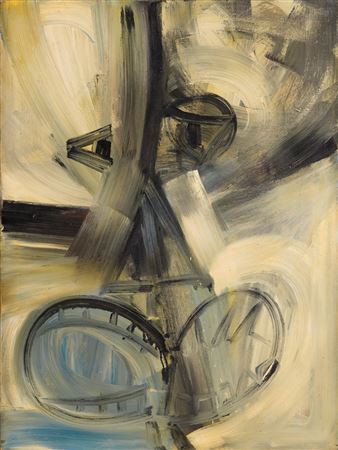 Following is The New York Times obituary of the artist.
"Merton D. Simpson, Painter, Collector and Dealer in African Art, Dies at 84"
By BRUCE WEBER
Published: March 14, 2013
Merton D. Simpson, an artist who became a trailblazing collector and gallery owner specializing in African art, died on Saturday in Manhattan. He was 84.
Mr. Simpson had had several strokes and suffered from a number of prolonged illnesses, including diabetes and dementia, said his son Merton Jr. and Alaina Simone, director of the Merton D. Simpson Gallery, in confirming his death.
Mr. Simpson's work as a painter was largely in the Abstract Expressionist mode. It grew more political after he joined the Spiral group, a collective of black artists founded in 1963 by Romare Bearden, Hale Woodruff and others, who met to discuss the role of black artists in the art world and, given the growing civil rights movement, the larger world as well.
Influenced by Bearden's collages and the Spiral discussions, Mr. Simpson, after witnessing a standoff between Harlem residents and the police in 1964, produced a series he called "Confrontations," abstract renderings of masklike faces, white and black, seemingly in hostile opposition.
Mr. Simpson began collecting African and tribal art in the late 1940s. His interest grew through the next decade, spurred by the influence of African sculpture on the paintings of Picasso, Miró and others.
"I was so taken with them, with the forms, you know," he said in a 1968 oral history interview for the Smithsonian Institution's Archives of American Art about the figures he had seen in the collections of Mr. Woodruff (who had been his teacher), Paul Robeson and others. "People talked about Picasso, Miró, and I used to say, 'What about African sculpture?,' which these people sort of got this idea from."
He began dealing in art in the early 1950s to support his painting and to help his family, at first working out of a studio apartment and later from a gallery in Manhattan. (The Merton D. Simpson Gallery is now at 38 West 28th Street.) Over decades of traveling in Africa and Europe, Mr. Simpson established a reputation for taste and expertise that many aficionados in the field consider unmatched.
"Over the course of the '60s and '70s Simpson became the most important dealer in the U.S. in this field," Heinrich C. Schweizer, head of the African and Oceanic art department at Sotheby's auction house, said on Tuesday. "Worldwide, you could say he was one of the two or three leading dealers, and certainly a powerhouse in the U.S., and this was especially remarkable for an African-American, who began doing this in the time of segregation."
Merton Daniel Simpson was born in Charleston, S.C., on Sept. 20, 1928. His father, Marion, was a water-meter reader; his mother, Jennie, was a homemaker. As a young boy he had diphtheria and rheumatic fever, illnesses that kept him out of school until fifth grade.
His youthful interests ran to both drawing and music; in high school he was a reed player, and he continued to play jazz saxophone as an adult, which he said influenced some of his later paintings, abstract works with looping lines, indefinite shapes and energetic brush strokes suggestive of the improvisatory nature of jazz."Painting is like playing music," he said. "You can hear a song, you can hear a melody, you don't have to know the words, but you hear the music and get an impression of what's going on."
He came to New York in 1948 and studied at Cooper Union and New York University, where he met Mr. Woodruff. In 1951 he entered the Air Force; he spent most of his time playing in the Air Force band and painting portraits of military officers, including Gen. Dwight D. Eisenhower. He also worked on paintings of his own.
When he left the service he returned to Manhattan, where he supported himself working in a frame shop frequented by well-known artists like Hans Hofmann, Jackson Pollock and Robert Motherwell, who would critique his paintings.
Mr. Simpson's marriage to Beatrice Houston ended in divorce. In addition to his son Merton Jr. he is survived by another son, Kenneth; a brother, Carl; a sister, Patsy Johnson; two grandchildren; and three great-grandchildren.
"He was a real pioneer, involved in African art at a high level at a time when there weren't even many African-Americans who were collecting African art," said Lowery Stokes Sims, curator of the Museum of Arts and Design in Manhattan, who worked at the Metropolitan Museum of Art from the '70s to the '90s. "When I worked at the Met I would go to the gallery and see some of the most incredible African art I'd ever seen in my life. It was really showstopping. And occasionally he'd show his own work," she said. "For an African-American who came up in the art world in the 1970s, he was truly one of those unsung pioneers, crucial in establishing our place in the art world."Biography from The Johnson Collection
MERTON DANIEL SIMPSON (1928-2013)
A man of many talents and dogged determination, Merton Simpson was an acclaimed Abstract Expressionist, amateur jazz musician, and pre-eminent dealer of African and tribal art. Though his paintings continue to be exhibited and collected by museums nationwide, Simpson's legacy is most closely tied to the vast collection of African art left behind in his eponymous—and now shuttered—New York gallery upon his death in March 2013. Curators and dealers from around the world visited and purchased African art from Simpson during the gallery's fifty-nine years of operation, and he is credited with assisting numerous institutions, including the Metropolitan Museum of Art, in their efforts to establish African art collections.
Simpson's success as an artist and art dealer almost never happened. During his youth in Charleston, South Carolina, Simpson suffered from diphtheria and was necessarily hospitalized for much of his childhood. Bedridden for long periods of time, Simpson entertained himself by drawing: his early subjects included Mickey Mouse and Dick Tracy cartoons before advancing to copies after paintings published in art magazines and journals available to him through the Charleston Library. Gradually, Simpson gravitated toward painting. During his healthy periods, Simpson enjoyed the company of local musicians, developing a love for jazz and mastering the saxophone and flute. His talent and persistence earned him membership in the legendary Jenkins Orphanage Band in spite of the fact that his parents were much alive at the time. Though he chose art over music as a career, Simpson never stopped playing his jazz saxophone.
Few opportunities for instruction or exhibition were available to an aspiring African American artist living in segregated Charleston in the 1940s. Simpson's chance encounter with local portrait painter Jean Fleming precipitated an introduction to William Halsey, another Charleston artist and Director of the Studio Program at the Gibbes Gallery. Struck by Simpson's evident talent, Halsey taught the young artist about drawing, composition, and mixing paint. He even encouraged Simpson to begin dabbling in abstraction. In 1949, Simpson left Charleston to attend New York University; that same year, the Home Book Shop in Charleston hosted a solo exhibition of his work, and Atlanta University included him in their Eighth Annual Exhibition of Painting, Sculpture, and prints by Negro Artists.
In New York City, Simpson attended Cooper Union during the day, studying under Robert Gwathmey, and took evening courses at New York University. Abstract Expressionism, which was at the height of its popularity in New York during the early 1950s, made a lasting impression on Simpson. His painting style became noticeably more abstract and gestural during these years. A writer for the Washington Post described Simpson's work on view at the Barnett-Aden Gallery in 1951 as "somewhat reminiscent of Ryder, despite the total difference in color." Over the course of his career, Simpson's work was included in important exhibitions at such prestigious institutions as the Guggenheim Museum, University of Michigan, and Krasner Gallery.
It was during his tenure at NYU that Simpson began collecting African art, a pursuit inspired by the personal collection of his art professor, Hale Woodruff. Following a three-year term of service as an Air Force artist (which included painting General Dwight Eisenhower's portrait), Simpson established the Merton D. Simpson Gallery in 1954, an endeavor that allowed him to share his passion for African art and earn money to help finance his siblings' education. Annual purchasing trips to Europe and Africa followed, and, in time, Simpson's gallery space, littered with art objects stored wherever space was available, became the premier destination for collectors, both private and public, of African art. In the 1960s, Simpson was a member, along with fellow artists Charles Alston, Romare Bearden, Woodruff, and others, of the black art collective known as the Spiral Group.
Simpson's work is held by the Brooklyn Museum, Gibbes Museum of Art, and Greenville County (SC) Museum of Art, among others.
The Johnson Collection, Spartanburg, South Carolina
www.thejohnsoncollection.org